








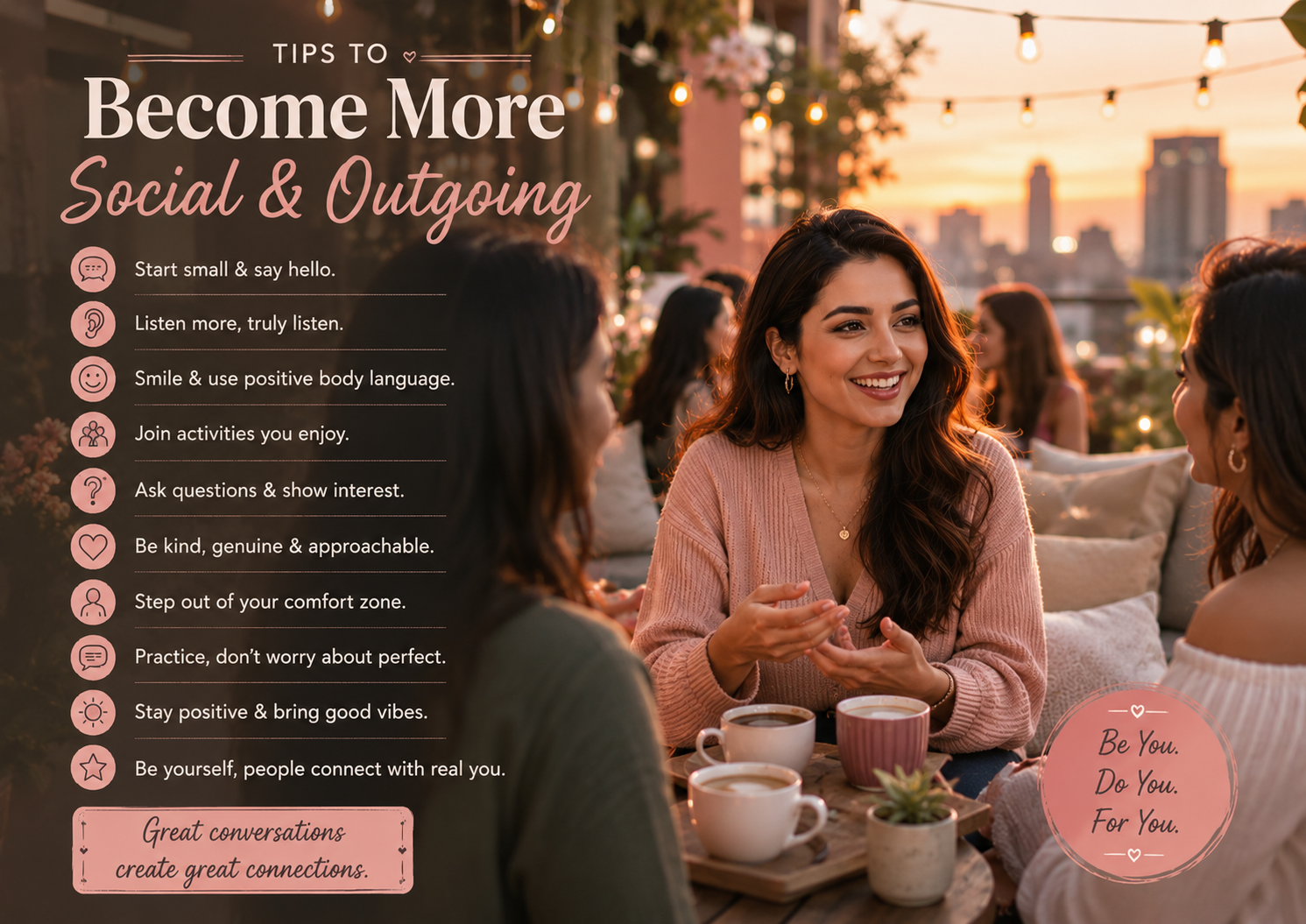
If you’re looking for practical tips to become more social, remember that being social and outgoing does not mean changing your personality completely or becoming loud all the time. Real social confidence comes from feeling comfortable around people, expressing yourself naturally, and building meaningful connections without constantly overthinking every interaction. The good news is that social skills can be learned and improved through small daily habits, regular practice, and personal growth. Many confident people were not born extroverts—they simply developed effective tips to become more social by stepping outside their comfort zones and engaging with others consistently.
Many people become more socially confident through small daily habits, practice, and emotional growth — not because they were born extroverted.
Start With Small Social Interactions
You do not need to become extremely outgoing overnight.
Begin with simple habits like:
- Smiling at people
- Saying hello
- Asking small questions
- Making short conversations
Small interactions help reduce social anxiety gradually.
Stop Overthinking What Others Think
Many people stay quiet because they fear:
- Judgment
- Rejection
- Embarrassment
- Saying the wrong thing
In reality, most people are focused on themselves far more than your small mistakes.
Confidence grows when you stop treating every conversation like a performance.
Improve Your Body Language
Body language strongly affects social confidence.
Helpful habits include:
- Standing straighter
- Smiling naturally
- Maintaining eye contact
- Keeping relaxed posture
Confident body language often makes conversations feel easier and more natural.
Practice Better Listening Skills
Social confidence is not only about talking more.
People often enjoy conversations more when they feel:
- Heard
- Understood
- Respected
Good listening helps build stronger social connections naturally.
You can also check https://www.hotpeeks.com/strong-women-habits-you-should-follow/
Join Activities and Social Spaces
Meeting new people becomes easier when you spend time in environments that encourage interaction.
You may meet people through:
- Fitness classes
- Cafés
- Workshops
- Hobby groups
- Volunteering
- Community events
Shared interests make conversations feel more comfortable.
Ask More Questions
Good conversations often grow through curiosity.
Simple questions may help conversations continue naturally:
- “How was your day?”
- “What do you enjoy doing?”
- “How did you get into that?”
Showing genuine interest makes social interactions smoother.
You can also check https://www.hotpeeks.com/inspirational-stories-of-successful-women/
Stop Trying to Be Perfect
Many people stay socially anxious because they fear awkward moments.
But everyone experiences:
- Nervousness
- Silence
- Social mistakes
- Awkward conversations
Outgoing people are not socially perfect — they simply recover more easily without overthinking every small moment.
Improve Your Confidence Gradually
Social skills and self-confidence are deeply connected.
Helpful confidence habits include:
- Self-care
- Exercise
- Positive self-talk
- Better posture
- Emotional healing
The more comfortable you feel with yourself, the easier socializing often becomes.
Spend Less Time Isolating Yourself
Avoiding people completely can increase social fear over time.
Even small social practice helps:
- Talking to coworkers
- Going to social events
- Joining conversations
- Spending time outside your comfort zone
Confidence grows through experience.
Be More Positive and Approachable
People are naturally drawn toward warm positive energy.
Simple habits include:
- Smiling more naturally
- Avoiding constant negativity
- Staying calm
- Being respectful and kind
Positive energy often makes social connections easier.
Learn to Enjoy Your Own Personality
You do not need to copy extremely extroverted people to become socially confident.
Some people are naturally:
- Calm
- Quiet
- Thoughtful
- Soft-spoken
You can still be socially attractive and confident while staying authentic.
Be Patient With Yourself
Social confidence takes time to build.
Some days conversations may feel easy, while other days feel awkward — and that’s completely normal.
Growth happens gradually through:
- Practice
- Repetition
- Confidence
- Emotional comfort
- Experience
Small improvements matter.
Final Thoughts
Becoming more social and outgoing is not about pretending to be someone else. It’s about learning to feel more relaxed, confident, expressive, and emotionally comfortable around people while still staying true to your personality.
At the end of the day, the most socially attractive people are often those who feel genuine, emotionally balanced, approachable, kind, and comfortable being themselves.