








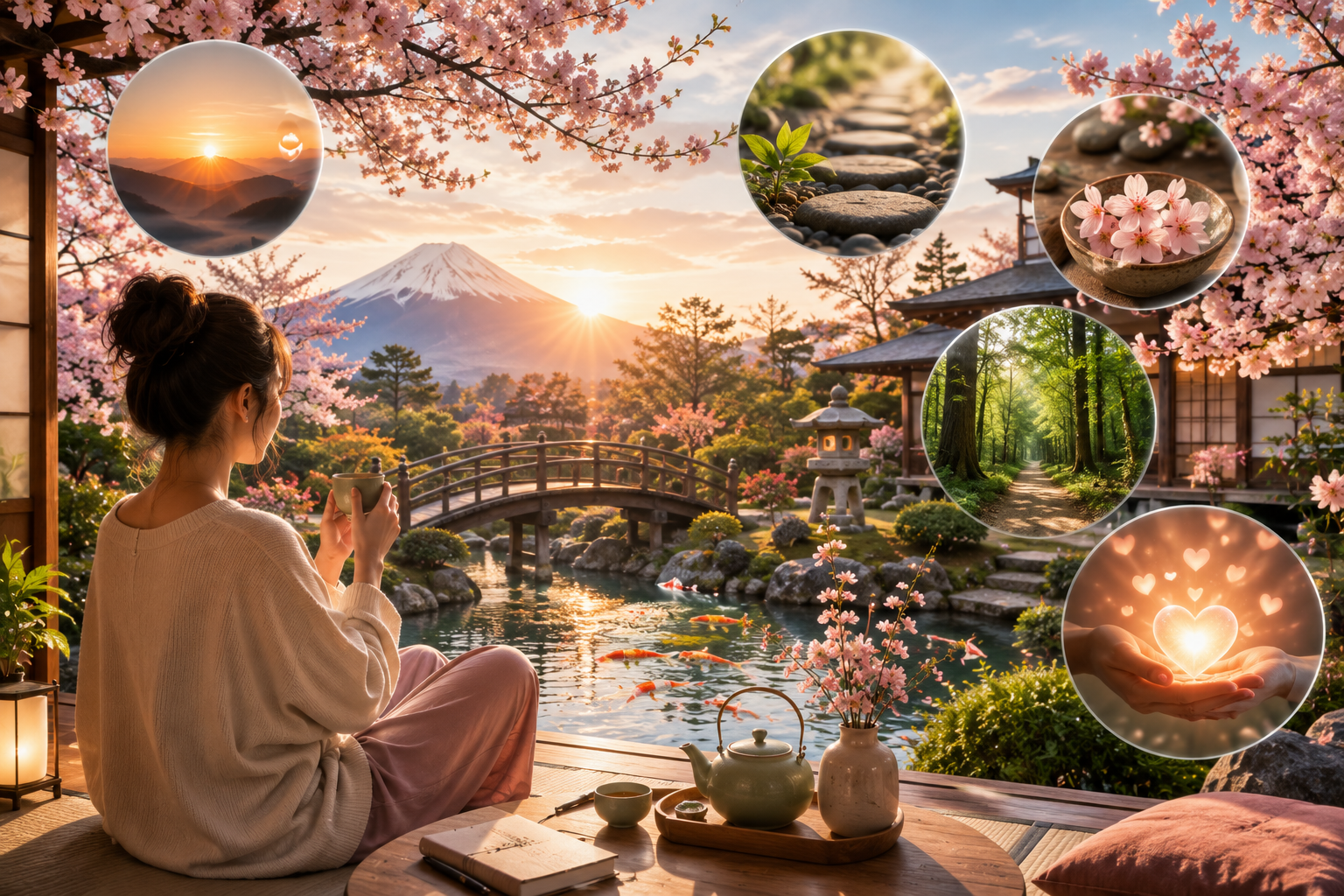
Many people around the world admire Japan not only for its technology and culture but also for the calm and balanced way many of its people approach life. The Japanese secrets to living a happy and peaceful life are rooted in simple daily habits rather than chasing perfection or material success.
Instead of constantly searching for happiness, Japanese philosophy teaches us to appreciate the present moment, value meaningful relationships, and find joy in small everyday experiences. These timeless ideas can help reduce stress, improve mental well-being, and create a more fulfilling lifestyle.
Let’s explore some of the most inspiring Japanese life principles that you can start practicing today.
1. Discover Your Ikigai
One of Japan’s most well-known philosophies is Ikigai, which roughly means “a reason for being.”
Your Ikigai is the purpose that motivates you to wake up every morning.
It doesn’t have to be a big achievement or a dream career. It can simply be something that brings meaning to your life.
Ask yourself:
- What do I enjoy doing?
- What am I naturally good at?
- How can I help others?
- What gives me a sense of purpose?
Finding your Ikigai helps create direction and long-term happiness.
2. Practice Kaizen Every Day
Kaizen means “continuous improvement.”
Instead of trying to change your life overnight, focus on making small improvements every day.
Examples include:
- Reading for 10 minutes daily.
- Walking for 20 minutes.
- Drinking more water.
- Learning one new skill each week.
- Sleeping a little earlier.
Small habits may seem insignificant, but over time they lead to remarkable changes.
3. Embrace Wabi-Sabi
In today’s world, many people feel pressure to be perfect.
The Japanese philosophy of Wabi-Sabi teaches us that beauty exists in imperfection.
Rather than chasing perfection, learn to appreciate:
- Natural beauty.
- Simplicity.
- Personal growth.
- Life’s imperfections.
- Authentic experiences.
Accepting that nothing is perfect can reduce stress and increase self-acceptance.
4. Stay Present Through Mindfulness
Mindfulness is deeply connected to many aspects of Japanese culture.
Instead of constantly worrying about the future or dwelling on the past, focus your attention on the present moment.
Simple ways to practice mindfulness include:
- Eating without distractions.
- Taking slow, deep breaths.
- Enjoying nature.
- Listening carefully during conversations.
- Spending a few quiet minutes without your phone.
Being present allows you to appreciate life more fully.
5. Keep Your Life Simple
Minimalism is another important principle that has become popular around the world.
Many Japanese homes emphasize clean spaces, fewer possessions, and thoughtful organization.
Living simply doesn’t mean owning nothing.
It means surrounding yourself with things that truly add value to your life.
Decluttering your home often helps declutter your mind as well.
6. Build Meaningful Relationships
Strong relationships are one of the biggest contributors to happiness.
Instead of having hundreds of acquaintances, Japanese culture often values smaller circles of deep, meaningful friendships.
Spend time with people who:
- Encourage you.
- Respect you.
- Inspire personal growth.
- Bring peace into your life.
- Celebrate your successes.
Healthy relationships contribute greatly to emotional well-being.
7. Practice the “Arigato In, Arigato Out” Mindset
In Japanese, “Arigato” (ありがとう) means “Thank you.” While it is a simple word, gratitude is deeply woven into everyday life in Japan.
Think of it as “Arigato In, Arigato Out.”
Arigato In means appreciating the kindness, opportunities, and blessings you receive each day-even the small ones.
Arigato Out means expressing gratitude freely to others through your words, actions, and attitude.
When gratitude flows both ways, it creates stronger relationships, reduces stress, and encourages a more positive outlook on life. Instead of focusing on what’s missing, you begin to notice what you already have.
Simple ways to practice this mindset include:
- Say “thank you” more often.
- Appreciate small acts of kindness.
- Keep a daily gratitude journal.
- Thank people who make your day easier.
- End each day by thinking of three things you’re grateful for.
Living with an “Arigato In, Arigato Out” mindset reminds us that happiness often begins with appreciation, not possessions.
8. Experience Shinrin-Yoku (Forest Bathing)
Another beautiful Japanese practice is Shinrin-Yoku, which means “Forest Bathing.”
It doesn’t involve swimming in a forest. Instead, it means spending quiet, mindful time surrounded by nature.
Whether it’s a park, garden, or forest trail, being in nature can help:
- Reduce stress.
- Improve mood.
- Increase focus.
- Lower mental fatigue.
- Promote relaxation.
Even a 20–30 minute walk in a peaceful green space can help you reconnect with yourself.
9. Keep Learning Throughout Life
In Japan, learning doesn’t stop after school or college.
Many people believe that continuous learning keeps the mind active and gives life purpose.
You can practice lifelong learning by:
- Reading books.
- Learning a new language.
- Taking online courses.
- Exploring creative hobbies.
- Developing new skills.
Every small lesson adds to your personal growth.
10. Nourish Your Body with Balance
Japanese cuisine is often praised for its balance and simplicity.
Instead of eating large portions, traditional Japanese meals focus on:
- Fresh vegetables.
- Fish.
- Rice.
- Seasonal ingredients.
- Green tea.
- Fermented foods.
Mindful eating and portion control can support both physical and mental well-being.
The Science Behind Japanese Happiness and Longevity
Japan is home to many people who enjoy long, healthy lives. While there isn’t one single reason for this, researchers often point to a combination of lifestyle habits that support overall well-being.
These include:
- Staying physically active through daily movement.
- Eating a balanced diet.
- Maintaining strong social connections.
- Managing stress with mindful practices.
- Having a sense of purpose, often described through the concept of Ikigai.
- Practicing gratitude and appreciation.
Rather than relying on one secret, it’s the combination of these everyday habits that contributes to a healthier and more fulfilling life.
You can also read: Boost self confidence by developing small daily habits
Small Japanese Habits You Can Start Today
You don’t need to completely change your lifestyle.
Start with one simple habit at a time:
- Write down one thing you’re grateful for each morning.
- Spend 20 minutes walking outdoors.
- Declutter one small area of your home.
- Eat without looking at your phone.
- Read a few pages of a book daily.
- Practice one small improvement each day.
- Tell someone “thank you” sincerely.
These small actions may seem simple, but together they can make a meaningful difference over time.
Final Thoughts
The Japanese secrets to living a happy and peaceful life remind us that happiness isn’t something we suddenly achieve-it’s something we create through our daily choices.
Practices like Ikigai, Kaizen, Wabi-Sabi, Shinrin-Yoku, mindfulness, and the “Arigato In, Arigato Out” mindset encourage us to slow down, appreciate the present, and focus on what truly matters.
You don’t have to adopt every habit at once. Start with one small change today, stay consistent, and allow those simple actions to shape a happier, calmer, and more meaningful life.
After all, lasting happiness often comes from ordinary moments lived with intention.
Frequently Asked Questions
What is the Japanese secret to a happy life?
Many Japanese philosophies focus on finding purpose, practicing gratitude, embracing simplicity, improving a little each day, and building meaningful relationships. Together, these habits create a balanced and fulfilling life.
What does Ikigai mean?
Ikigai is a Japanese concept that means “a reason for being.” It encourages people to find purpose and joy in everyday life.
What is Kaizen?
Kaizen means continuous improvement through small, consistent steps rather than dramatic changes.
What is Shinrin-Yoku?
Shinrin-Yoku, or Forest Bathing, is the practice of spending mindful time in nature to reduce stress and improve overall well-being.
Can these Japanese habits really improve daily life?
While everyone’s experience is different, many of these habits-such as gratitude, mindfulness, regular movement, and meaningful relationships-are also supported by psychological and health research as contributing to greater well-being.