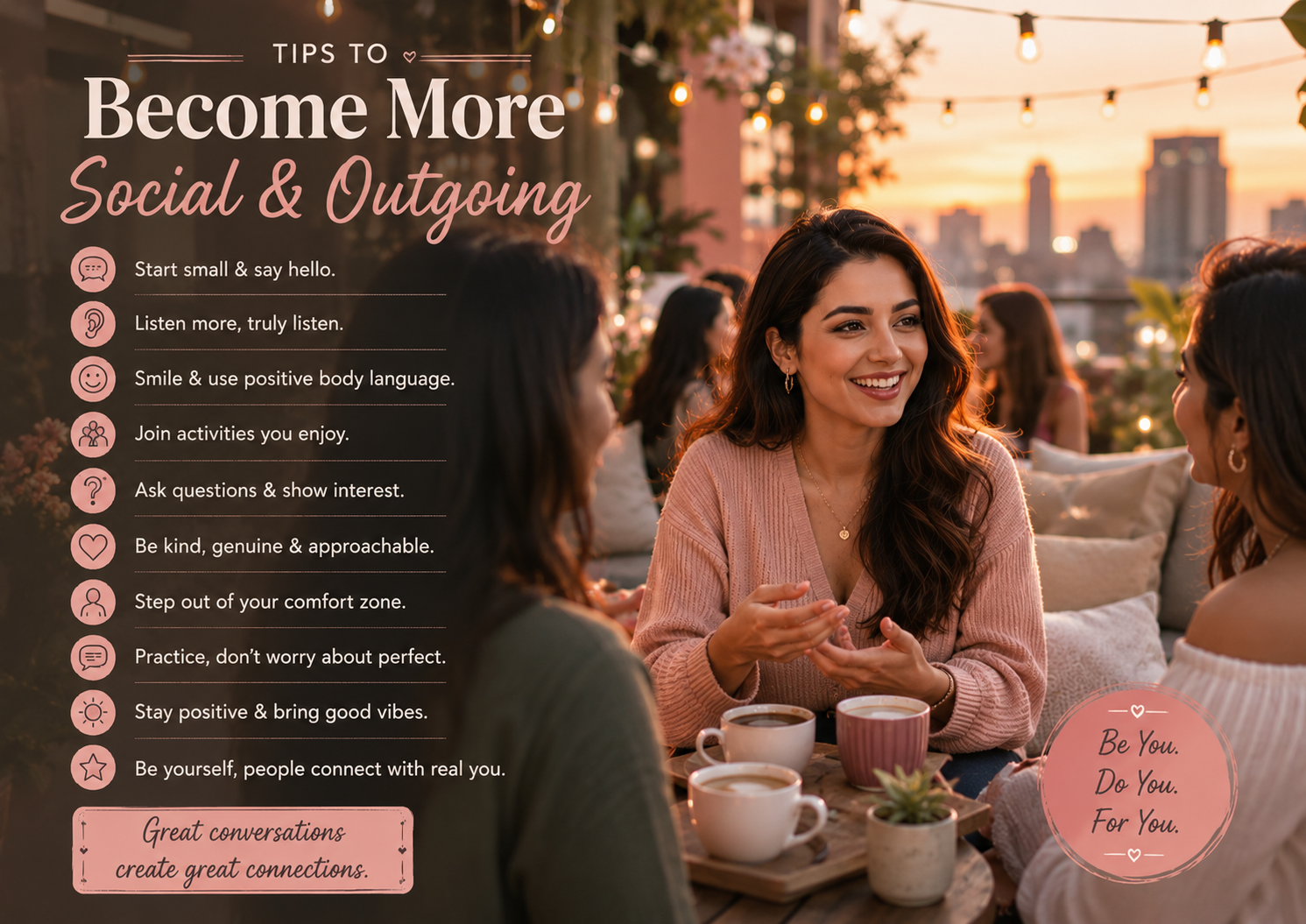








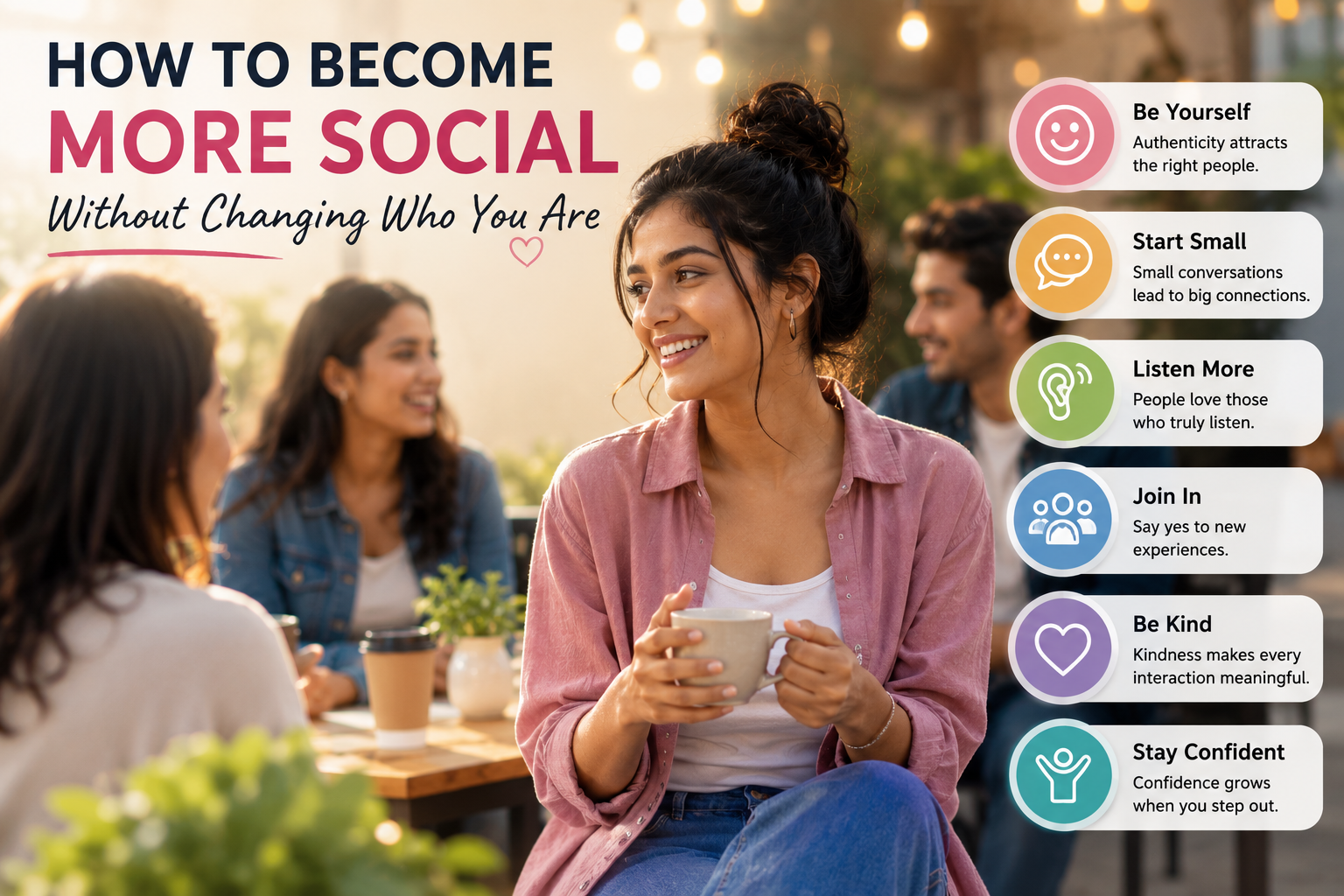
Become More Social doesn’t mean becoming the loudest person in the room or pretending to have a different personality. Many people believe they need to be naturally outgoing to make friends or enjoy social situations, but that’s simply not true. Being social is about building genuine connections, communicating with confidence, and feeling comfortable being yourself.
Whether you’re naturally quiet, introverted, or simply looking to improve your social life, you can develop stronger social skills without changing who you are. Small, consistent habits often make the biggest difference.
Accept Your Personality
The first step to becoming more social is accepting yourself.
You don’t have to become extroverted to build meaningful relationships. Some people enjoy large gatherings, while others prefer one-on-one conversations. Both are completely normal.
Instead of trying to copy someone else’s personality, focus on becoming the best version of yourself.
People are naturally drawn to authenticity.
Smile More Often
A genuine smile makes you appear friendly, approachable, and welcoming.
You don’t need to force it, but smiling when greeting people or during conversations creates a positive first impression.
Small gestures often speak louder than words.
Become a Better Listener
One of the biggest social myths is that interesting people talk the most.
In reality, people often enjoy conversations with those who genuinely listen.
Maintain eye contact.
Avoid interrupting.
Ask thoughtful follow-up questions.
Remember details people share.
Being a good listener makes others feel valued.
Start Small Conversations
You don’t have to deliver perfect conversations.
Start with simple questions like:
- How has your day been?
- What do you enjoy doing in your free time?
- How did you get interested in this?
- Have you watched anything good recently?
Small conversations often grow into meaningful friendships.
Stop Worrying About Being Perfect
Many people avoid social situations because they’re afraid of saying something embarrassing.
The truth is that everyone has awkward moments.
People usually remember how you made them feel, not every word you said.
Give yourself permission to be imperfect.
Show Genuine Interest
People appreciate those who show real curiosity about their lives.
Instead of thinking about what you’ll say next, focus on understanding the other person.
Ask questions because you’re genuinely interested, not simply to keep the conversation going.
Authentic curiosity builds stronger relationships.
Improve Your Body Language
Your body language often communicates before you speak.
Try to:
- Stand confidently.
- Keep your shoulders relaxed.
- Maintain comfortable eye contact.
- Avoid crossing your arms constantly.
- Face the person you’re talking to.
Positive body language helps others feel more comfortable around you.
Say Yes to More Opportunities
It’s easy to decline invitations because staying home feels comfortable.
However, social confidence grows through experience.
Accept invitations when you can.
Attend community events.
Join hobby groups.
Take part in workplace activities.
Every new experience helps you become more comfortable around people.
Don’t Compare Yourself to Others
Social media can make it seem like everyone else has an exciting social life.
Remember that you’re only seeing highlight moments.
Focus on building genuine relationships instead of comparing your life with someone else’s.
Meaningful friendships matter more than large friend groups.
Learn to Remember Names
People appreciate hearing their own names.
When meeting someone new, repeat their name naturally during the conversation.
It helps you remember it while making the interaction feel more personal.
Be Kind Without Expecting Anything
Kindness creates lasting impressions.
Simple actions like:
- Offering help.
- Giving genuine compliments.
- Saying thank you.
- Showing appreciation.
- Being respectful.
help build trust and positive relationships.
Don’t Try to Impress Everyone
One of the biggest social mistakes is trying too hard to gain approval.
You don’t need everyone to like you.
Focus on finding people who appreciate you for who you are.
Healthy friendships are built on mutual respect, not constant validation.
Practice Good Communication
Strong communication involves more than speaking clearly.
It also includes:
- Listening carefully.
- Respecting different opinions.
- Speaking honestly.
- Avoiding unnecessary negativity.
- Showing empathy.
These habits make conversations more enjoyable for everyone.
Build Confidence Through Small Wins
Confidence develops gradually.
Challenge yourself with small goals such as:
- Greeting one new person.
- Starting one conversation.
- Joining one group activity.
- Speaking up during a meeting.
Each positive experience builds confidence for the next one.
Internal Link: The Confidence Mistakes You Should Never Make in Public
Take Care of Yourself
Looking after your physical and mental well-being can improve your confidence in social situations.
Get enough sleep.
Stay active.
Eat nutritious meals.
Practice good personal hygiene.
Dress in clothes that make you feel comfortable.
When you feel good about yourself, socializing often becomes easier.
Internal Link: Healthy Habits That Keep Your Body Strong and Your Mind Sharp
Don’t Forget That Friendships Take Time
Meaningful friendships rarely happen overnight.
Strong relationships grow through shared experiences, trust, consistency, and mutual support.
Be patient.
The goal isn’t collecting as many friends as possible.
The goal is building genuine connections.
Simple Ways to Become More Social Every Day
You don’t need dramatic changes.
Start with these simple habits:
- Smile at people.
- Start one conversation each day.
- Listen more than you speak.
- Maintain positive body language.
- Accept social invitations.
- Join activities you enjoy.
- Be kind and respectful.
- Stay true to yourself.
- Celebrate small improvements.
- Practice consistently.
Small daily actions create lasting confidence.
Frequently Asked Questions
Can introverts become more social?
Absolutely. Becoming more social doesn’t require changing your personality. Introverts can build strong friendships by focusing on meaningful conversations and authentic connections.
How can I improve my social skills?
Practice active listening, ask open-ended questions, improve your body language, and gradually put yourself in more social situations.
Why do I feel awkward around people?
Many people feel nervous in social settings, especially when meeting new people. Confidence usually grows with experience and practice.
How long does it take to become more confident socially?
Everyone is different, but consistent practice and small daily improvements often lead to noticeable changes over time.
Do I need a large group of friends to have a good social life?
Not at all. A few supportive and meaningful friendships are often more valuable than having many casual acquaintances.
Final Thoughts
Becoming more social isn’t about pretending to be someone you’re not. It’s about learning to communicate with confidence, showing genuine interest in others, and creating opportunities to build meaningful relationships. By accepting your personality, practicing small social habits, and staying authentic, you can develop stronger connections without sacrificing who you are. Remember, the most likeable people aren’t always the loudest-they’re often the ones who make others feel comfortable, respected, and appreciated.