







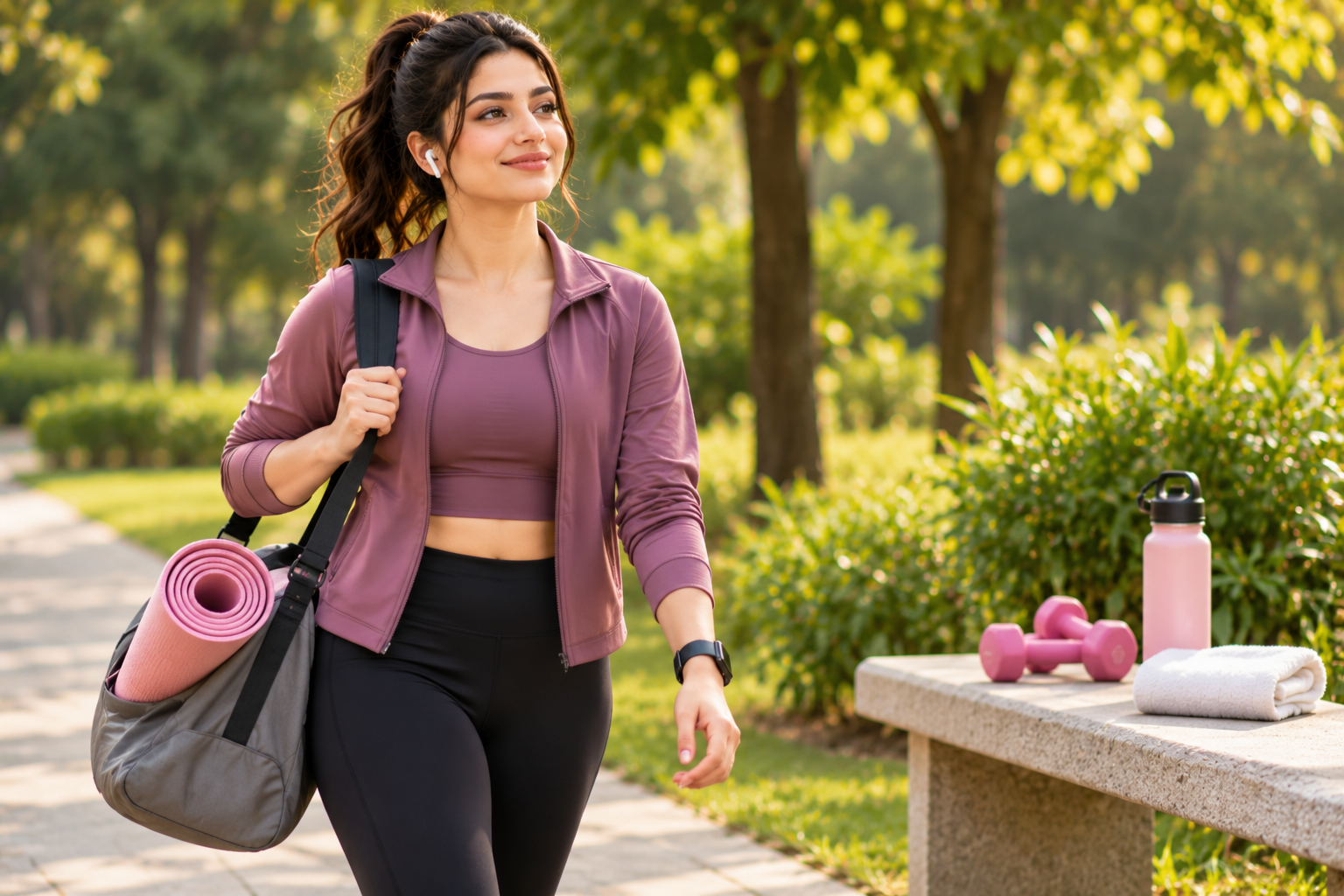
Walking and strength training are two simple but effective ways to improve your overall fitness. Walking keeps your body active, supports cardiovascular health and helps build endurance, while strength training helps develop stronger muscles, improve balance and support everyday movement.
Many women focus on either walking or strength exercises when planning their fitness routine. However, combining both can provide a more balanced approach to physical activity.
You do not need to spend hours at the gym or follow an extremely demanding workout schedule. With a little planning, you can include walking and strength exercises in your weekly routine, even if you have a busy lifestyle.
Whether you are a beginner or someone who already enjoys regular exercise, understanding how to combine these activities can help you work towards better fitness.
Let’s explore how to create a balanced walking and strength training routine.
1. Understand the Benefits of Walking and Strength Training
Before combining these activities, it helps to understand what each one contributes to your fitness.
Benefits of walking
Walking is a low-impact physical activity that most people can include in their daily routine. Regular brisk walking can:
- Support heart and cardiovascular health.
- Improve stamina and endurance.
- Help manage blood sugar levels.
- Support healthy weight management.
- Improve mood and overall well-being.
- Keep your body active without requiring special equipment.
Benefits of strength training
Strength training involves exercises that make your muscles work against resistance. You can use your body weight, resistance bands, dumbbells or gym equipment.
It can help you:
- Build and maintain muscle strength.
- Support bone health.
- Improve balance and stability.
- Make everyday activities easier.
- Maintain functional strength as you age.
- Support healthy body composition.
Together, walking and strength training offer benefits that complement each other.
2. Decide Your Fitness Goals First
Your workout routine should match your personal fitness goals.
Some women want to improve their stamina, while others want to build muscle, support weight management or simply become more active.
Understanding your goal helps you decide how much time to dedicate to each activity.
For general fitness
Combine regular walks with two or three strength training sessions each week. Focus on consistency rather than intensity.
For building strength
Give strength training more attention while continuing to walk on other days or after selected workouts. Allow enough recovery time between challenging strength sessions.
For improving endurance
Include regular brisk walks and gradually increase your walking duration or pace. Continue strength exercises to support your muscles and movement.
For healthy weight management
Combine walking, strength training and balanced eating habits. Remember that weight management depends on several factors, including nutrition, sleep, activity levels and individual health.
Your routine does not need to look like someone else’s. Choose a schedule that fits your fitness level and daily responsibilities.
3. Start With Walking at a Comfortable Pace
If you are new to exercise, walking is a good place to begin.
Start with a comfortable pace that allows you to talk without becoming extremely breathless. As your stamina improves, gradually increase your walking time or speed.
You can begin with 10 to 15 minutes of walking and slowly work towards longer sessions.
Try these simple walking variations:
Easy walking: A relaxed walk that helps you stay active and gradually build consistency.
Brisk walking: Walk at a faster pace while still being able to talk. This can help improve cardiovascular fitness.
Interval walking: Alternate between a few minutes of comfortable walking and a few minutes of faster walking. Begin with short intervals and adjust according to your fitness level.
Incline walking: Walking on a gentle slope or treadmill incline can make your muscles work harder. Start with a low incline if you are comfortable with it.
You do not need to walk fast every day. A comfortable, consistent routine is more useful than pushing yourself too hard and giving up because of exhaustion.
4. Include Full Body Strength Training Exercises
Strength training does not always require a gym membership. Many effective exercises can be performed at home using your body weight.
Try including these beginner-friendly movements in your routine.
Squats
<placeholder> Squats work the muscles in your thighs, hips and glutes.
How to perform:
- Stand with your feet approximately shoulder-width apart.
- Keep your chest comfortable and your back in a natural position.
- Bend your knees and push your hips backwards as if sitting on a chair.
- Lower yourself only as far as you can comfortably manage.
- Push through your feet to return to standing.
Start with 8 to 10 repetitions.
Glute Bridges
Glute bridges strengthen your glutes and work muscles around your hips.
How to perform:
- Lie on your back with your knees bent.
- Keep your feet flat on the floor.
- Tighten your abdominal muscles gently.
- Lift your hips while squeezing your glutes.
- Lower your hips slowly.
Start with 10 to 12 repetitions.
Wall Push-Ups
Wall push-ups are a beginner-friendly way to strengthen your chest, shoulders and arms.
How to perform:
- Stand facing a wall.
- Place your palms against the wall at shoulder height.
- Bend your elbows and move your chest towards the wall.
- Push gently back to the starting position.
Start with 8 to 12 repetitions.
Bird Dogs
Bird dogs help develop core stability, coordination and balance.
How to perform:
- Get onto your hands and knees.
- Keep your back in a neutral position.
- Extend your right arm and left leg.
- Hold briefly without twisting your body.
- Return to the starting position and switch sides.
Start with 6 to 8 repetitions on each side.
Standing Calf Raises
Calf raises strengthen the muscles in your lower legs.
How to perform:
- Stand with your feet hip-width apart.
- Hold a chair or wall for balance if needed.
- Slowly raise your heels off the floor.
- Pause briefly at the top.
- Lower your heels with control.
Start with 10 to 15 repetitions.
Choose exercises that suit your ability. Good technique is more important than completing a large number of repetitions.
5. Follow a Balanced Weekly Workout Schedule
One of the easiest ways to combine walking and strength training is to plan your activities across the week.
Here is a simple beginner-friendly example.
| Day | Workout |
|---|---|
| Monday | 20-minute walk + full body strength training |
| Tuesday | 25-minute comfortable walk |
| Wednesday | 20-minute walk + full body strength training |
| Thursday | Gentle walk or mobility exercises |
| Friday | 20-minute walk + full body strength training |
| Saturday | 30-minute relaxed or brisk walk |
| Sunday | Rest or gentle movement |
This is an example rather than a strict requirement. Adjust the duration, intensity and number of sessions according to your current fitness level.
If you are just starting, you can begin with two strength sessions and shorter walks. Increase gradually as your body becomes more comfortable with the routine.
6. Should You Walk Before or After Strength Training?
There is no single correct order for everyone. It depends on your goals and how your body responds to exercise.
Walking before strength training
A short, easy walk can work as a warm-up. It increases movement gradually and prepares your body for the workout.
Try 5 to 10 minutes of comfortable walking before beginning your strength exercises.
Walking after strength training
If building strength is your main goal, you may prefer to complete your strength exercises first and take a walk afterwards.
Keep the walk comfortable, especially if you have completed a challenging workout.
Walking and strength training separately
You can also perform these activities at different times of the day. For example, take a morning walk and complete your strength workout in the evening.
Choose the arrangement that allows you to exercise comfortably and consistently.
7. Do Not Forget Warm-Ups and Cool-Downs
Starting exercise suddenly without preparing your body may make movement feel uncomfortable.
Before strength training, spend a few minutes warming up.
You can try:
- Walking slowly.
- Gentle shoulder circles.
- Arm swings.
- Marching in place.
- Gentle hip movements.
After your workout, slow down gradually and allow your breathing to return towards normal.
You can also perform comfortable stretches for your legs, hips, shoulders and back.
Avoid forcing a stretch or bouncing during the movement. If something causes pain, stop.
8. Give Your Muscles Enough Time to Recover
Exercise is only one part of building better fitness. Recovery is equally important.
Strength training places demands on your muscles, and they need time to recover between challenging sessions.
A few simple habits can support recovery:
- Avoid training the same muscle groups intensely on consecutive days when you are a beginner.
- Get enough sleep.
- Drink water regularly.
- Eat balanced meals with sufficient protein.
- Include easier walking days.
- Take rest days when your body needs them.
Feeling extremely tired after every workout is not a sign that your routine is working better.
If you experience persistent pain, unusual weakness or excessive fatigue, reduce your exercise intensity and seek appropriate medical advice.
9. Support Your Workouts With Balanced Nutrition
Walking and strength training work best as part of an overall healthy lifestyle.
Your body needs adequate energy and nutrients to support physical activity and recovery.
Include a variety of foods in your meals.
Protein: Foods such as lentils, beans, eggs, yoghurt, paneer, fish and chicken can help provide protein needed for muscle repair and maintenance.
Carbohydrates: Whole grains, oats, rice, fruits and potatoes provide energy for daily activities and exercise.
Healthy fats: Nuts, seeds, olive oil and other sources of unsaturated fats contribute to a balanced diet.
Fruits and vegetables: These provide fibre, vitamins and minerals that support overall health.
Also, drink enough water throughout the day, particularly when exercising in hot weather.
You do not need an expensive supplement or complicated diet plan to start building healthier fitness habits.
10. Track Your Progress Without Obsessing Over Numbers
Tracking your progress can help you understand how your fitness is improving.
However, progress is not limited to changes in body weight or appearance.
Notice other improvements, such as:
- Walking for longer without feeling exhausted.
- Completing more repetitions with good technique.
- Feeling stronger while performing everyday tasks.
- Improving your balance.
- Recovering more comfortably after exercise.
- Becoming more consistent with your routine.
You can use a notebook or fitness app to record your walks and strength sessions.
Avoid comparing your progress with someone else’s. Your fitness journey should be based on your own abilities and goals.
11. Common Mistakes to Avoid
Combining walking and strength training can be simple, but a few common mistakes may make your routine harder to maintain.
Doing too much too soon
Starting with long walks and intense strength sessions can leave you exhausted. Increase your activity gradually.
Skipping strength training
Walking offers many health benefits, but it does not replace all the benefits of resistance exercises. Include both types of activity where possible.
Ignoring recovery
Exercising intensely every day without enough rest can increase fatigue and make consistency difficult.
Following an unrealistic routine
A schedule that requires too much time may not fit your lifestyle. Start with manageable sessions.
Focusing only on weight loss
Fitness is also about strength, stamina, mobility, balance and overall health. Do not judge your progress only by the number on a weighing scale.
12. How Much Walking and Strength Training Do Women Need?
For general adult health, the World Health Organization recommends 150 to 300 minutes of moderate-intensity aerobic physical activity per week, or an equivalent amount of vigorous activity. Adults should also perform muscle-strengthening activities involving major muscle groups on at least two days per week.
Brisk walking can count towards moderate-intensity activity when it makes your breathing and heart rate increase while still allowing you to talk.
These are general adult recommendations, not a requirement to achieve immediately. If you are currently inactive, begin with shorter sessions and build up gradually.
Your needs may differ depending on your age, fitness level, pregnancy or postpartum stage, medical conditions and physical limitations. Speak with a healthcare professional if you are unsure which activities are appropriate for you.
Final Thoughts
Combining walking and strength training is a practical way to create a balanced fitness routine.
Walking helps improve endurance and keeps your body moving, while strength training develops stronger muscles and supports everyday activities.
You do not need expensive equipment, complicated workout plans or hours of exercise to get started. Begin with short walks, choose a few simple strength exercises and gradually increase your activity.
Most importantly, make your routine enjoyable and realistic.
The best fitness routine is not the one that exhausts you. It is the one you can follow consistently while taking care of your body.
Frequently Asked Questions
1. Can I combine walking and strength training on the same day?
Yes. You can walk before or after strength training, or perform the two activities at different times of the day. Choose an arrangement that suits your fitness goals and energy levels.
2. Is walking enough for women’s fitness?
Walking is an excellent form of physical activity and supports cardiovascular health. However, adding strength training provides additional benefits for muscles, bones, balance and everyday movement.
3. How many days a week should women do strength training?
For general health, adults should perform muscle-strengthening activities involving major muscle groups at least two days per week. Beginners can start with two manageable sessions and gradually adjust their routine.
4. Should I walk before or after strength training?
A short walk before strength training can help warm up your body. If building strength is your main priority, you may prefer to complete strength exercises first and walk afterwards.
5. Can walking and strength training help with weight management?
Yes. Both activities contribute to energy expenditure and overall fitness. Combining regular exercise with balanced nutrition and healthy lifestyle habits can support long-term weight management.
6. Can beginners combine walking and strength training?
Yes. Beginners can start with short walks and simple bodyweight exercises. Increase the duration and difficulty gradually, allowing enough time for recovery.
7. Do I need gym equipment for strength training?
No. You can begin with bodyweight exercises such as squats, wall push-ups, glute bridges and bird dogs. Resistance bands and dumbbells can be added as your strength improves.