








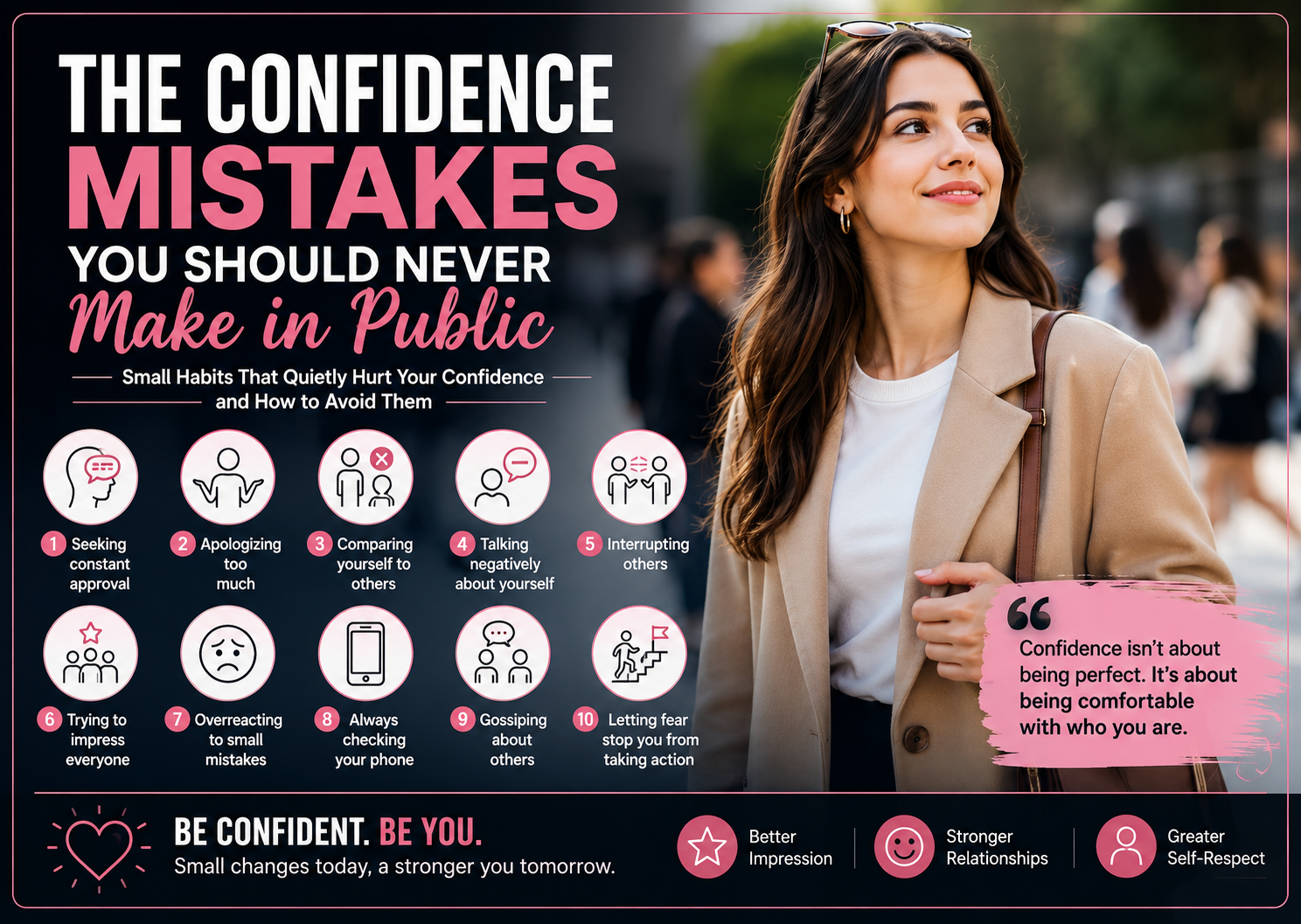
The Confidence Mistakes You Should Never Make in Public because true confidence isn’t about being the loudest person in the room-it’s about being comfortable with who you are. The way you behave in everyday situations often leaves a stronger impression than your appearance or achievements.
Many people believe confidence is something you’re born with, but it’s actually built through small daily habits. If you want to appear more self-assured and earn respect naturally, avoiding these common behaviors is a great place to start.
1. They Don’t Constantly Seek Approval
Confident people trust their own decisions.
They don’t ask everyone whether their clothes, opinions, or choices are good enough before taking action.
While they value advice, they don’t depend on others to validate every decision.
Try This
Before asking for someone’s opinion, ask yourself whether you already know the answer.
2. They Don’t Apologize for Everything
Saying “sorry” when you’ve genuinely made a mistake shows maturity.
But constantly apologizing for speaking, asking questions, or expressing your thoughts can make you appear unsure of yourself.
Replace unnecessary apologies with gratitude.
Instead of saying:
“Sorry for keeping you waiting.”
Try:
“Thank you for waiting.”
3. They Don’t Compare Themselves to Everyone Around Them
Comparison steals confidence.
Confident people understand that everyone has a different journey.
Instead of competing with others, they focus on becoming a better version of themselves.
4. They Don’t Speak Negatively About Themselves
Statements like:
- “I’m so stupid.”
- “I always mess everything up.”
- “I’m not good enough.”
gradually shape how you see yourself-and how others see you.
Confident people avoid putting themselves down, even as a joke.
5. They Don’t Interrupt Others
Listening is a sign of confidence, not weakness.
People who constantly interrupt often feel the need to prove themselves.
Confident individuals let others finish speaking before sharing their thoughts.
6. They Don’t Try to Impress Everyone
Not everyone has to like you.
Confident people understand this.
They stay authentic instead of pretending to fit in with every group.
Ironically, authenticity often makes people more attractive.
7. They Don’t Panic Over Small Mistakes
Everyone spills coffee.
Everyone forgets words.
Everyone feels awkward sometimes.
Confident people don’t let small embarrassing moments define them.
They smile, laugh it off, and move on.
8. They Don’t Constantly Check Their Phone
When talking with someone, confident people give their full attention.
Constantly checking notifications can make you seem distracted or uninterested.
Being present shows confidence and respect.
9. They Don’t Gossip About Others
People who feel secure rarely need to tear others down.
Instead of criticizing people behind their backs, confident individuals focus on meaningful conversations.
10. They Don’t Let Fear Stop Them
Confidence doesn’t mean never feeling nervous.
It means acting despite being nervous.
Whether introducing yourself, asking a question, or trying something new, confident people choose action over fear.
11. They Don’t Ignore Their Body Language
Your body language speaks before you do.
Confident people usually:
- Stand tall.
- Make natural eye contact.
- Smile genuinely.
- Walk with purpose.
- Keep their shoulders relaxed.
Small posture changes can dramatically change how others perceive you.
12. They Don’t Pretend to Know Everything
Confident people aren’t afraid to say:
- “I don’t know.”
- “Can you explain that?”
- “I’d like to learn more.”
They understand that asking questions is a sign of growth, not weakness.
Simple Habits That Build Real Confidence
Building confidence doesn’t require changing your personality.
Start with these daily habits:
- Smile more naturally.
- Practice good posture.
- Speak slowly and clearly.
- Make eye contact during conversations.
- Celebrate small achievements.
- Focus on progress rather than perfection.
- Keep promises you make to yourself.
- Treat yourself with kindness.
You can also read: Proven Ways to Build Confidence and Make Friends
Common Myths About Confidence
Myth 1: Confident people never feel nervous.
False. They simply don’t let fear control their actions.
Myth 2: Confidence means being loud.
Not at all. Many confident people are calm, thoughtful, and soft-spoken.
Myth 3: You must be perfect to feel confident.
Confidence grows from accepting your imperfections while continuing to improve.
Frequently Asked Questions
Can confidence be learned?
Yes. Confidence develops through practice, positive habits, and experience.
Is confidence the same as arrogance?
No. Confidence comes from self-belief, while arrogance often involves believing you’re better than others.
How long does it take to become more confident?
There’s no fixed timeline. Small, consistent changes can make a noticeable difference over time.
What’s the fastest way to appear more confident?
Improving your posture, maintaining eye contact, speaking clearly, and avoiding negative self-talk can quickly change how others perceive you.
Final Thoughts
Confidence isn’t about pretending to be perfect or seeking attention. It’s reflected in how you treat yourself, communicate with others, and respond to challenges. By avoiding these habits and replacing them with healthier ones, you can develop genuine self-confidence that feels natural and leaves a lasting positive impression.