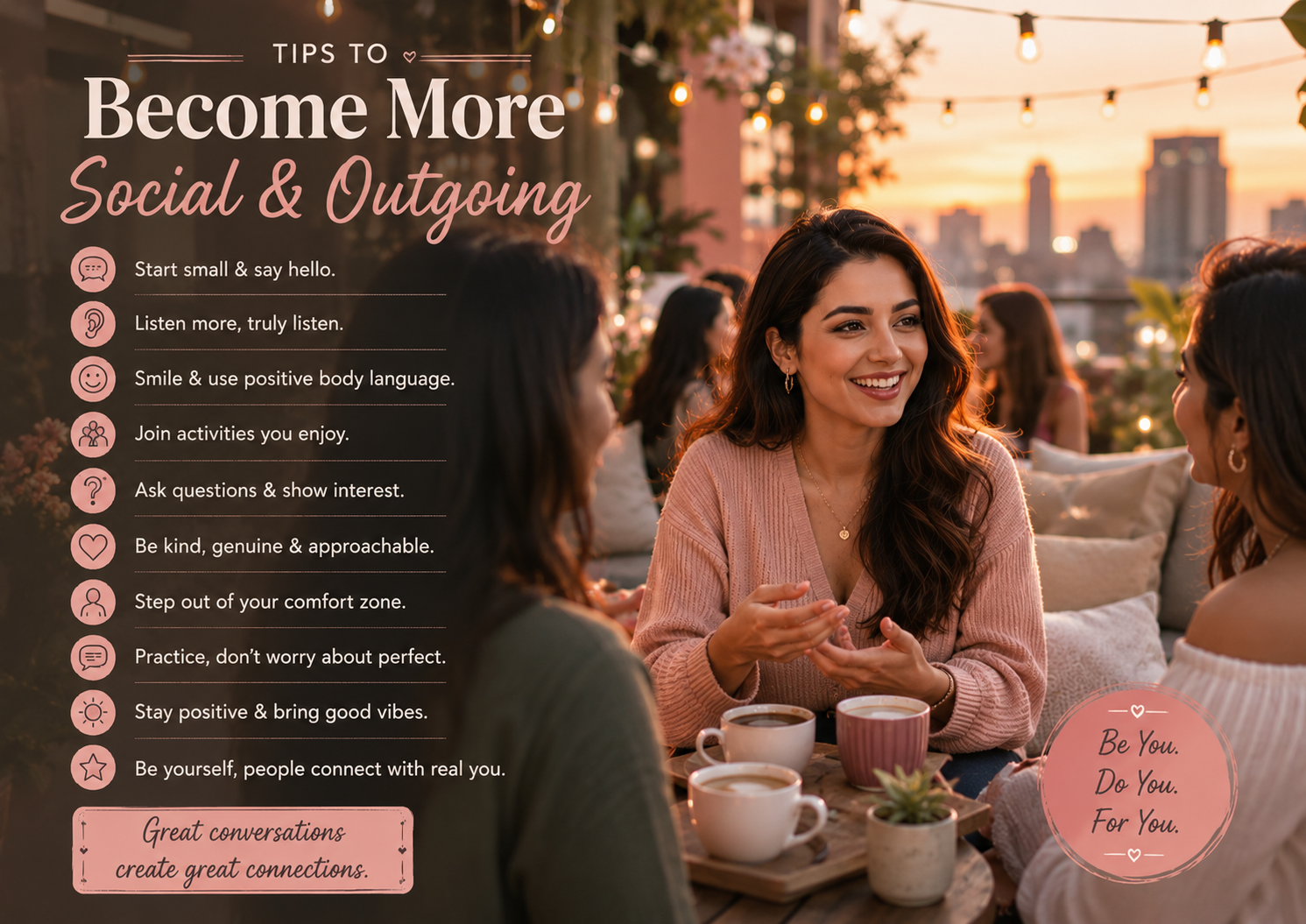








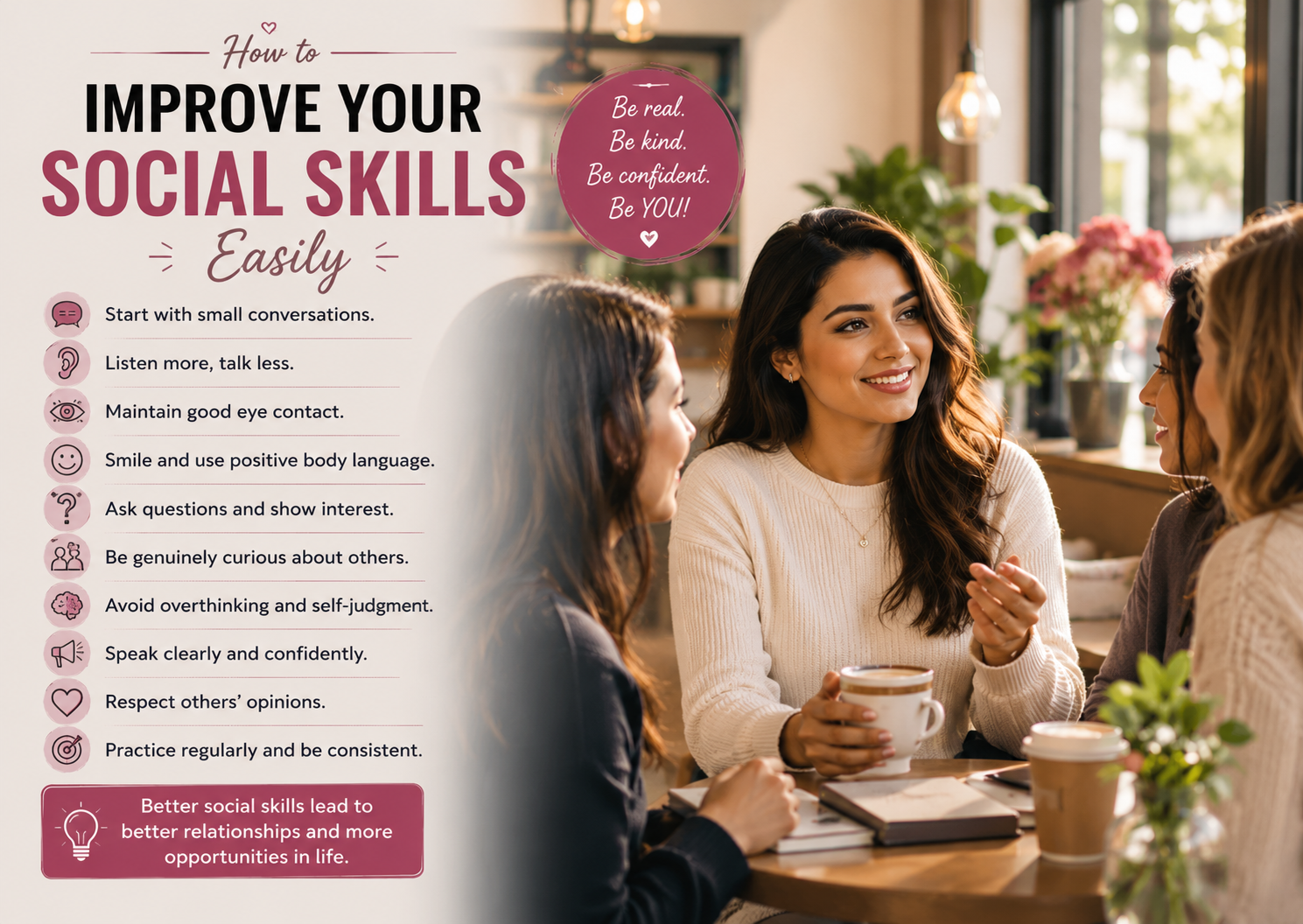
Good social skills are not about becoming loud, fake, or constantly talking. Real social confidence comes from feeling comfortable around people, communicating clearly, listening well, and building genuine connections naturally.
Many people struggle socially because of shyness, overthinking, fear of judgment, or lack of confidence. The good news is that social skills can absolutely improve through small daily habits and practice.
Start With Small Conversations
You do not need to become extremely outgoing overnight. Start with simple interactions like:
- Greeting people
- Asking small questions
- Smiling naturally
- Making short conversations
Small daily practice helps social confidence grow gradually.
Improve Your Social Skills in Listening
One of the biggest social mistakes is focusing only on what to say next. People usually enjoy conversations more when they feel heard and understood. Good listening habits include:
- Maintaining eye contact
- Paying attention
- Avoiding interruptions
- Showing genuine interest
Strong listeners often appear more confident and likable naturally.
Practice Better Eye Contact
Healthy eye contact can help you appear:
- More confident
- More engaged
- More trustworthy
- More socially comfortable
You do not need to stare intensely — just maintain natural comfortable eye contact during conversations.
Stop Overthinking Every Interaction
Many people replay conversations in their head and worry:
- “Did I sound weird?”
- “Do they like me?”
- “What if I embarrassed myself?”
Overthinking increases social anxiety and self-doubt. Most people are far less focused on your mistakes than you imagine.
Improve Your Body Language
Body language strongly affects social confidence. Helpful habits include:
- Standing straighter
- Smiling naturally
- Keeping relaxed posture
- Avoiding closed body language
Confident body language can make social interactions feel easier.
Ask More Questions
People usually enjoy conversations when others show genuine curiosity. Simple questions can help conversations flow naturally:
- “How was your day?”
- “What do you enjoy doing?”
- “How did you get interested in that?”
Good conversations are built through interest, not perfection.
Practice Speaking Clearly and Calmly
You do not need to speak extremely fast or constantly impress people. Try focusing on:
- Speaking slower
- Staying calm
- Expressing thoughts clearly
- Avoiding apologizing excessively
Calm communication often appears more confident.
Spend Less Time Comparing Yourself Socially
Many people feel insecure because they compare themselves to:
- More outgoing people
- Social media personalities
- Highly confident individuals
Remember that social confidence develops differently for everyone. You do not need to copy someone else’s personality to become socially skilled.
Improve Your Confidence Gradually
Social skills and confidence are strongly connected. Helpful confidence habits include:
- Self-care
- Better posture
- Healthy routines
- Positive self-talk
- Facing small fears
The more comfortable you feel with yourself, the easier social interactions often become.
Accept That Awkward Moments Are Normal
Everyone experiences:
- Awkward conversations
- Nervousness
- Embarrassing moments
- Social mistakes
Confident people are not perfect socially — they simply stop treating every awkward moment like a disaster. Social growth requires practice and patience.
Spend Time Around Positive People
Supportive environments help social confidence grow faster. Healthy people often make conversations feel:
- Safer
- More comfortable
- Less judgmental
Positive social experiences help reduce fear and anxiety over time.
Practice Consistently
Social skills improve through repetition. Even small habits help:
- Joining conversations
- Talking to new people
- Practicing communication
- Spending less time isolating yourself
Confidence grows through experience.
Final Thoughts on Social Skills
Improving your social skills does not mean changing your personality completely. It simply means becoming more comfortable communicating, expressing yourself, listening to others, and building genuine connections with confidence and emotional balance.
At the end of the day, the best social skills come from authenticity, kindness, confidence, emotional intelligence, and learning to relax instead of constantly judging yourself.