







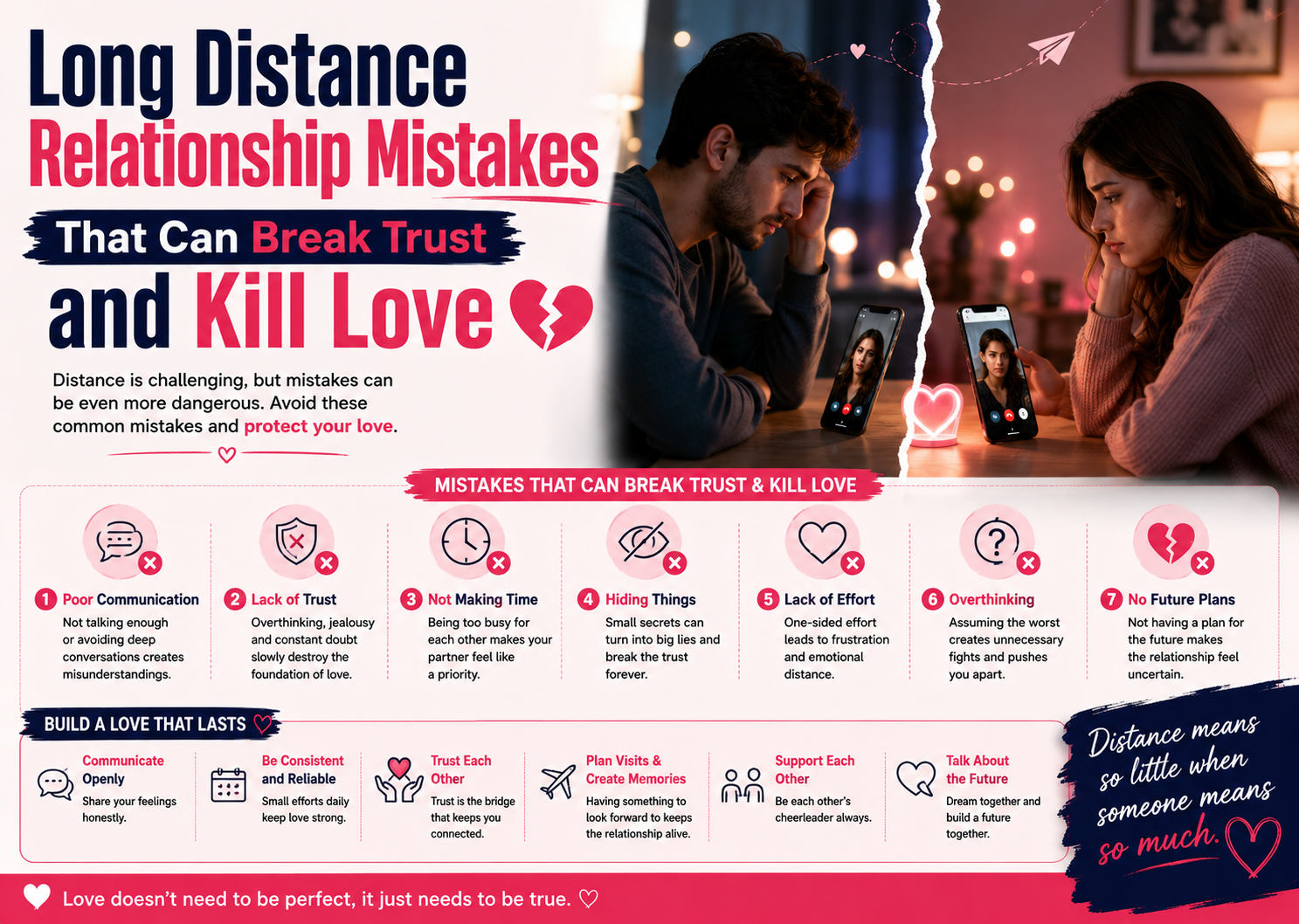
Long Distance Relationship can be incredibly meaningful, but they also require a different kind of effort. When two people cannot meet whenever they want, small communication problems, unspoken expectations, and emotional distance can gradually become much bigger than they seem.
Most long distance relationships do not struggle simply because of the miles between two people. Often, it is the little things that go unnoticed. A missed call becomes normal. Conversations become shorter. Appreciation disappears. One person stops sharing the small details of their day, and slowly, the relationship begins to feel different.
The difficult part is that these changes can happen quietly. Recognizing them early can help couples protect their connection before emotional distance becomes harder to repair.
1. Expecting Constant Communication
When you miss someone, it is natural to want to talk to them as much as possible. But expecting your partner to text or call throughout the entire day can eventually create pressure.
Work, studies, family responsibilities, different schedules, and time zones can make constant communication unrealistic.
A healthy relationship is not measured by how many messages you exchange.
Instead of expecting continuous contact, focus on meaningful communication. A thoughtful 20 minute conversation can sometimes make you feel more connected than hundreds of rushed messages.
2. Turning Every Missed Call Into a Problem
Your partner doesn’t answer.
You immediately start wondering:
Why didn’t they pick up?
Are they ignoring me?
Who are they with?
Is something changing?
One missed call should not automatically become evidence that something is wrong.
If this happens repeatedly without explanation, discussing it is reasonable. But constantly assuming the worst can create unnecessary tension.
Trust means giving your partner room to have a life outside the relationship.
3. Stopping the Small Updates
At the beginning of a long distance relationship, couples often share everything.
What they ate.
Something funny that happened at work.
A random picture from their day.
A song they discovered.
Then slowly, those little updates disappear.
They may seem insignificant, but they help your partner feel included in your everyday life.
You don’t need to report everything you do. Simply sharing occasional ordinary moments can make the distance feel smaller.
4. Making Every Conversation Serious
Long distance couples often have limited time together, which can create pressure to discuss important relationship matters whenever they call.
But if every conversation becomes about problems, plans, commitment, or the future, talking to each other can start feeling emotionally exhausting.
Relationships also need fun.
Send memes.
Tell ridiculous stories.
Watch something together.
Flirt.
Laugh about things that make absolutely no sense to anyone else.
Your partner should not only be someone you solve relationship problems with. They should still feel like someone you genuinely enjoy spending time with.
5. Keeping Your Feelings to Yourself
One of the most damaging habits in a long distance relationship is saying:
“I’m fine.”
When you clearly aren’t.
Maybe something your partner did hurt you. Perhaps you’re feeling lonely, insecure, or disconnected.
Keeping those emotions inside doesn’t make them disappear.
They often turn into resentment.
You don’t need to turn every feeling into an argument. Instead, explain how you feel calmly and give your partner an opportunity to understand you.
6. Testing Your Partner’s Love
Some people unknowingly create little relationship tests.
They stop texting first to see whether their partner notices.
They deliberately reply late.
They become cold and wait for their partner to ask what’s wrong.
They mention someone else to create jealousy.
These tests rarely create reassurance. They create confusion.
If you need more attention, affection, or reassurance, asking directly is healthier than expecting your partner to pass a test they didn’t know they were taking.
7. Comparing Your Relationship With Other Couples
Social media can make long distance relationships feel especially difficult.
You see couples going on dates, traveling together, celebrating anniversaries, and spending ordinary evenings together.
Meanwhile, your date night happens through a screen.
Comparison can make you overlook everything that is working in your own relationship.
Remember that social media shows moments, not entire relationships.
Focus on building a connection that works for the two of you instead of trying to recreate someone else’s relationship.
8. Letting Jealousy Control the Relationship
A little jealousy can happen in any relationship. Distance, however, can amplify it because you cannot always see what your partner is doing.
Problems begin when jealousy becomes surveillance.
Constantly asking where your partner is, who they’re with, why someone liked their picture, or why they were online without replying can make the relationship feel restrictive.
Trust doesn’t mean ignoring suspicious behavior. It means avoiding accusations when you don’t have a genuine reason to distrust someone.
9. Forgetting to Show Appreciation
When you’ve been together for a long time, effort can start feeling expected.
That is dangerous.
Don’t stop saying:
“Thank you for making time for me.”
“I appreciate you.”
“I’m proud of you.”
“I loved talking to you today.”
Being appreciated makes people feel emotionally valued.
Distance makes these small expressions even more important because physical affection cannot always fill the gap.
10. Avoiding Difficult Conversations
Not every disagreement needs to become a fight, but avoiding every uncomfortable topic can be equally damaging.
Maybe you disagree about communication.
Maybe one person wants more commitment.
Perhaps you’re uncertain about where the relationship is heading.
Ignoring these issues might keep things peaceful temporarily, but unresolved problems usually return.
Healthy couples learn how to disagree without disrespecting each other.
The goal should not be to win an argument. It should be to understand what is happening and find a solution together.
11. Making Assumptions Instead of Asking
Text messages do not come with facial expressions or tone of voice.
A simple reply like “okay” can suddenly feel cold.
You may start thinking your partner is upset when they were simply busy.
Instead of creating an entire story in your head, ask.
“You seem a little quiet today. Is everything okay?”
One simple question can prevent hours of unnecessary overthinking.
12. Forgetting to Create Experiences Together
Long distance relationships can easily become repetitive.
Good morning.
How was work?
What did you eat?
Good night.
Repeat.
Communication is important, but relationships also need experiences.
Try having virtual dates, watching the same movie, playing an online game, cooking the same meal, creating playlists for each other, or planning something special for your next meeting.
You are not just maintaining communication.
You are still building memories together.
13. Losing Your Individual Life
Missing your partner does not mean your entire life should revolve around waiting for their messages.
Keep your hobbies.
Meet your friends.
Work toward your goals.
Spend time with family.
Learn something new.
A healthy relationship should become part of a fulfilling life, not replace it.
Maintaining your independence also gives both of you more experiences to share when you talk.
14. Ignoring Changes in Communication
Relationships naturally change.
You may not communicate exactly the same way after two years as you did during the first three months.
That isn’t automatically a problem.
But sudden and consistent changes deserve attention.
If your partner becomes noticeably distant, stops making time for conversations, avoids emotional discussions, or seems uninterested in maintaining the connection, don’t simply pretend everything is normal.
Ask what has changed.
A calm conversation is better than weeks of silent overthinking.
15. Having No Plan for the Distance
This is one of the biggest challenges in a serious long distance relationship.
Distance becomes much harder when neither person knows whether it will ever end.
You don’t need your entire future planned immediately. But as the relationship becomes serious, conversations about eventually living in the same place become important.
Discuss things such as careers, locations, finances, family responsibilities, and realistic timelines.
Having something to work toward can make the distance feel temporary rather than endless.
How to Make a Long Distance Relationship Stronger
Successful long distance relationships are not built by texting every minute. They are built through consistency, trust, honesty, and mutual effort.
Create communication habits that suit both of your schedules. Tell each other when something is bothering you instead of expecting the other person to guess. Continue showing affection and appreciation even after the relationship feels comfortable.
Most importantly, make sure effort comes from both sides.
One person cannot maintain an entire relationship alone.
Signs Your Long Distance Relationship Is Healthy
A healthy relationship does not mean you never argue or feel lonely. Difficult days are normal.
What matters is how you handle them.
Your relationship is likely moving in a healthy direction when you trust each other without needing constant proof, communicate openly about difficult feelings, respect each other’s personal lives, make time for each other consistently, feel comfortable being honest, and can talk realistically about your future.
You should generally feel secure in the relationship, not permanently anxious about where you stand.
Frequently Asked Questions
What destroys long distance relationships the most?
There is rarely one single cause. Lack of trust, inconsistent communication, unresolved conflicts, different expectations, and having no realistic future plan can gradually weaken the relationship.
Is it normal to talk less in a long distance relationship?
Yes. Communication frequency can change because of work, studies, family responsibilities, or different schedules. The quality and consistency of communication often matter more than talking continuously.
How do you keep the spark alive in a long distance relationship?
Continue flirting, plan virtual dates, surprise each other occasionally, share everyday moments, create experiences together, and make plans for future visits.
Can a long distance relationship really last?
Yes, it can. Distance itself does not determine whether a relationship succeeds. Trust, compatibility, communication, commitment, realistic expectations, and mutual effort all play important roles.
How do you know when emotional distance is becoming a problem?
Pay attention to persistent changes such as avoiding conversations, showing little interest in each other’s lives, repeatedly cancelling plans, refusing to discuss problems, or one person carrying most of the relationship effort.
Final Thoughts
The biggest threats to long distance relationships are not always dramatic betrayals or huge arguments. Sometimes they are the quiet habits that gradually make two people feel less connected.
Stop sharing the little things, avoid difficult conversations, take your partner for granted, let jealousy replace trust, and the miles between you can begin to feel much greater.
But distance doesn’t automatically weaken love either.
When both people communicate honestly, maintain their individual lives, appreciate each other’s effort, create meaningful experiences, and work toward a shared future, a long distance relationship can remain deeply connected despite the physical space between them.