








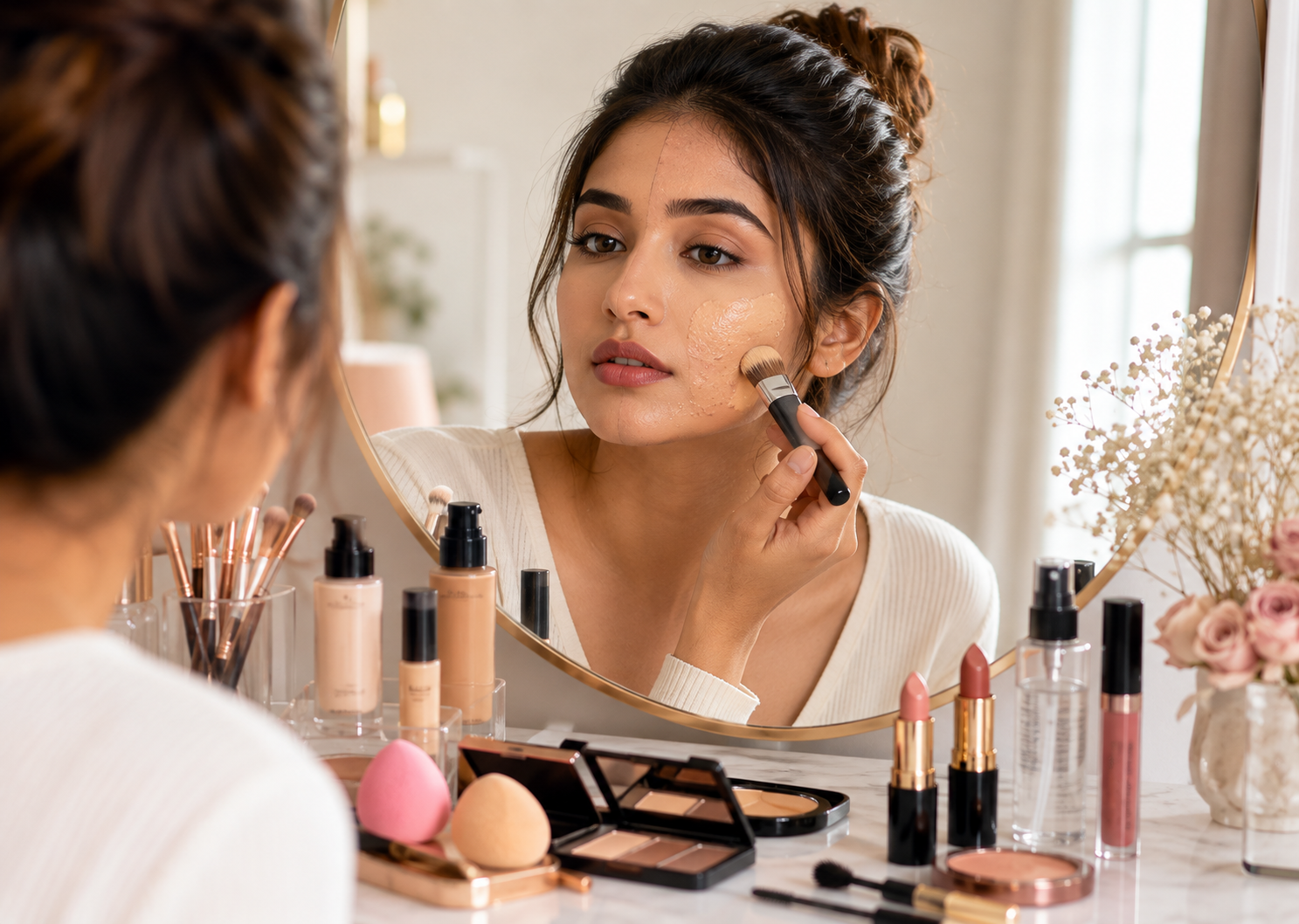
Makeup Mistakes are one of the biggest reasons your makeup never looks as flawless as you imagine. Even if you use high-quality beauty products, small application errors can leave your foundation looking patchy, your concealer creasing, or your makeup fading long before the day ends.
The good news is that achieving flawless makeup isn’t about spending more money-it’s about following the right techniques. In this guide, you’ll discover the most common makeup mistakes, learn why they happen, and find simple, practical tips to help you create a smooth, natural, and long-lasting makeup look every time.
Skipping Skincare Before Makeup
Beautiful makeup starts with healthy skin.
Applying foundation directly onto dry, oily, or unprepared skin often leads to uneven coverage.
Before reaching for your makeup products, always prepare your skin.
A simple routine should include:
- Cleansing
- Moisturizing
- Sunscreen during the day
- Primer if needed
Hydrated skin creates a smoother surface, allowing makeup to blend more naturally.
Using the Wrong Foundation for Your Skin Type
Not every foundation works for every skin type.
A matte foundation may emphasize dry patches, while a dewy formula can appear greasy on oily skin.
Understanding your skin type is the first step toward achieving flawless makeup.
Choose products designed specifically for your skin’s needs instead of following trends.
Choosing the Wrong Foundation Shade
One of the easiest ways to ruin your makeup is by wearing the wrong shade.
A foundation that’s too light can make your face appear dull, while one that’s too dark may create an obvious contrast with your neck.
Always test foundation in natural light and blend it along your jawline to find the closest match.
Applying Too Much Product
More makeup doesn’t always mean better makeup.
Layering thick foundation, heavy concealer, and excessive powder can leave your skin looking cakey instead of flawless.
Start with a light layer and build coverage only where it’s needed.
Your natural skin should still look like skin.
Forgetting to Blend Properly
Blending is what separates average makeup from professional-looking makeup.
Harsh lines around the jawline, hairline, nose, or eyeshadow instantly make makeup appear unfinished.
Take your time blending with a makeup sponge or brush until every product melts seamlessly into your skin.
Ignoring Primer
Many people skip primer because they think it’s unnecessary.
However, the right primer can help smooth pores, reduce excess oil, and create a more even base for foundation.
If your makeup fades quickly or settles into fine lines, a suitable primer may make a noticeable difference.
Using Too Much Powder
Setting powder helps control shine, but too much can make your face look dry and heavy.
Instead of applying powder everywhere, focus on areas that become oily, such as the T-zone.
A light application usually creates a more natural finish.
Applying Concealer Incorrectly
Concealer should brighten and correct, not overpower your makeup.
Using a shade that’s far lighter than your skin tone can create an unnatural appearance, especially under the eyes.
Apply small amounts and blend gently for a fresh, natural look.
Neglecting Your Makeup Tools
Dirty brushes and beauty sponges don’t just affect hygiene—they also affect how your makeup applies.
Old product buildup can make blending difficult and may even contribute to skin irritation.
Wash your brushes regularly and replace worn-out sponges when needed.
Forgetting About Your Neck
A perfectly blended face with a completely different-colored neck is one of the most noticeable makeup mistakes.
Always blend foundation slightly onto your neck and around your jawline for a seamless finish.
Overdoing Contour and Highlighter
Contouring and highlighting should enhance your features, not dominate your face.
Heavy contour lines and excessive shimmer can look harsh, especially in daylight.
Use these products with a light hand and blend thoroughly.
Choosing the Wrong Lighting
Many makeup mistakes happen because of poor lighting.
Warm indoor lights can hide uneven foundation or mismatched shades.
Whenever possible, check your makeup in natural daylight before leaving home.
Not Setting Your Makeup Properly
Without setting your makeup, it may fade, crease, or become patchy throughout the day.
A light dusting of powder and a quality setting spray can help keep your makeup looking fresh for longer.
Following Every Beauty Trend
Not every viral makeup trend will suit your face shape, skin type, or personal style.
Instead of copying every trend, choose techniques that enhance your natural features.
Confidence comes from wearing makeup that feels comfortable and authentic.
Forgetting Less Is More
One of the biggest secrets behind flawless makeup is knowing when to stop.
Professional makeup artists often focus on enhancing natural beauty rather than covering every inch of skin.
Balanced makeup almost always looks fresher, more elegant, and more timeless.
Simple Tips for Flawless Makeup Every Day
If you want your makeup to look smooth and long-lasting, remember these habits:
- Prepare your skin before applying makeup.
- Choose products that match your skin type.
- Wear the correct foundation shade.
- Apply thin layers instead of heavy coverage.
- Blend carefully.
- Keep brushes and sponges clean.
- Set your makeup lightly.
- Check your makeup in natural light.
- Remove makeup completely before sleeping.
- Stay hydrated and maintain a healthy skincare routine.
Frequently Asked Questions
Why does my makeup always look cakey?
Cakey makeup is often caused by applying too much product, skipping skincare, or using products that don’t suit your skin type.
How can I make my makeup look smoother?
Start with moisturized skin, use a primer if needed, apply thin layers of makeup, and blend everything thoroughly.
Should I use primer every day?
Not everyone needs primer daily, but it can help create a smoother base and improve makeup longevity, especially if you have oily skin or visible pores.
Why does my foundation separate during the day?
Foundation can separate because of excess oil, dry patches, incompatible skincare products, or applying too much product.
How often should I clean my makeup brushes?
Brushes used for liquid products should ideally be cleaned weekly, while powder brushes can be cleaned every one to two weeks depending on use.
Final Thoughts
Achieving flawless makeup isn’t about buying the most expensive beauty products or following every trend you see online. It’s about understanding your skin, choosing the right products, and applying them with the correct techniques. Small changes, such as preparing your skin, blending properly, and using lighter layers, can completely transform the way your makeup looks. With a little patience and consistency, you’ll create a polished, natural finish that lasts throughout the day.