






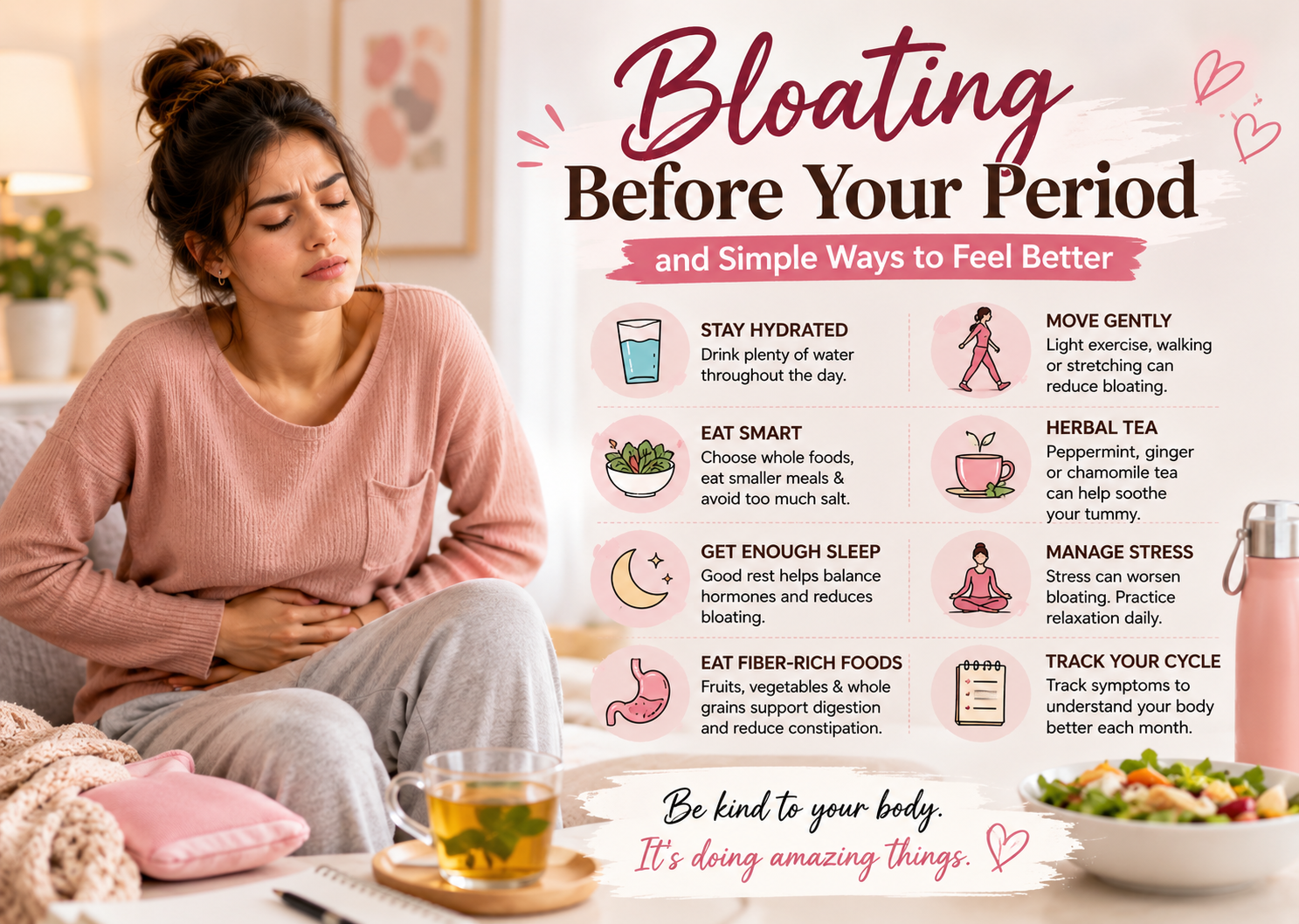
Bloating Before Your Period is a common experience that can leave you feeling uncomfortable, heavy, or unusually full. Your jeans may suddenly feel tighter, your stomach may feel swollen, and you may notice more gas or changes in your digestion.
The good news is that occasional bloating before menstruation is a common premenstrual symptom. The Office on Women’s Health lists bloating and a gassy feeling among the physical symptoms associated with premenstrual syndrome, or PMS.
While you can’t always prevent it completely, understanding why it happens and making a few simple lifestyle changes may help you feel more comfortable.
Why Do You Get Bloated Before Your Period?
The exact cause of PMS isn’t completely understood, but changing hormone levels during the menstrual cycle appear to play a role. PMS occurs after ovulation and before the start of menstruation, when hormone levels change significantly.
These changes can affect more than your reproductive system. Some people also experience digestive symptoms such as bloating, gas, constipation, or diarrhea around this time.
Your symptoms may also vary from one cycle to another.
Is Period Bloating Normal?
For many people, yes.
Bloating is one of the commonly reported PMS symptoms, and more than 90% of women report experiencing some type of premenstrual symptom, although the severity can vary considerably.
Some people may notice only mild fullness, while others may feel significantly uncomfortable.
What matters is understanding what is normal for you.
If bloating suddenly becomes severe, persistent, or very different from your usual symptoms, it’s worth talking with a healthcare professional.
Eat Smaller Meals
When you’re already feeling bloated, very large meals can make you feel even more uncomfortable.
Instead, try eating smaller meals throughout the day.
For example, rather than having one extremely heavy lunch, you could divide your food into smaller portions and eat according to your appetite.
The goal isn’t to eat less overall. It’s simply to avoid making an already uncomfortable stomach feel overly full.
Pay Attention to Salt
Salt can cause the body to retain more water, which may contribute to temporary increases in body weight and feelings of swelling.
If you notice significant bloating before your period, consider reducing very salty foods during the days when symptoms usually appear.
You don’t need to eliminate salt completely.
Instead, watch out for foods that are particularly high in sodium, such as:
- Packaged snacks
- Instant noodles
- Processed meats
- Salty chips
- Highly processed convenience foods
- Some ready-made sauces
Choosing more whole foods can make it easier to control your overall salt intake.
Drink Enough Water
It may seem strange to drink more water when you’re feeling bloated, but staying hydrated is still important.
Instead of drastically restricting fluids because you feel swollen, drink water regularly throughout the day.
Keeping a reusable water bottle nearby can make this easier.
Avoid relying heavily on sugary drinks or very salty beverages when you’re already experiencing PMS symptoms.
Cut Back on Excess Caffeine If It Makes You Feel Worse
Some people notice that caffeine makes certain PMS symptoms more uncomfortable.
The Office on Women’s Health notes that reducing caffeine, salt, and sugar during the two weeks before your period may lessen some PMS symptoms.
This doesn’t mean everyone needs to stop drinking coffee.
If you notice that coffee, energy drinks, or other caffeinated beverages seem to worsen your symptoms, try reducing your intake and see whether you feel a difference.
Get Some Gentle Movement
When you’re bloated, staying curled up on the sofa may feel tempting.
But gentle movement can be helpful for overall PMS management.
Regular aerobic physical activity throughout the month is recommended by the Office on Women’s Health and may help with several PMS symptoms, including fatigue and mood-related symptoms.
You don’t have to do an intense workout.
Try:
- Walking
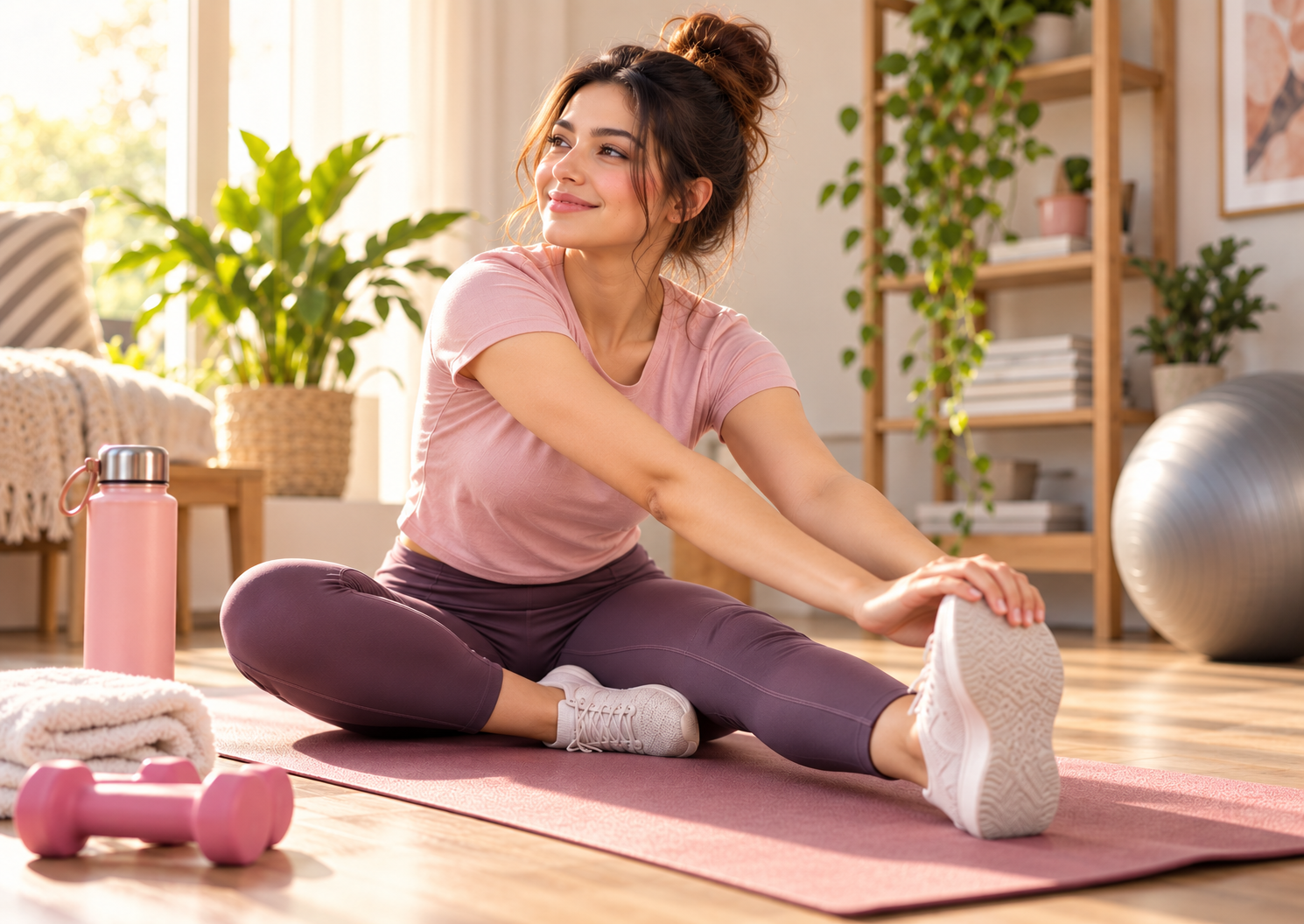
- Gentle stretching
- Yoga
- Light cycling
- Easy dancing
Even a short walk can help you feel less sluggish.
Don’t Ignore Constipation
For some people, PMS can come with constipation, which may make bloating feel worse.
If this happens regularly, pay attention to your fiber intake, fluid intake, and physical activity.
Foods containing fiber include:
- Fruits
- Vegetables
- Whole grains
- Beans
- Lentils
- Nuts and seeds
Increase fiber gradually rather than suddenly adding very large amounts, because a rapid increase can itself cause gas and bloating.
Choose Foods That Feel Comfortable
There isn’t one special “period diet” that works for everyone.
Instead, notice which foods make your digestion feel better or worse around your period.
Some people may feel more comfortable eating simple meals with vegetables, whole grains, fruit, lean proteins, and other minimally processed foods.
If certain foods consistently trigger bloating, keep track of them and discuss persistent digestive symptoms with a healthcare professional.
Get Enough Sleep
Your body needs rest, especially when you’re dealing with uncomfortable PMS symptoms.
The Office on Women’s Health recommends aiming for about eight hours of sleep and notes that lack of sleep can worsen some PMS symptoms.
Try creating a consistent bedtime routine.
Simple habits can help:
- Keep your bedroom comfortable.
- Reduce screen time before bed.
- Avoid very heavy meals immediately before sleeping.
- Keep a consistent sleep schedule.
- Give yourself enough time to rest.
Manage Stress
Stress can affect your digestive system as well as your menstrual cycle.
Long-term stress can make PMS symptoms more severe and can also worsen digestive symptoms such as gas and bloating, particularly in people with conditions such as IBS.
Try simple stress-management habits such as:
- Walking outside
- Deep breathing
- Journaling
- Meditation
- Gentle yoga
- Talking to someone you trust
- Taking short breaks from work
You don’t need a complicated wellness routine. Even a few minutes of intentional relaxation can be useful.
Try Gentle Heat for Comfort
If bloating comes with period cramps or abdominal discomfort, gentle warmth may feel soothing.
A warm heating pad or hot-water bottle placed over the lower abdomen can be comforting for some people.
Make sure the temperature isn’t hot enough to burn your skin, and avoid sleeping with a heating device switched on.
Don’t Let Bloating Change How You Feel About Your Body
This is an important one.
Your body can look different at different points in your menstrual cycle.
Temporary bloating can make your stomach appear larger or your clothes feel tighter. That doesn’t automatically mean you’ve gained body fat.
Changes in water retention and digestive symptoms can temporarily affect how your body looks and feels.
Try not to respond to normal cycle-related changes with extreme dieting or excessive exercise.
Track Your Bloating
If bloating happens around your period, tracking it for a few months can help you recognize patterns.
Write down:
- The first day of your period
- When bloating begins
- How long it lasts
- Foods you ate
- Your bowel habits
- Your stress level
- Your sleep
- Other PMS symptoms
The Office on Women’s Health recommends tracking PMS symptoms over several months because the pattern can help healthcare professionals understand what’s happening.
You may discover that your bloating consistently begins a few days before your period and improves shortly after it starts.
What You Should Avoid
When you’re bloated, it’s tempting to try extreme solutions.
Avoid relying on:
- Crash diets
- Excessive exercise
- Severe fluid restriction
- Unverified “detox” products
- Random hormone supplements
- Extreme fasting
There is no need to punish your body for a temporary menstrual symptom.
If you’re considering supplements for PMS, talk with a healthcare professional first because supplements can have side effects and may interact with medications.
When Period Bloating May Need Medical Attention
Occasional mild bloating around your period is common.
However, don’t automatically assume that persistent or severe bloating is simply PMS.
Talk to a healthcare professional if your bloating:
- Is severe
- Happens throughout the month
- Is getting progressively worse
- Interferes with your daily activities
- Occurs with severe abdominal pain
- Comes with unexplained weight changes
- Occurs alongside unusual bleeding or other significant symptoms
PMS symptoms can overlap with other health conditions, including digestive problems such as IBS.
What About Severe PMS?
For some people, symptoms before a period can be much more intense than typical PMS.
A more severe condition called premenstrual dysphoric disorder, or PMDD, can cause significant emotional and physical symptoms that interfere with everyday life. Bloating can be one of its physical symptoms.
If your symptoms regularly make it difficult to work, study, maintain relationships, or enjoy everyday activities, don’t simply assume you have to live with them.
A healthcare professional can help determine what’s happening and discuss treatment options.
A Simple Routine for the Week Before Your Period
If you regularly experience bloating, try preparing before symptoms become uncomfortable.
Morning
Start your day with water and a balanced breakfast.
During the Day
Choose nutritious meals, stay hydrated, and avoid excessive salty processed foods if they seem to worsen your symptoms.
Evening
Take a gentle walk, stretch, or practice another relaxing activity.
Before Bed
Give yourself enough time to sleep and try to keep your bedtime consistent.
These habits won’t guarantee that bloating disappears, but they can support your overall health and may help reduce some PMS symptoms.
Related reading: Hormone Health Secrets That Every Adult Should Know
Frequently Asked Questions
Why do I feel bloated before my period?
Hormonal changes during the menstrual cycle are thought to contribute to PMS symptoms, which can include bloating and gas.
How long does period bloating last?
The timing varies. PMS symptoms usually occur before the period and generally improve within a few days after menstruation begins.
Does drinking water help period bloating?
Staying hydrated supports overall health, but it doesn’t guarantee that bloating will disappear. Avoiding excessive salt may also help with temporary water retention.
What foods should I avoid when bloated before my period?
If you notice that salty, highly processed, sugary, or caffeinated foods worsen your PMS symptoms, reducing them before your period may help. Individual responses vary.
Does exercise help with PMS?
Regular aerobic physical activity may help with several PMS symptoms, including fatigue and mood-related symptoms.
When should I worry about period bloating?
If bloating is severe, persistent, suddenly different from your normal pattern, or interferes with everyday life, speak with a healthcare professional.
Final Thoughts
Bloating before your period can be uncomfortable, but it is a common PMS symptom and often follows a predictable pattern.
Instead of fighting your body with extreme diets or quick fixes, focus on simple habits: stay hydrated, pay attention to salt intake, eat balanced meals, keep moving, sleep well, and manage stress.
Most importantly, learn your own cycle. Once you understand when your bloating usually appears and what makes it better or worse, you can prepare for it instead of wondering what’s happening every month.
And if your symptoms are severe or interfering with your daily life, you don’t have to simply put up with them. Getting professional advice can help you find the right approach.
This article is for general educational purposes and is not a substitute for personalized medical advice.