







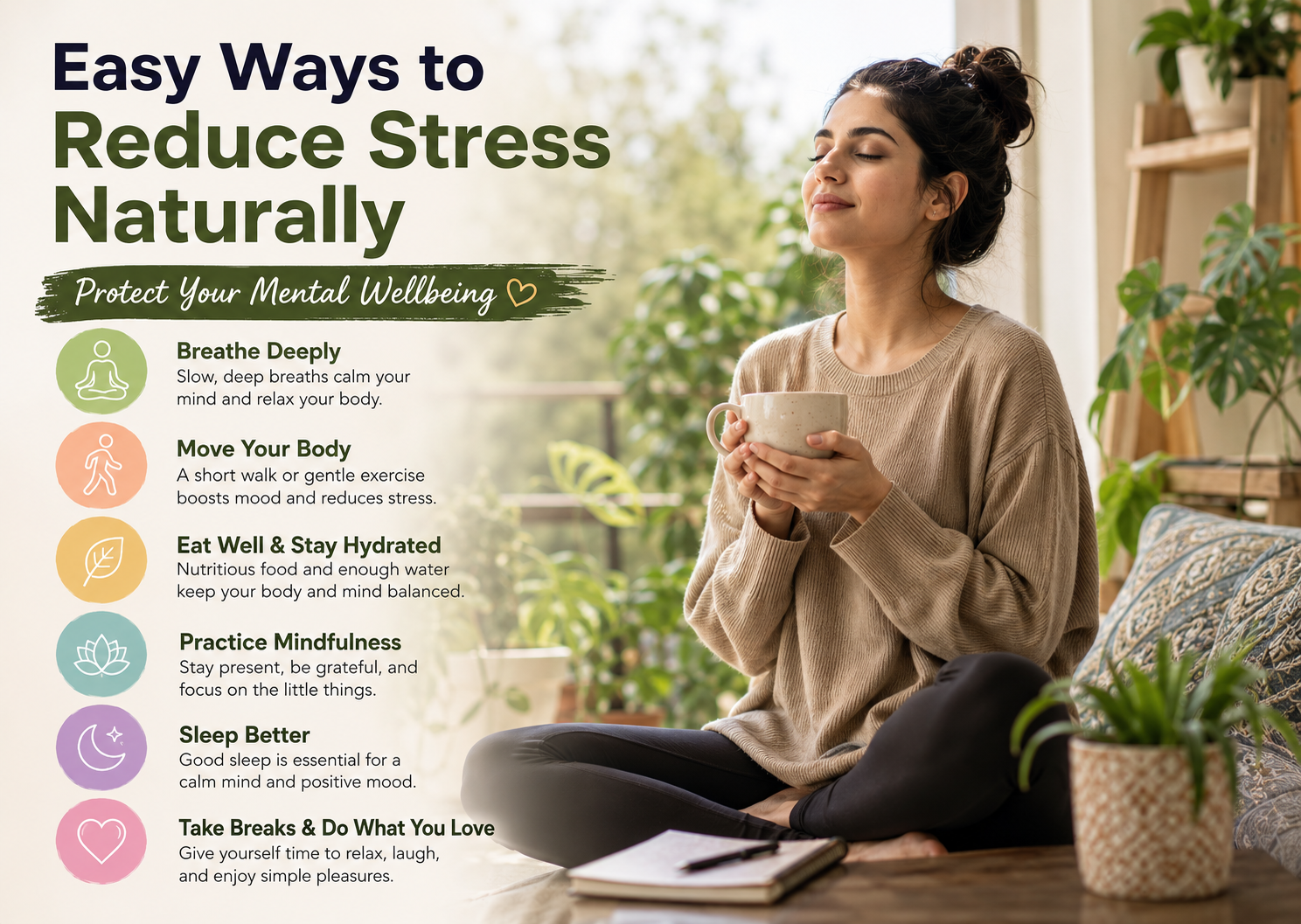
Modern life can make stress feel almost unavoidable. Work, relationships, responsibilities, money, social media, and constant notifications can leave your mind feeling like it never gets a chance to switch off.
Learning how to reduce stress naturally doesn’t mean eliminating every stressful situation. Stress is a normal physical and emotional response to challenges. However, when stress continues for a long time, it can contribute to or worsen problems such as headaches, digestive issues, and sleep difficulties.
The good news is that supporting your mental wellbeing doesn’t always require complicated routines. Simple, consistent habits can help you create more space for calm and recovery.
Start Your Day Without Immediately Checking Your Phone
One simple change can be giving yourself a few quiet minutes before opening social media, emails, and messages.
Constantly consuming information from the moment you wake up can make your brain feel busy before your day has even started.
Instead, try:
- Drinking water
- Opening a window
- Stretching
- Sitting quietly
- Taking a few slow breaths
- Writing down your priorities
You don’t need a one-hour morning routine. Even 10 peaceful minutes can give your day a calmer beginning.
Take Slow, Deep Breaths
When you’re stressed, your body can enter a “fight-or-flight” response. Your heart rate and breathing can increase, and your muscles may become tense.
Slow, deep breathing is one simple relaxation technique that may help reduce stress.
Try this:
Breathe in slowly → pause comfortably → breathe out slowly → repeat.
You don’t have to force extremely deep breaths. Focus on making your breathing slower and more comfortable.
Research suggests diaphragmatic breathing may modestly reduce stress and cortisol levels.
Move Your Body Every Day
You don’t need an intense workout to support your mental wellbeing.
Walking, dancing, cycling, stretching, swimming, or doing a short home workout can all help you stay active.
The National Institute of Mental Health recommends regular exercise as part of taking care of mental health and notes that even smaller amounts of activity can add up.
If you’re having a stressful day, try going outside for a 15-minute walk instead of spending that time scrolling on your phone.
Don’t Underestimate the Power of Sleep
When you’re exhausted, everyday problems can feel much bigger.
Making sleep a priority is one of the simplest ways to support your physical and mental wellbeing. NIMH recommends getting enough sleep and maintaining a consistent sleep schedule.
Create a relaxing nighttime routine:
- Keep your bedtime relatively consistent.
- Reduce screen exposure before bed.
- Keep your bedroom comfortable.
- Avoid working right up until bedtime.
- Give yourself time to relax.
If you’re regularly struggling to sleep, don’t simply assume that stress is the only cause. Persistent sleep problems deserve attention.
Try a Few Minutes of Mindfulness
Mindfulness means intentionally paying attention to the present moment rather than constantly getting caught up in thoughts about the past or future.
You can practice it almost anywhere.
Sit quietly and notice your breathing.
When your mind wanders, gently bring your attention back.
You don’t have to completely empty your mind.
Research suggests mindfulness practices may help reduce symptoms of stress and may also support sleep.
Take Regular Breaks From Screens
Phones and computers are useful, but being connected constantly can make it difficult to mentally switch off.
Try creating small screen-free periods during your day.
For example:
20 minutes during lunch
30 minutes before bed
A phone-free walk
A screen-free meal
You don’t need to completely disconnect from technology.
The goal is to give your attention somewhere else to go.
Spend Time With People You Trust
Stress can feel heavier when you keep everything to yourself.
Talking with someone you trust can provide emotional support and a different perspective.
You don’t necessarily need someone to solve your problems.
Sometimes you simply need someone who will listen.
NIMH recommends staying connected with friends and family as part of caring for your mental health.
Eat Regular, Balanced Meals
When you’re busy or stressed, it’s easy to skip meals or rely heavily on convenience foods.
Try to eat regular, balanced meals and stay hydrated.
NIMH includes healthy meals and hydration among basic self-care practices that can support mental and physical wellbeing.
You don’t need a perfect diet.
Think about adding more:
- Vegetables
- Fruits
- Whole grains
- Protein-rich foods
- Beans and lentils
- Nuts and seeds
Consistency matters more than perfection.
Watch Your Caffeine Intake
Coffee can be part of a healthy routine for many people, but caffeine affects everyone differently.
If you notice that caffeine makes you feel restless, jittery, or interferes with your sleep, consider reducing your intake.
Pay attention to your own response rather than following extreme advice online.
Try Gentle Yoga
Yoga combines physical movement with breathing and focused attention.
Some research suggests yoga can improve measures of perceived stress, although results aren’t identical across every study.
You don’t need to perform advanced poses.
A gentle 10-minute stretching session may be enough to create a relaxing pause in your day.
If you’re new to yoga or have a health condition, choose movements appropriate for you and consider learning from a qualified instructor.
Listen to Music That Helps You Relax
Music can give your mind a break from repetitive thoughts.
Create a playlist that makes you feel calm or happy.
Listen while:
- Cooking
- Walking
- Getting ready
- Cleaning
- Stretching
- Relaxing before bed
You don’t need special “stress relief” music. Choose sounds that you personally find pleasant.
Write Down What’s Making You Stressed
Sometimes your brain keeps repeating the same thoughts because you’re afraid you’ll forget something.
Writing them down can create some mental space.
Try making three lists:
Things I need to do
Things I can control
Things that can wait
Then choose one small task to handle first.
NIMH recommends setting goals and priorities and learning to recognize what needs immediate attention versus what can wait.
Learn to Say No
You don’t have unlimited time or energy.
Taking on every request can leave you overwhelmed.
It’s okay to say:
“I can’t take this on right now.”
or
“I’ll need to think about it before I commit.”
Setting boundaries doesn’t make you selfish.
It can help you protect your time and energy.
Spend Time Outdoors
A short break outside can be a simple way to change your environment.
Go for a walk.
Sit in the sunshine.
Spend time around trees.
Have your tea outside.
The activity doesn’t have to be dramatic. Sometimes changing your surroundings is enough to interrupt a stressful thought cycle.
Make Room for Things You Actually Enjoy
Self-care shouldn’t become another task on your to-do list.
Read a book.
Paint.
Cook.
Garden.
Watch a funny movie.
Listen to music.
Spend time with your pet.
Whatever genuinely makes you feel relaxed or happy, make some room for it.
NIMH recommends making time for relaxing activities and low-stress hobbies you enjoy.
Try Progressive Muscle Relaxation
Stress doesn’t only affect your thoughts.
You may also notice tension in your shoulders, neck, jaw, back, or other muscles.
Progressive muscle relaxation involves intentionally tightening and then relaxing different muscle groups.
NCCIH notes that progressive muscle relaxation may have stress-alleviating effects and may also benefit anxiety and depression symptoms in some people.
If you notice discomfort while doing it, stop rather than forcing the exercise.
Stop Trying to Solve Everything at Once
A long list of problems can make you feel powerless.
Instead, ask:
“What is one thing I can do right now?”
Maybe it’s sending an email.
Making a phone call.
Cleaning your workspace.
Taking a walk.
Finishing one assignment.
Small actions can feel more manageable than trying to solve your entire life in one afternoon.
Don’t Believe Every “Natural Stress Remedy” Online
The internet is full of teas, powders, supplements, gummies, and herbal products claiming to eliminate stress.
Be careful.
Natural doesn’t automatically mean safe or effective.
Some supplements can interact with medicines, and evidence for many products marketed for stress is limited. NCCIH recommends discussing complementary approaches with a healthcare professional rather than using them as a substitute for appropriate care.
Simple habits are often a safer starting point than randomly adding supplements to your routine.
Build a Simple Stress-Relief Routine
You don’t need to practice every technique in this article.
Choose a few habits that fit your lifestyle.
Morning
Take a few slow breaths and avoid immediately checking every notification.
Afternoon
Take a short walk and drink some water.
Evening
Spend some time away from your phone and do something relaxing.
Before Bed
Follow a consistent sleep routine and give yourself time to unwind.
The best routine is one you can actually maintain.
When Stress Becomes Too Much
There is a difference between everyday stress and persistent distress.
If stress continues and begins affecting your sleep, concentration, appetite, relationships, work, or ability to complete normal activities, don’t simply keep trying new self-care techniques.
NIMH recommends seeking professional help when severe or distressing symptoms persist, particularly when they interfere with everyday functioning.
Getting professional support doesn’t mean you’ve failed at managing stress.
It means you’re taking your wellbeing seriously.
You can also read: DIY face packs for instant glow
Frequently Asked Questions
How can I reduce stress naturally?
Start with simple habits such as regular movement, adequate sleep, balanced meals, deep breathing, mindfulness, relaxing activities, and staying connected with supportive people.
Does deep breathing really help with stress?
Research suggests that slow, deep breathing may modestly reduce stress and can affect physiological measures such as cortisol and blood pressure.
Can exercise reduce stress?
Regular physical activity is recommended as part of maintaining mental health, and even smaller amounts of exercise can be beneficial.
Is mindfulness good for stress?
Research suggests mindfulness practices may help reduce symptoms of stress and may support better sleep for some people.
Are herbal remedies safe for stress?
Not necessarily. Some herbal and dietary supplements can have side effects or interact with medicines. Talk with a healthcare professional before using supplements for stress.
When should I get professional help for stress?
If stress or other emotional symptoms persist, become severe, or interfere with your normal daily activities, consider speaking with a qualified healthcare or mental health professional.
Final Thoughts
Learning how to reduce stress naturally doesn’t require a complicated wellness routine.
Start with the basics: move your body, sleep well, eat regularly, breathe slowly, take breaks, stay connected, and make time for things that genuinely make you feel good.
You don’t need to become completely stress-free.
The goal is to build habits that help you recover when life becomes overwhelming.
And if stress starts affecting your everyday life for an extended period, don’t rely only on home remedies. Reaching out for professional support can be one of the healthiest decisions you make.
Your mental wellbeing deserves regular care, not just attention when you’re already exhausted