








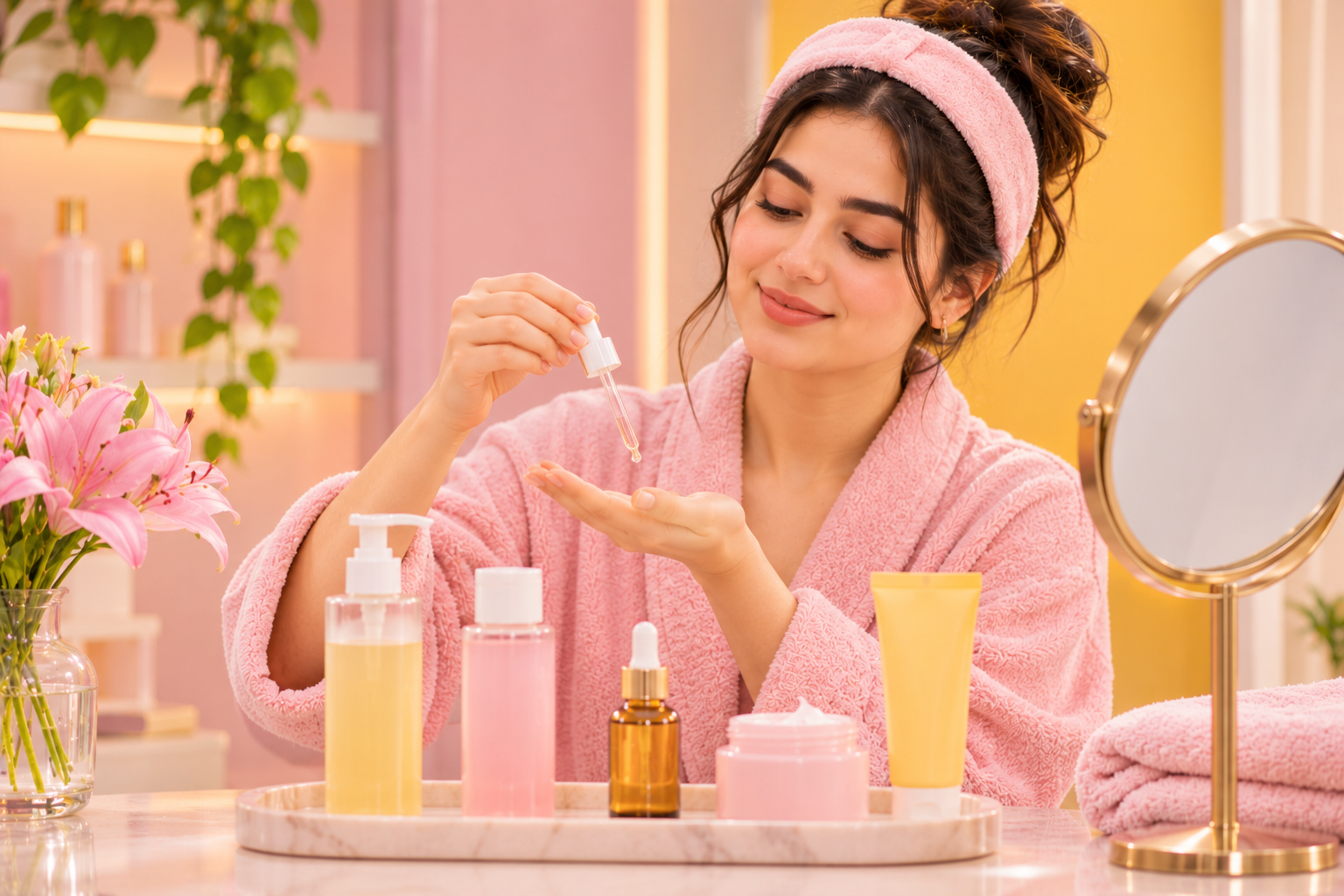
Buying good skincare products is only one part of taking care of your skin. Knowing how to layer skincare products correctly is equally important. You might have a cleanser, toner, serum, moisturiser and sunscreen on your bathroom shelf, but if you are applying them in the wrong order, your routine may not be working as well as you expect.
Many women use multiple skincare products without knowing which one should go first. Should serum be applied before moisturiser? Does toner come before or after essence? Should sunscreen be the last step? These small questions can make your daily skincare routine confusing.
The good news is that you do not need a complicated 10-step routine to care for your skin. You simply need to understand the purpose of each product and apply it in a sensible order.
Let’s break down the correct skincare layering order for both morning and night, along with common mistakes you should avoid.
Why Is the Order of Skincare Products Important?
Skincare products are designed to serve different purposes. Some remove dirt and excess oil, some provide hydration, while others help address specific concerns such as uneven skin tone, acne or fine lines.
Applying products in the right order helps you build a routine that is easier to follow and less likely to feel heavy or uncomfortable.
For example, applying a thick moisturiser before a lightweight serum may make it harder for the serum to spread evenly. Similarly, applying sunscreen before your other skincare products can interfere with forming an even protective layer.
A simple rule to remember is to generally apply products from the lightest texture to the heaviest texture, with sunscreen as the final step of your morning skincare routine.
However, the ingredients and instructions on individual products also matter.
Correct Order of Skincare Products in the Morning
Your morning skincare routine should focus on cleansing, hydration and protecting your skin from daily environmental exposure.
Here is a simple order you can follow.
1. Cleanser
<text color=”secondary” size=”sm”>First step – Remove overnight oil and impurities</text>
Start your morning routine with a gentle facial cleanser. Your skin can collect oil, sweat and product residue overnight, so cleansing helps create a fresh base for the rest of your routine.
Choose a cleanser according to your skin type.
- Oily skin: A gentle gel cleanser may help remove excess oil.
- Dry skin: Try a creamy or hydrating cleanser.
- Sensitive skin: Choose a fragrance-free cleanser that does not leave your skin feeling tight.
- Combination skin: A mild cleanser that balances comfort and cleansing may work well.
Avoid washing your face with very hot water or scrubbing too aggressively. Both can irritate your skin.
2. Toner
<text color=”secondary” size=”sm”>Second step – Add a light layer of hydration</text>
Toner is generally applied after cleansing. Modern toners come in different formulas, including hydrating, soothing and exfoliating versions.
A hydrating toner may contain ingredients such as glycerin or hyaluronic acid to help attract and retain moisture.
However, toner is not compulsory. If your cleanser, serum and moisturiser already meet your skin’s needs, you can skip it.
If you use an exfoliating toner containing acids, follow its usage instructions and avoid combining too many strong active ingredients in one routine.
3. Serum
<text color=”secondary” size=”sm”>Third step – Target specific skin concerns</text>
Serums are lightweight skincare products designed to deliver selected ingredients to the skin. They can be used to address concerns such as dehydration, uneven-looking skin tone or fine lines.
Some popular serum ingredients include:
- Vitamin C: Often used in morning routines to help improve the appearance of uneven skin tone and provide antioxidant support.
- Hyaluronic acid: Helps attract moisture and improve skin hydration.
- Niacinamide: Can support the skin barrier and help improve the appearance of uneven tone.
- Peptides: Used in some formulas to support smoother-looking skin.
Apply your serum according to its instructions. You usually only need a few drops. Gently spread it over your face without rubbing aggressively.
You do not need to use several serums together. Start with one that suits your main skin concern.
4. Eye Cream
<text color=”secondary” size=”sm”>Fourth step – Care for the delicate eye area</text>
Eye creams are optional, but some people like using them to moisturise the skin around their eyes.
The skin in this area is delicate, so use a product formulated for the eye area if you need one.
Apply a small amount using your ring finger and gently tap it around the orbital bone. Avoid getting the product too close to your eyes.
If your regular moisturiser is suitable for the eye area and does not cause irritation, you may not need a separate eye cream.
5. Moisturiser
<text color=”secondary” size=”sm”>Fifth step – Keep your skin hydrated</text>
Moisturiser helps reduce water loss and supports the skin barrier. It also helps make your skin feel soft and comfortable.
Choose a formula based on your skin type.
- Oily skin: A lightweight gel or lotion may feel more comfortable.
- Dry skin: A richer cream can help reduce moisture loss.
- Combination skin: A balanced lotion may work well.
- Sensitive skin: Look for gentle formulas with ingredients such as ceramides or glycerin.
Apply moisturiser evenly over your face and neck. Give it a little time to settle before applying sunscreen.
6. Sunscreen
<text color=”secondary” size=”sm”>Final step – Protect your skin from UV exposure</text>
Sunscreen is one of the most important steps in your morning skincare routine. It helps protect your skin from ultraviolet radiation, which contributes to sunburn, premature skin ageing and skin cancer.
Choose a broad-spectrum sunscreen with SPF 30 or higher. Apply it generously to all exposed areas, including your face, neck and ears.
Remember these points:
- Apply sunscreen as the final step of your morning skincare routine.
- Follow the product’s instructions for the correct amount.
- Reapply approximately every two hours when outdoors, and after swimming, sweating or towel drying.
- Use sunscreen even when the weather is cloudy.
- Do not forget your neck and other exposed areas.
If you wear makeup, apply sunscreen before your makeup rather than mixing it into your foundation.
Correct Order of Skincare Products at Night
Your nighttime routine can be slightly different from your morning routine. This is when you can focus on cleansing away sunscreen, makeup and daily impurities, followed by hydration and selected treatment products.
Here is a simple order.
1. Makeup Remover or Cleansing Oil
If you wear makeup or water-resistant sunscreen, begin with a suitable makeup remover or cleansing oil.
This first cleansing step helps dissolve makeup, sunscreen and excess oil. You can use micellar water or an oil-based cleanser depending on your preference.
If you do not wear makeup or water-resistant sunscreen, you may not need a separate first cleanse.
2. Facial Cleanser
Follow with a gentle water-based cleanser to remove remaining residue.
This is often called double cleansing. It can be useful when you wear makeup or long-lasting sunscreen, but it is not necessary for everyone.
Avoid over-cleansing, especially if your skin is dry or sensitive.
3. Toner or Essence
After cleansing, you can apply a hydrating toner or essence if it is part of your routine.
These products can add moisture and make your skin feel comfortable before applying serum.
Again, this step is optional.
4. Treatment Serum
Nighttime is a convenient time to use certain treatment ingredients, depending on your skin’s needs.
For example:
- Retinol: Often used to address signs of ageing and uneven skin texture. Beginners should start slowly and follow the product instructions.
- Niacinamide: Can help support the skin barrier and improve the appearance of uneven tone.
- Hyaluronic acid: Provides hydration and can be used in both morning and evening routines.
- Exfoliating acids: Ingredients such as glycolic acid and salicylic acid can help with specific concerns, but should not be overused.
If you are new to active ingredients, introduce one product at a time. Avoid combining multiple strong treatments without understanding whether they are suitable together.
Retinoids should generally be avoided during pregnancy. If you are pregnant, breastfeeding or planning pregnancy, ask your healthcare professional before using retinoids or other treatment ingredients.
5. Eye Cream
If you use an eye cream, apply it according to its instructions. A small amount is usually enough.
You can skip this step if you do not have a separate eye product.
6. Moisturiser
Finish your nighttime routine with a suitable moisturiser.
It helps reduce moisture loss and supports your skin barrier while you sleep. If your skin feels particularly dry, you may prefer a richer moisturiser at night.
You do not need to apply a large amount. A comfortable, even layer is enough.
Morning vs Night Skincare Routine at a Glance
| Step | Morning | Night |
|---|---|---|
| 1 | Cleanser | Makeup remover or cleansing oil, if needed |
| 2 | Toner (optional) | Cleanser |
| 3 | Serum | Toner or essence (optional) |
| 4 | Eye cream (optional) | Treatment serum |
| 5 | Moisturiser | Eye cream (optional) |
| 6 | Sunscreen | Moisturiser |
The exact order can vary depending on your products and their instructions. Keep your routine simple rather than trying to use every product listed.
Common Skincare Layering Mistakes to Avoid
Even when you have good skincare products, a few everyday mistakes can make your routine uncomfortable or unnecessarily complicated.
1. Applying Too Many Products at Once
Using multiple serums, toners and treatments does not automatically give you better results. Too many products can increase the risk of irritation and make it difficult to identify which product is causing a reaction.
Start with the basics and add new products only when you have a clear reason.
2. Applying Sunscreen Before Moisturiser
Sunscreen should generally be the last step of your morning skincare routine. Applying moisturiser over sunscreen can disturb the protective layer.
Apply your moisturiser first, allow it to settle and then apply sunscreen evenly.
3. Using Too Many Active Ingredients Together
Combining several exfoliating acids, retinoids and other strong treatments can irritate your skin.
You do not need to use every active ingredient in one routine. Introduce products gradually and follow their directions.
4. Not Giving Products Time to Settle
Some people apply several layers immediately, which can cause products to pill or roll off the skin.
Allow each layer to settle before applying the next one, especially if the formula feels slippery or sticky. You do not need to wait a fixed number of minutes between every product.
5. Ignoring Your Skin Type
A product that works well for someone with oily skin may feel too drying for someone with dry or sensitive skin.
Pay attention to how your skin responds. Adjust the texture and number of products according to your needs.
6. Changing Your Entire Routine Too Quickly
Trying several new products in one week makes it difficult to know what is helping and what is irritating your skin.
Introduce one new product at a time. Patch test when appropriate and give your skin time to adjust.
Simple Skincare Layering Routine for Beginners
If you are new to skincare, you do not need to purchase a large collection of products. Start with a basic routine and build from there.
Morning routine
- Gentle cleanser
- Moisturiser
- Broad-spectrum SPF 30 or higher sunscreen
Night routine
- Makeup remover or cleanser, if needed
- Gentle facial cleanser
- Moisturiser
Once your skin is comfortable with this routine, you can consider adding a serum or another treatment product based on your concerns.
A simple routine that you follow consistently is often more useful than a complicated routine that irritates your skin or becomes difficult to maintain.
Final Thoughts
Learning how to layer skincare products does not have to be complicated. The key is to understand what each product does and apply it in an order that makes sense for your skin.
Start with cleansing, add optional treatments and hydration, finish with moisturiser and always make sunscreen the final step in your morning routine.
Most importantly, remember that healthy-looking skin does not require dozens of products. Choose suitable formulas, introduce new ingredients gradually and pay attention to how your skin responds.
Your skincare routine should work for your skin, not become another stressful part of your day.
Related Reading: How to Make Your Skin Look Younger Without Expensive Treatments
Frequently Asked Questions
1. What is the correct order to apply skincare products?
A general order is cleanser, toner, serum, eye cream, moisturiser and sunscreen in the morning. At night, remove makeup if needed, cleanse, apply treatment products and finish with moisturiser.
2. Should I apply serum before or after moisturiser?
Serum is generally applied before moisturiser because many serums have lighter textures. Moisturiser is then used to provide hydration and help reduce moisture loss.
3. Can I skip toner in my skincare routine?
Yes. Toner is optional. If your cleanser, serum and moisturiser already meet your skin’s needs, you do not have to use toner.
4. How long should I wait between skincare products?
There is no universal waiting time. Allow each layer to settle enough that it does not feel overly wet or slippery before applying the next product. Follow specific product instructions when provided.
5. Should sunscreen be applied before or after moisturiser?
Sunscreen should generally be applied after moisturiser as the final step of your morning skincare routine, before makeup.
6. Can I use vitamin C and niacinamide together?
Many skincare routines can include both ingredients. They are generally considered compatible in well-formulated products. However, if your skin is sensitive, introduce them separately and monitor how your skin responds.
7. Can I use retinol every night?
Not necessarily. Beginners should start with a lower-strength product and use it less frequently, following the manufacturer’s instructions. Increase frequency only if your skin tolerates it. Avoid retinoids during pregnancy and seek professional advice if breastfeeding.
8. Do I need a 10-step skincare routine for healthy skin?
No. A basic routine with cleanser, moisturiser and sunscreen can be enough for many people. Additional products are optional and should address specific skin concerns.