







Makeup that lasts all day starts with more than just choosing long-wear products. Your skincare, application technique, product quantity, skin type, and even the weather can affect how long your makeup stays fresh.
Your skincare routine, application technique, product quantity, weather, skin type, and even how often you touch your face can affect how long your makeup stays fresh.
The good news is that you don’t need a complicated routine or dozens of products. A few simple changes can help your makeup stay comfortable and polished for much longer.
Start With Clean Skin
Your makeup needs a good base.
Before applying makeup, gently cleanse your face to remove excess oil, sweat, and leftover skincare products.
Avoid scrubbing your skin aggressively just before makeup application. Irritated skin can make makeup look uneven and uncomfortable.
After cleansing, use your normal skincare products and give them enough time to settle before starting your makeup.
Don’t Skip Moisturizer
It may seem strange to moisturize your skin when you’re trying to make makeup last, especially if your skin is oily.
But overly dry skin can cause foundation and concealer to look flaky or patchy.
Choose a moisturizer that works with your skin type and apply a reasonable amount.
The goal is to have skin that feels comfortable and hydrated without being excessively greasy.
Give Your Skincare Time to Set
One common mistake is applying makeup immediately after applying several skincare products.
If your skin still feels very wet or slippery, your makeup may move around more easily.
Allow your skincare to absorb and settle before moving on to primer and makeup.
You don’t necessarily need a long waiting period. Just make sure your face no longer feels heavily coated.
Choose the Right Primer
Primer isn’t essential for everyone, but the right one can help create a smoother makeup base.
Different primers can address different concerns.
For example:
- Hydrating primers can work well for dry-feeling skin.
- Smoothing primers can help create a more even-looking surface.
- Oil-control primers can be useful for areas that become very oily.
- Gripping primers can help makeup adhere to the skin.
You don’t need to cover your entire face with a thick layer.
Apply primer mainly where you need it.
Use Thin Layers of Foundation
One of the biggest mistakes people make when trying to get long lasting makeup is applying too much foundation.
More product does not necessarily mean better coverage or longer wear.
Instead, apply a thin layer first.
Then add a little more product only where you need additional coverage.
This can help your makeup look more natural and reduce the chance of it becoming heavy or cakey as the day goes on.
Choose Foundation Based on Your Skin Type
Your skin type can influence how your foundation behaves.
If your skin tends to become oily, you may prefer a foundation with a finish that feels comfortable and doesn’t become excessively shiny.
If your skin tends to feel dry, a more hydrating formula may look better.
The goal isn’t simply to choose the most expensive foundation.
It’s to find a formula that works well with your skin and the finish you want.
Apply Concealer Only Where You Need It
Concealer can easily become cakey when too much is applied.
Instead of covering your entire under-eye area with a thick layer, start with a small amount.
Blend it gently and build coverage only where necessary.
For blemishes, allow the product to sit briefly before gently blending the edges.
A thinner application can often look better throughout the day.
Don’t Forget Your T-Zone
If your forehead, nose, or chin becomes oily during the day, pay extra attention to these areas.
After applying your base makeup, lightly set areas that tend to become shiny.
You don’t necessarily need powder everywhere.
Keeping some natural dimension on the face can make your makeup look fresher.
Set Cream Products With Powder
Layering similar textures can help improve makeup longevity.
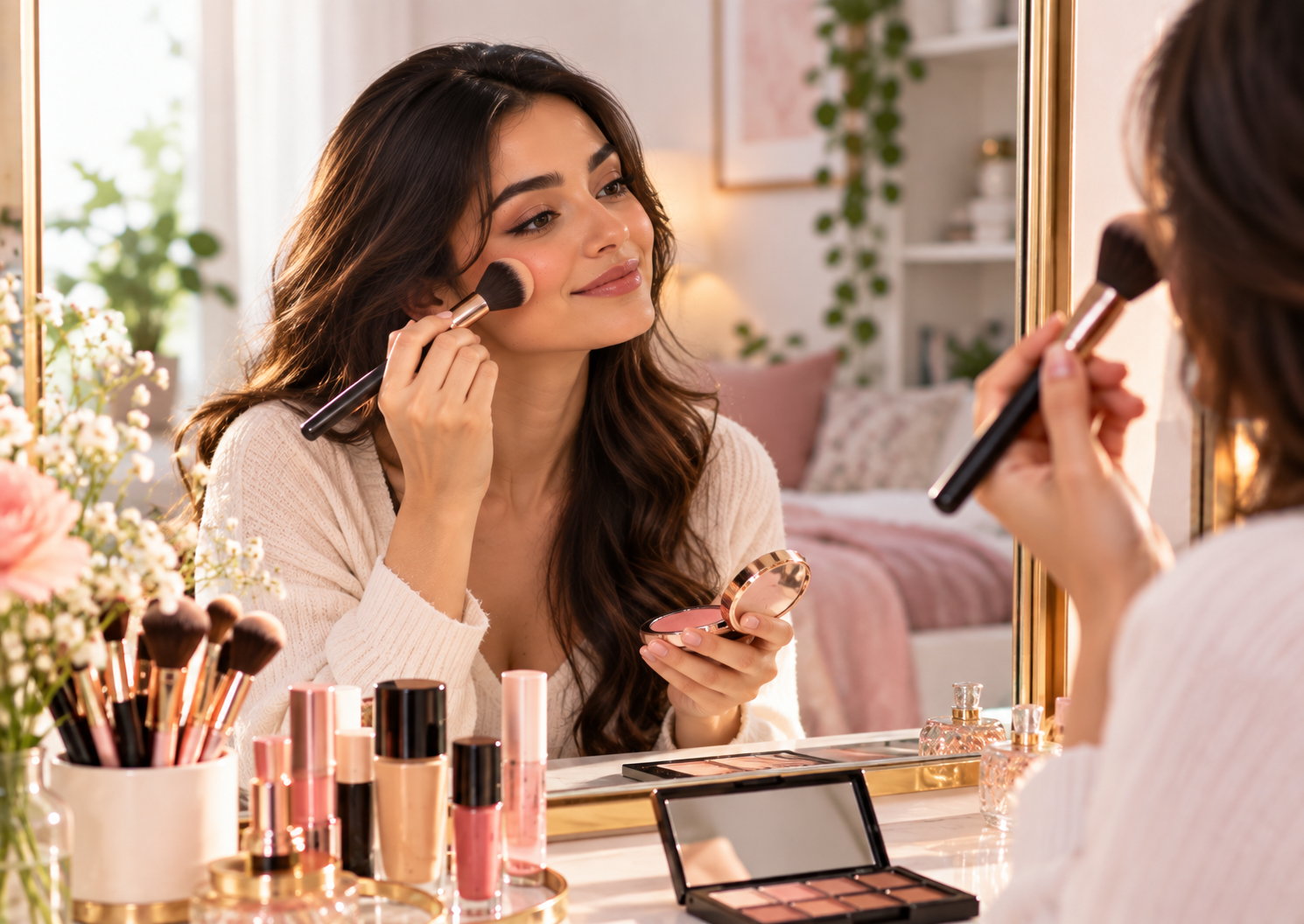
For example, after applying a cream or liquid blush, you can lightly apply a compatible powder blush over it.
Similarly, lightly setting areas of foundation or concealer with powder can help reduce movement and creasing.
The important word is lightly.
Too much powder can make your makeup look dry and heavy.
Use Powder Strategically
Powder can be helpful, but applying it everywhere isn’t always necessary.
Focus on areas where makeup tends to move or where you experience excess shine.
Common areas include:
- Around the nose
- Forehead
- Chin
- Under the eyes
- Areas where foundation tends to crease
Use a small amount and build gradually.
Make Your Eye Makeup Last Longer
Eye makeup can fade or crease quickly, especially if your eyelids become oily.
Before applying eyeshadow, make sure the eyelid area isn’t covered with a thick layer of moisturizer.
An eye primer can also help create a better base for eyeshadow.
For eyeliner, choose a formula that suits your eyelid type and the look you’re creating.
If your eye makeup tends to transfer, avoid applying excessive product.
Apply Mascara Carefully
Mascara can become smudged when applied too heavily.
Try applying one or two controlled coats rather than repeatedly adding layers.
Allow each coat to settle before adding another.
If your eyes are prone to watering, choose a formula designed for longer wear or water resistance.
Make Your Lipstick Last Longer
Lip color often disappears first because we eat, drink, talk, and touch our lips throughout the day.
To improve its staying power:
- Start with comfortable, moisturized lips.
- Remove excess lip balm before applying color.
- Outline your lips with a lip liner if you like.
- Apply lipstick in a thin layer.
- Blot gently if needed.
- Add another light layer.
A lip liner can also help define the edges and reduce the appearance of fading.
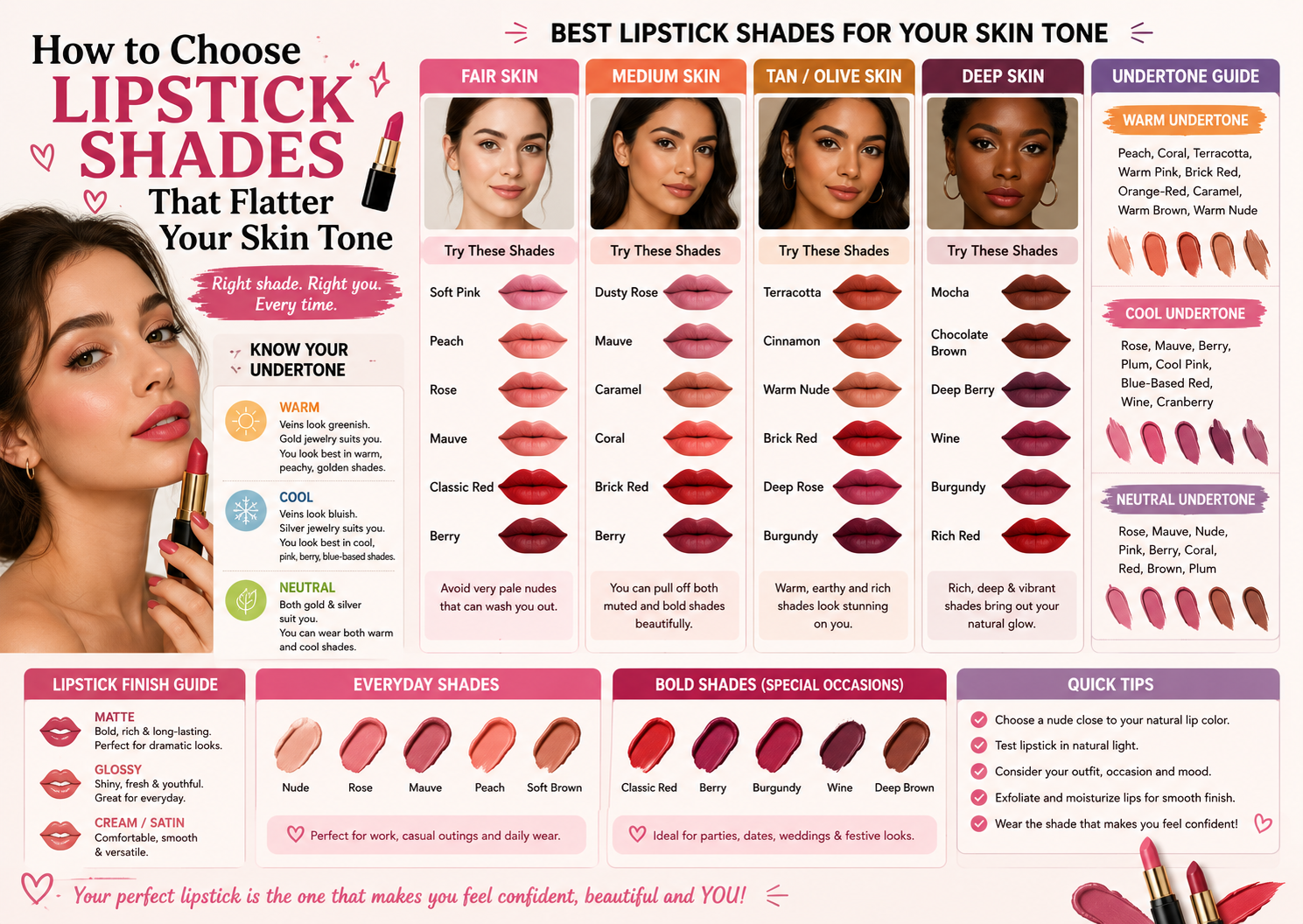
If you’re choosing a lipstick shade for everyday makeup, you may also enjoy How to Choose Lipstick Shades That Flatter Your Skin Tone.
Don’t Apply Too Much Setting Spray
Setting spray can be useful as the final step of your makeup routine.
Hold it at a reasonable distance and apply an even mist rather than soaking your face.
Allow it to dry naturally.
If your makeup already feels heavy, adding more and more setting spray throughout the day won’t necessarily solve the problem.
Let Your Makeup Dry Between Steps
Rushing through your routine can make products mix together before they’ve had a chance to settle.
For example, immediately applying powder over a very wet foundation can sometimes create an uneven texture.
Give each major layer a moment to settle.
This doesn’t mean waiting several minutes after every product. Just avoid aggressively blending or layering everything at once.
Avoid Touching Your Face
Your hands come into contact with phones, keyboards, door handles, and countless other surfaces.
Touching your face frequently can move makeup and transfer oil onto your skin.
Try to avoid:
- Rubbing your eyes
- Resting your hands on your cheeks
- Constantly touching your nose
- Picking at makeup
- Frequently checking or rubbing your skin
The less you disturb your makeup, the better it is likely to hold up.
Use Blotting Paper Instead of Adding More Powder
If your face becomes shiny during the day, your first reaction may be to add another layer of powder.
Instead, try blotting excess oil first.
Gently press blotting paper or a clean tissue against the oily area without rubbing.
Then add a very small amount of powder if needed.
This can help prevent the heavy, layered look that develops after multiple touch-ups.
Be Careful With Your Hair
Your hair can also affect your makeup.
If your hair repeatedly touches your forehead or cheeks, natural oils and hair products may transfer onto your makeup.
If you’re wearing your hair down, try to keep it away from your face when possible.
This is especially useful if you have oily skin or are spending a long day outdoors.
Think About the Weather
Heat and humidity can make makeup more challenging.
On hot days:
- Keep your skincare lighter if appropriate for your skin.
- Avoid applying excessive layers.
- Use long-wear formulas if they work for you.
- Set areas that become oily.
- Carry blotting papers.
- Avoid constantly touching your face.
In colder or drier weather, overly matte products may emphasize dryness, so hydration becomes especially important.
Your makeup routine doesn’t have to remain exactly the same throughout the year.
Don’t Forget Your Neck
If you’re wearing foundation or complexion products that need to blend beyond your face, make sure there isn’t a noticeable line between your face and neck.
Blend carefully rather than applying a thick layer.
The goal is a seamless transition, not heavy coverage everywhere.
Keep Your Makeup Tools Clean
Dirty brushes and sponges can accumulate makeup residue, oils, and other debris.
Regularly cleaning the tools you use can help keep your makeup routine more hygienic and can also improve application.
A clean sponge or brush can distribute makeup more evenly than one covered in old product.
Build a Simple Long Lasting Makeup Routine
You don’t need 15 steps to create makeup that lasts.
Try this basic routine:
Step 1
Cleanse your face gently.
Step 2
Apply moisturizer suited to your skin.
Step 3
Allow skincare to settle.
Step 4
Apply primer if you use one.
Step 5
Apply a thin layer of foundation.
Step 6
Use concealer only where needed.
Step 7
Add blush, bronzer, or other complexion products.
Step 8
Lightly set areas that tend to become oily or crease.
Step 9
Complete your eye and lip makeup.
Step 10
Finish with setting spray if you use one.
The exact products can vary depending on your skin type and the makeup style you prefer.
Common Mistakes That Make Makeup Fade Faster
Applying Too Much Skincare
Heavy layers underneath makeup can make your base slide around.
Using Too Much Foundation
Thick layers can become cakey and emphasize texture.
Skipping Skin Preparation
Makeup applied over very dry or very oily skin may not sit as evenly.
Applying Too Much Powder
Excess powder can make the skin look dry and textured.
Constantly Touching Your Face
This can transfer and remove makeup.
Rubbing Instead of Blotting
Rubbing can disturb foundation, blush, and concealer.
Using Products That Don’t Work Together
Sometimes the issue is product compatibility rather than application technique. If a combination repeatedly pills, separates, or slides around, try simplifying your routine and testing products individually.
How to Make Makeup Last Without Looking Heavy
Long lasting makeup shouldn’t mean wearing a thick layer of products.
The goal is strategic application.
Use less product where you don’t need coverage and concentrate coverage only where necessary.
A natural-looking base with carefully placed powder and setting products can often look better throughout the day than a heavily layered face.
What to Do When Your Makeup Starts Fading
Even the best makeup will eventually change throughout the day.
Instead of completely redoing your face, use small corrections.
For example:
Oily skin: Blot first, then add a small amount of powder.
Faded blush: Add a little blush rather than applying a completely new layer of foundation.
Creased concealer: Gently smooth the area with a clean finger or small brush before adding a tiny amount of product.
Faded lipstick: Remove leftover uneven color and reapply.
The goal is to refresh your makeup rather than pile more product on top of everything.
Final Thoughts
Long lasting makeup isn’t about using the most expensive products or applying the most layers.
It’s about creating a good base, choosing products that suit your skin, applying makeup in thin layers, setting strategically, and avoiding habits that cause your makeup to disappear.
Start with clean, comfortable skin. Give your skincare time to settle, use primer when helpful, apply foundation carefully, and use powder and setting spray where they actually add value.
And remember, makeup doesn’t need to look exactly the same at the end of the day as it did when you first applied it. A little fading and natural shine are completely normal.
The goal is makeup that still makes you feel confident and comfortable hours after you leave the house.
FAQs
How can I make my makeup last all day?
Prepare your skin properly, use suitable primer and foundation, apply thin layers, set areas that become oily, and finish with setting spray if it works for you.
Why does my foundation disappear after a few hours?
Oil, sweat, touching your face, skincare underneath makeup, product compatibility, and the foundation formula itself can all affect how long it lasts.
Should I use powder before or after foundation?
Powder is generally used after liquid or cream complexion products. Apply it lightly and focus on areas where you need to control shine or reduce movement.
Does setting spray really make makeup last longer?
A setting spray can help some makeup routines last longer, but results vary depending on the product, skin type, weather, and other products you’re using.
How do I stop my makeup from getting cakey?
Use less product, apply thin layers, prepare your skin properly, and avoid repeatedly adding powder throughout the day.
How can I make lipstick last longer?
Start with comfortable lips, use lip liner if desired, apply lipstick in thin layers, blot gently, and reapply a light layer.
How can I keep makeup from melting in summer?
Use a lightweight routine, avoid excessive product, set areas prone to oiliness, use suitable long-wear products, and blot excess oil instead of repeatedly adding powder.