







Finding the right lipstick can instantly make your makeup look more polished. But with hundreds of shades available, choosing the right one can sometimes feel confusing.
Should you choose nude, pink, red, brown, or berry? And how do you know which shade will actually complement your complexion?
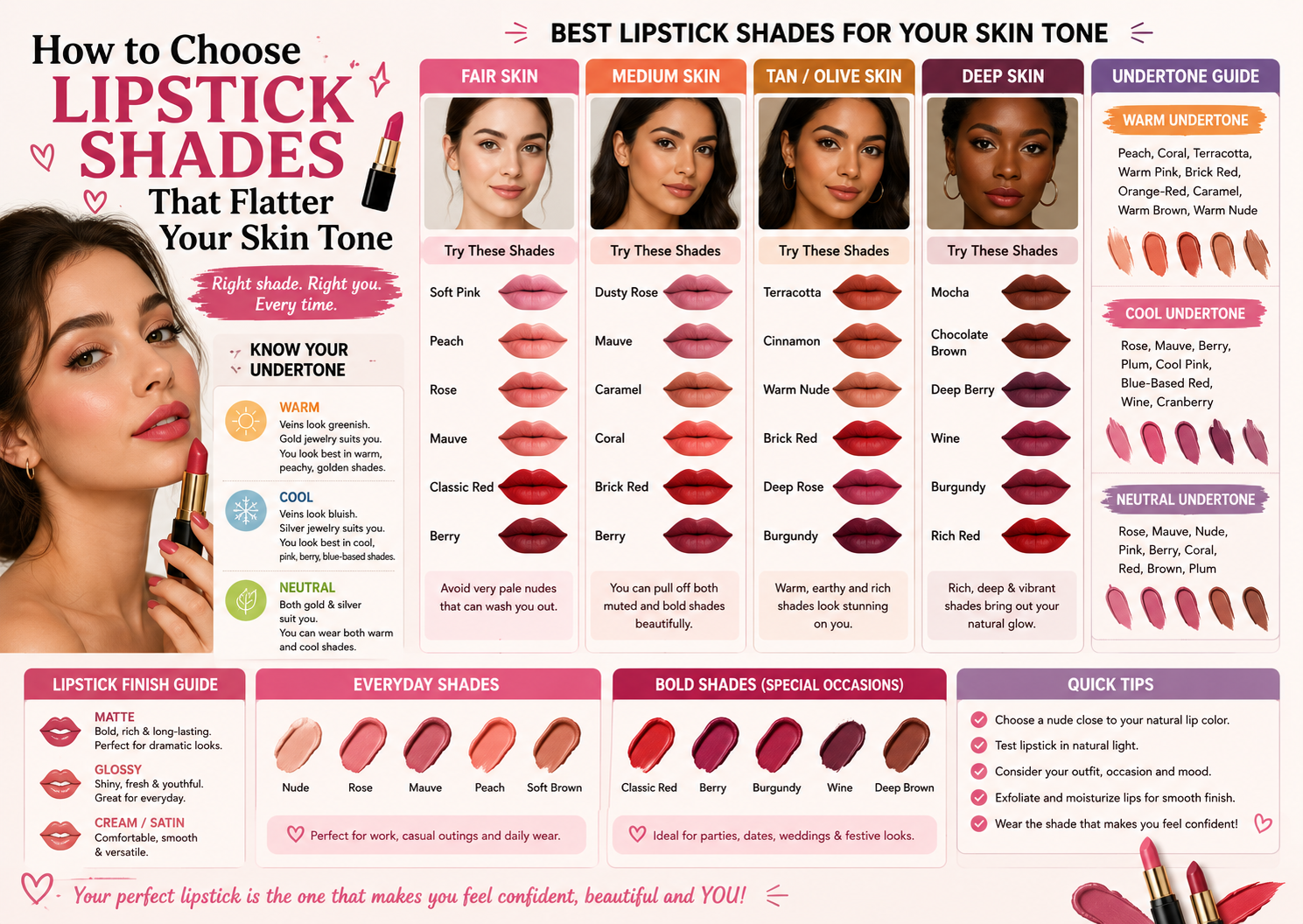
The secret isn’t simply choosing a lipstick based on whether you have fair, medium, or deep skin. Your skin undertone, natural lip color, makeup style, and the occasion can all influence how a lipstick looks on you.
Once you understand these simple factors, finding lipstick shades that flatter your skin tone becomes much easier.
Start by Understanding Your Skin Tone
Your skin tone is the color you see on the surface of your skin.
It can generally be described as:
- Fair
- Light
- Medium
- Tan
- Deep
However, your undertone is just as important.
Your undertone is the subtle color underneath your skin and is usually described as:
- Warm
- Cool
- Neutral
Two people can have a similar skin tone but different undertones, which is why the same lipstick can look completely different on them.
How to Find Your Skin Undertone
You don’t need a professional color analysis to get a good idea of your undertone.
Look at Your Veins
Check the veins on the inside of your wrist in natural daylight.
If they appear more green, you may have a warm undertone.
If they appear more blue or purple, you may have a cool undertone.
If you see a combination of both, you may have a neutral undertone.
This isn’t a perfect test, but it can give you a useful starting point.
Look at Your Jewelry
Think about whether gold or silver jewelry tends to complement your complexion more.
If gold looks particularly flattering, you may lean warm.
If silver looks better, you may lean cool.
If both look good, you may have a neutral undertone.
Again, don’t treat this as a strict rule. Personal preference matters too.
Related reading: How to Choose the Right Colors for Your Skin Tone
Lipstick Shades for Warm Undertones
Warm undertones often have golden, yellow, peachy, or olive qualities.
Warm lipstick shades can create a naturally harmonious look.
Try:
- Peach
- Coral
- Terracotta
- Warm pink
- Caramel
- Cinnamon
- Orange-red
- Brick red
- Warm brown
- Warm nude
These shades can be especially beautiful for everyday makeup.
Best Warm Nude Lipsticks
If you have a warm undertone, try nude shades with hints of:
Peach + beige
Caramel + brown
Terracotta + nude
Warm rose + brown
Avoid choosing a nude that is so pale that it completely washes out your natural lip color.
Lipstick Shades for Cool Undertones
Cool undertones often have pink, red, or bluish qualities.
Cool lipstick shades can create a beautiful contrast with the complexion.
Try:
- Rose
- Mauve
- Berry
- Plum
- Raspberry
- Cool pink
- Blue-based red
- Wine
- Cranberry
These shades can work particularly well for evening makeup and special occasions.
Best Cool Nude Lipsticks
Try shades with subtle hints of:
- Pink
- Rose
- Mauve
- Cool beige
A rosy nude can often look more natural on a cool undertone than a strongly yellow or orange-toned nude.
Lipstick Shades for Neutral Undertones
If you have a neutral undertone, you have more flexibility.
You can experiment with both warm and cool shades.
Try:
- Rose
- Mauve
- Nude
- Pink
- Coral
- Berry
- Brown
- Red
- Plum
Neutral undertones are a great opportunity to experiment with different lipstick families and see which ones you personally prefer.
Lipstick Shades for Fair Skin
Fair skin can look beautiful with both soft and bold lipstick colors.
For Everyday Wear
Try:
- Soft pink
- Peach
- Rose
- Nude pink
- Light mauve
For a Bold Look
Try:
- Cherry red
- Classic red
- Raspberry
- Berry
If you have a warm undertone, peach and coral can work beautifully.
If you have a cool undertone, rose, mauve, and blue-based reds may be more flattering.
Lipstick Shades for Medium Skin
Medium skin tones can work with a wide variety of colors.
Everyday Shades
Try:
- Dusty rose
- Mauve
- Caramel
- Warm nude
- Peach
- Soft brown
Statement Shades
Try:
- Brick red
- Berry
- Burgundy
- Deep rose
- Terracotta
Medium complexions often have plenty of room to experiment with both warm and cool colors.
Lipstick Shades for Tan and Olive Skin
Tan and olive complexions can look gorgeous with rich, earthy, and vibrant shades.
Try:
- Terracotta
- Cinnamon
- Caramel
- Burnt orange
- Brick red
- Warm brown
- Deep rose
- Berry
- Burgundy
If you have an olive undertone, don’t feel restricted to warm shades. Cooler berry, plum, and red colors can create a beautiful contrast.
Lipstick Shades for Deep Skin
Deeper complexions can carry rich and highly pigmented colors beautifully.
Try:
- Chocolate brown
- Mocha
- Deep caramel
- Plum
- Burgundy
- Wine
- Deep berry
- Brick red
- Rich red
- Berry-brown
For nude lipstick, choose shades that provide enough contrast instead of selecting a color that is too close to your skin.
How to Choose the Right Nude Lipstick
Nude lipstick is one of the most popular everyday choices, but finding the right nude can be surprisingly difficult.
A common mistake is assuming that “nude” means the same beige shade for everyone.
It doesn’t.
Your perfect nude should generally complement your natural lip color and complexion.
Fair Skin
Try:
Pink nude, peach nude, soft beige
Medium Skin
Try:
Rose nude, caramel, warm beige
Tan Skin
Try:
Cinnamon, terracotta, brown nude
Deep Skin
Try:
Mocha, cocoa, chocolate, deep caramel
If a nude makes you look tired or washed out, try a shade with more pink, peach, or brown.
How to Choose the Perfect Red Lipstick
Red lipstick doesn’t belong to just one skin tone.
There are countless versions of red.
Fair Skin
Try:
- Cherry red
- Blue-red
- Classic red
- Coral red
Medium Skin
Try:
- True red
- Brick red
- Warm red
- Berry red
Tan or Olive Skin
Try:
- Tomato red
- Brick red
- Deep red
- Orange-red
Deep Skin
Try:
- Burgundy red
- Wine red
- Deep cherry
- Brick red
- Rich berry red
The best red is the one that makes you feel confident.
Which Pink Lipstick Should You Choose?
Pink lipstick comes in almost endless variations.
You can choose based on the look you’re going for.
Soft and Natural
Try:
- Dusty rose
- Nude pink
- Soft mauve
Fresh and Bright
Try:
- Coral pink
- Raspberry
- Bright rose
Bold and Playful
Try:
- Fuchsia
- Hot pink
- Magenta
Warm undertones may enjoy peachy and coral pinks, while cool undertones may prefer blue-based pinks, rose, and mauve.
Brown Lipstick for Different Complexions
Brown lipstick has become a popular choice for everyday and evening makeup.
The trick is choosing the right depth and undertone.
Fair Skin
Try:
- Soft cocoa
- Pink-brown
- Light caramel
Medium Skin
Try:
- Caramel
- Chestnut
- Cinnamon
Tan Skin
Try:
- Mocha
- Chocolate
- Cinnamon brown
Deep Skin
Try:
- Espresso
- Dark chocolate
- Rich cocoa
- Brown-plum
A slightly darker lip liner can also help define a brown lipstick look.
Berry and Plum Lipsticks
Berry and plum shades are excellent when you want something stronger than nude but don’t necessarily want bright red.
They’re especially suitable for:
- Dinner dates
- Weddings
- Parties
- Evening events
- Festive makeup
Try raspberry for a brighter look, berry for something versatile, and plum or wine for a deeper appearance.
Don’t Forget Your Natural Lip Color
Your natural lip pigmentation can affect how a lipstick looks.
The same lipstick may appear:
- Pinker
- Darker
- Warmer
- Cooler
depending on the natural color of your lips.
That’s why a lipstick that looks perfect in the tube may look slightly different once you apply it.
Whenever possible, test lipstick on your lips rather than judging it only from the packaging.
Lip Liner Can Change the Look
Lip liner isn’t just for creating a defined lip shape.
It can also influence the final color of your lipstick.
For a natural look, choose a liner close to your natural lip color.
For a more defined appearance, choose one close to your lipstick shade.
A slightly deeper liner can add dimension, but blend the colors together so there isn’t a harsh line.
Choose Lipstick According to the Occasion
Your perfect lipstick can also depend on where you’re going.
For Work
Try:
- Nude
- Rose
- Mauve
- Soft brown
- Muted pink
For Casual Outings
Try:
- Peach
- Pink
- Caramel
- Soft berry
- Sheer brown
For Parties
Try:
- Red
- Burgundy
- Berry
- Plum
- Deep brown
For Weddings and Festive Events
Try:
- Classic red
- Rose
- Berry
- Wine
- Deep pink
If you’re wearing a heavily detailed outfit, a balanced lipstick shade can help keep your overall makeup from looking too busy.
Match Your Lipstick With Your Outfit
Your lipstick doesn’t need to exactly match your clothes.
Instead, think about whether the colors complement each other.
For example:
Red outfit → red, rose, berry, or nude
Pink outfit → pink, mauve, rose, or berry
Green outfit → coral, nude, brown, or berry
Blue outfit → rose, mauve, red, or berry
Gold outfit → caramel, warm nude, terracotta, or brick red
You can also keep your outfit neutral and let your lipstick become the statement color.
Matte, Glossy, or Creamy?
The lipstick finish can change the entire feel of your makeup.
Matte
Matte lipstick gives a defined and sophisticated appearance.
Glossy
Gloss adds shine and can create a softer, fresher appearance.
Cream or Satin
Cream and satin finishes offer a balance between color and shine and can be comfortable for everyday wear.
Choose your finish based on both the look you want and what feels comfortable on your lips.
Common Lipstick Mistakes to Avoid
Choosing a Nude That Is Too Light
A very pale nude can sometimes make your face look washed out.
Ignoring Your Undertone
A shade may technically be the right depth but still feel wrong because its undertone clashes with your complexion.
Buying Only Based on the Packaging
Lipstick often looks different on the lips than it does in the tube.
Following Every Viral Trend
A trending shade isn’t automatically the best shade for you.
Forgetting Your Natural Lip Color
Your natural pigmentation can significantly affect the final result.
Applying Without Preparing Your Lips
Dry or flaky lips can make lipstick look uneven. Gently exfoliate only when appropriate and keep your lips moisturized.
How to Find Your Signature Lipstick Shade
Instead of searching for one “perfect” lipstick, try building a small collection.
Choose:
One everyday nude
One soft pink or rose
One classic red
One deeper berry or brown
This gives you options for different outfits and occasions without needing dozens of lipsticks.
The Best Lipstick Is the One You Feel Good Wearing
Color theory can help guide your choices, but it shouldn’t limit you.
If you love orange lipstick, wear it.
If you feel amazing in deep purple, wear it.
If a shade doesn’t follow the traditional rules but makes you feel confident, that’s enough reason to keep wearing it.
Beauty should be personal.
Your skin tone can help you understand which colors are likely to complement you, but confidence is always part of the final look.
Frequently Asked Questions
How do I choose a lipstick shade for my skin tone?
Start by identifying your skin tone and undertone. Then experiment with shades that complement your undertone while considering your natural lip color and the look you want.
What lipstick shades suit warm undertones?
Warm undertones often work well with peach, coral, terracotta, caramel, warm brown, brick red, and orange-red shades.
What lipstick shades suit cool undertones?
Cool undertones often complement rose, mauve, berry, plum, cool pink, wine, and blue-based red shades.
What lipstick looks best on medium skin?
Medium skin can suit many shades, including rose, mauve, caramel, terracotta, brick red, berry, brown, and classic red.
What lipstick colors look good on deep skin?
Rich shades such as wine, burgundy, plum, chocolate brown, deep berry, brick red, and rich red can create a beautiful look on deeper complexions.
What is the best nude lipstick shade?
The best nude lipstick usually complements your natural lip color instead of being dramatically lighter than your complexion. The right nude can be pink, peach, beige, caramel, brown, mocha, or another shade depending on your coloring.
Can I wear lipstick that doesn’t match my undertone?
Absolutely. Undertone guidelines are simply a starting point. If you love a shade, experiment with it and style it in a way that makes you feel confident.
Final Thoughts
Choosing lipstick shades that flatter your skin tone becomes much easier once you understand your undertone and experiment with different colors.
Start with a few reliable shades—perhaps a nude, rose, red, and berry—and see how they look in natural light.
Remember that your natural lip color, outfit, makeup style, and the occasion can all influence the final result.
There is no single lipstick shade that every person must wear.
The perfect lipstick is the one that complements your features, feels comfortable, and makes you feel confident when you look in the mirror. 💄