








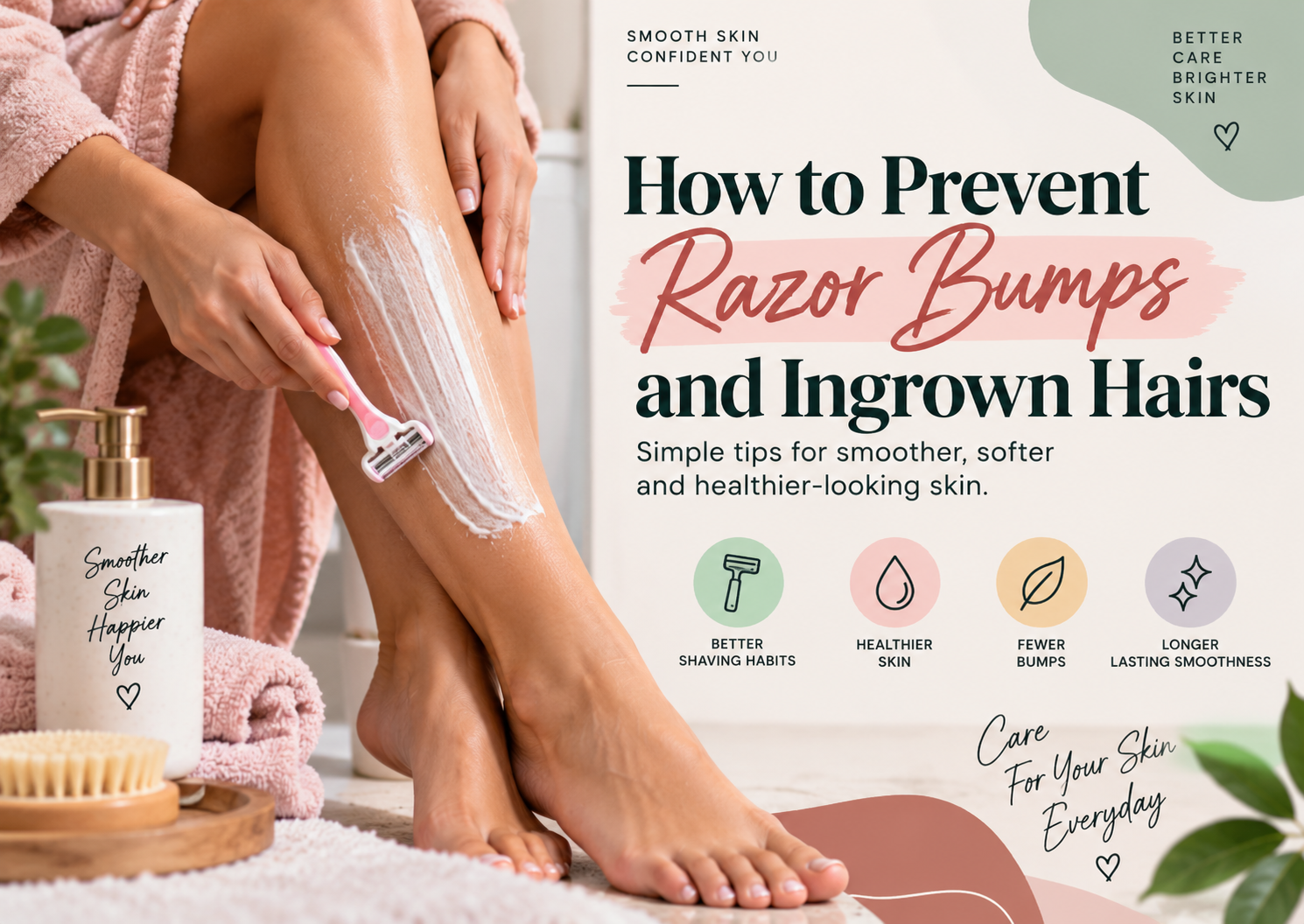
Razor bumps and ingrown hairs can be frustrating, especially when you shave regularly and expect smooth skin afterward. Instead, you may notice tiny red bumps, itching, irritation, or small painful spots that make your skin feel anything but smooth.
These problems can happen on the legs, underarms, bikini area, face, neck, and other parts of the body.
The good news is that your shaving technique can make a big difference. You don’t necessarily need a complicated collection of products. A few simple changes before, during, and after shaving can help your skin feel more comfortable.
What Are Razor Bumps and Ingrown Hairs
Razor bumps and ingrown hairs are related, but they are not exactly the same thing.
An ingrown hair happens when a hair grows back into the skin instead of growing outward. This can create a small raised bump that may look red, irritated, or darker than the surrounding skin.
Razor bumps can develop when shaving irritates the skin and very short hairs curl back toward the skin.
They are particularly common after close shaving and may be more noticeable if you have coarse or curly hair.
Why Do Razor Bumps Happen
Several things can contribute to razor bumps and ingrown hairs.
Common causes include:
- Shaving too closely
- Shaving against the direction of hair growth
- Using a dull razor
- Pressing the razor too hard
- Going over the same area repeatedly
- Shaving dry skin
- Not using shaving cream or gel
- Picking at bumps
- Wearing clothing that creates friction after shaving
- Shaving irritated skin
Your natural hair texture can also affect how likely you are to develop ingrown hairs.
If your hair is naturally curly or coarse, it may be more likely to curve back toward the skin after being cut.
Prepare Your Skin Before Shaving
One of the easiest ways to make shaving gentler is to prepare your skin first.
Avoid immediately running a razor over dry skin.
Instead, wet the area with warm water for a few minutes. A shower is an easy time to do this because the water helps soften the hair and prepares the skin for shaving.
If you are shaving outside the shower, you can use a warm, damp washcloth on the area for a few minutes.
The goal is simple.
Soften the hair before cutting it.
Always Use Shaving Cream or Gel
Shaving cream or gel helps the razor move more smoothly across the skin.
Apply a generous layer to the area you want to shave and allow it to sit for a short time before starting.
If your skin is sensitive, choose a gentle shaving product rather than one that leaves your skin feeling dry or irritated.
Dry shaving creates more friction and can make the skin uncomfortable.
Shave in the Direction of Hair Growth
If you frequently get razor bumps, pay attention to the direction your hair naturally grows.
Instead of automatically shaving against the hair, move the razor in the same direction as the hair growth.
Shaving against the grain may give you a very close shave, but it can also increase irritation and make it easier for short hairs to curl back toward the skin.
You may not get an ultra-close shave this way, but your skin may be happier afterward.
Use Gentle Strokes
There is no need to press the razor firmly against your skin.
Use light, controlled strokes.
Try to avoid repeatedly passing over the same area because every extra pass creates more friction.
A simple approach is:
Light pressure → short strokes → rinse the razor → move to the next area.
If a particular spot still has a few hairs, resist the urge to keep scraping over it again and again.
Keep Your Razor Clean and Sharp
Your razor matters more than you might think.
A dull blade can pull at the hair and encourage you to press harder or repeat strokes. Both can increase irritation.
Replace disposable blades regularly instead of continuing to use them long after they have become dull.
After shaving, rinse your razor properly and allow it to dry.
Don’t leave it sitting in a puddle of water or covered in hair and shaving cream.
A clean, well-maintained razor is a simple part of better body care.
Don’t Stretch Your Skin While Shaving
Pulling your skin tightly can help create an extremely close shave, but getting the closest possible shave isn’t always the best choice if you are prone to razor bumps.
Keep your skin relaxed and use gentle movements.
Your goal should be comfortable, smooth-looking skin rather than removing every tiny hair at the deepest possible level.
Don’t Shave Irritated Skin
If your skin is already red, sore, or covered with bumps, give it some time to settle.
Continuing to shave over irritated skin can increase friction and make the area more uncomfortable.
If you absolutely need to remove hair, consider using a gentler method that doesn’t repeatedly scrape the affected area.
Sometimes giving your skin a short break is the best body-care step you can take.
What to Do After Shaving
Your routine doesn’t end when you finish shaving.
Afterward:
- Rinse the area gently.
- Pat your skin dry instead of rubbing it.
- Apply a gentle moisturizer.
- Avoid scratching the freshly shaved area.
- Give your skin some time before exposing it to unnecessary friction.
If your skin feels warm or irritated, a cool damp cloth can feel soothing.
Avoid immediately applying products that sting or make your skin feel unusually hot.
Don’t Pick or Squeeze Ingrown Hairs
This is one of the hardest habits to avoid.
When you see a small bump or trapped hair, you may want to squeeze it or dig into the skin with tweezers.
Try not to.
Picking and squeezing can irritate the area further and may leave behind dark marks or scars.
Instead, leave the area alone and give the hair time to grow outward naturally.
If an ingrown hair becomes very painful or repeatedly returns, professional advice can help.
Be Gentle With Exfoliation
Exfoliation is often recommended as part of an ingrown-hair routine, but more is not always better.
Aggressive scrubbing can irritate the skin, especially after shaving.
If you use a body exfoliant, choose a gentle option and avoid scrubbing too hard.
Don’t exfoliate skin that is already painful, broken, or significantly irritated.
A healthy body-care routine should leave your skin comfortable, not raw.
Pay Attention to Clothing
Sometimes shaving isn’t the only issue.
Tight clothing can create friction against freshly shaved skin, particularly around the bikini area and thighs.
After shaving, choose comfortable clothing when possible.
Allowing the skin to breathe can make the post-shaving period more comfortable.
Should You Shave Every Day
There isn’t one perfect shaving schedule for everyone.
If shaving every day leaves your skin irritated, try giving it more time between shaves.
On the other hand, some people with recurring razor bumps find that their skin responds differently to a more regular shaving routine.
The important thing is to notice how your own skin reacts.
If frequent shaving consistently causes bumps, redness, or discomfort, consider changing your technique or trying another hair-removal method.
Try an Electric Razor
If traditional shaving repeatedly causes irritation, an electric razor may be worth considering.
It may not produce exactly the same close finish as a traditional blade, but leaving the hair slightly less close to the skin can be useful for people who frequently experience bumps.
You can also experiment with different settings to find an approach that feels comfortable.
What About Waxing
Waxing is another popular hair-removal method, but changing from shaving to waxing does not automatically solve ingrown-hair problems.
Some people may still experience ingrown hairs after waxing.
The same applies to tweezing and other hair-removal methods.
The best method depends on your hair type, skin sensitivity, preferred results, and how your skin responds.
How to Prevent Razor Bumps on the Bikini Area
The bikini area can be especially sensitive because of friction, hair texture, and frequent shaving.
A simple routine can help:
Before shaving
Use warm water to soften the hair.
During shaving
Apply shaving gel and use gentle strokes in the direction of hair growth.
After shaving
Rinse gently, pat dry, and moisturize.
Between shaves
Avoid picking bumps and give irritated skin time to recover.
If you repeatedly experience painful bumps in this area, consider discussing your hair-removal routine with a dermatologist.
How to Prevent Razor Bumps on Your Legs
Legs are usually easier to shave, but they can still develop bumps and irritation.
Try:
- Shaving after your skin has been softened with warm water
- Using shaving gel or cream
- Using a sharp, clean razor
- Shaving with gentle strokes
- Avoiding repeated passes
- Moisturizing afterward
- Avoiding aggressive scrubbing
If your legs feel dry after shaving, your moisturizer becomes especially important.
How to Prevent Underarm Razor Bumps
Underarms can be tricky because the hair may grow in different directions.
Instead of making one long shaving movement, pay attention to how the hair grows in different parts of the area.
Use gentle strokes rather than repeatedly going over the same spot.
After shaving, allow the skin to settle before applying strongly fragranced products if they tend to cause irritation for you.
A Simple Razor Bump Prevention Routine
You don’t need ten different products.
Before Shaving
Warm water → gentle cleansing → shaving cream or gel
During Shaving
Follow hair growth → light pressure → short strokes → rinse razor regularly
After Shaving
Rinse → pat dry → gentle moisturizer → avoid friction
Between Shaves
Keep your razor clean → replace dull blades → avoid picking → give irritated skin time to recover
Simple routines are often easier to maintain consistently.
Common Shaving Mistakes to Avoid
Shaving Dry Skin
This creates unnecessary friction and can leave your skin feeling irritated.
Using a Dull Razor
A dull blade can make you press harder and repeat strokes.
Shaving Against the Grain
It can create a closer finish but may increase irritation for people who are prone to bumps.
Pressing Too Hard
Your razor doesn’t need to be pushed firmly against your skin.
Going Over the Same Area Again and Again
More passes don’t necessarily mean better results.
Picking Ingrown Hairs
Squeezing and scratching can make the area worse.
Applying Irritating Products Immediately
Freshly shaved skin can be more sensitive, so keep your after-shave routine gentle.
When Should You See a Dermatologist
Occasional small bumps may improve with better shaving habits, but persistent or severe problems deserve professional attention.
Consider speaking with a dermatologist if:
- Bumps keep returning
- The area becomes very painful
- You notice significant swelling
- The skin becomes increasingly red or warm
- There is pus or drainage
- You develop repeated dark marks or scars
- Hair removal is becoming difficult because of constant irritation
A dermatologist can help determine whether you’re dealing with ingrown hairs, follicle irritation, or another skin condition.
Final Thoughts
Preventing razor bumps and ingrown hairs doesn’t have to mean buying a complicated collection of skincare products.
Start with the basics.
Soften your hair before shaving, use shaving cream or gel, choose a clean and sharp razor, shave gently in the direction of hair growth, and avoid repeatedly scraping the same area.
Afterward, moisturize and give your skin some time to recover.
Most importantly, don’t judge your skin for having a few bumps. The goal of body care isn’t perfectly flawless skin. It’s keeping your skin comfortable, healthy-looking, and well cared for.
If razor bumps continue despite changing your routine, getting professional advice can help you find a better solution for your skin.
FAQs
How can I prevent razor bumps?
Prepare your skin with warm water, use shaving cream or gel, shave in the direction of hair growth, use light pressure, avoid repeated strokes, and keep your razor clean and sharp.
Why do I get ingrown hairs after shaving?
An ingrown hair can develop when a short hair curls back into the skin instead of growing outward. Close shaving and naturally coarse or curly hair can make this more likely.
Should I shave against the direction of hair growth?
If you frequently experience razor bumps, shaving in the direction of hair growth may be gentler and can reduce irritation.
Should I exfoliate razor bumps?
Gentle exfoliation may help some people, but aggressive scrubbing can irritate the skin. Avoid exfoliating areas that are already painful or significantly irritated.
Should I pop an ingrown hair?
It is better not to squeeze, scratch, or dig into an ingrown hair. Doing so can further irritate the skin and may leave marks or scars.
How often should I replace my razor?
Replace the blade when it becomes dull, uncomfortable, rusty, or difficult to use. Continuing to use a worn-out blade can increase irritation.
Can moisturizer help after shaving?
Yes. Applying a gentle moisturizer after shaving can help support the skin barrier and reduce the dry, tight feeling that some people experience after hair removal.