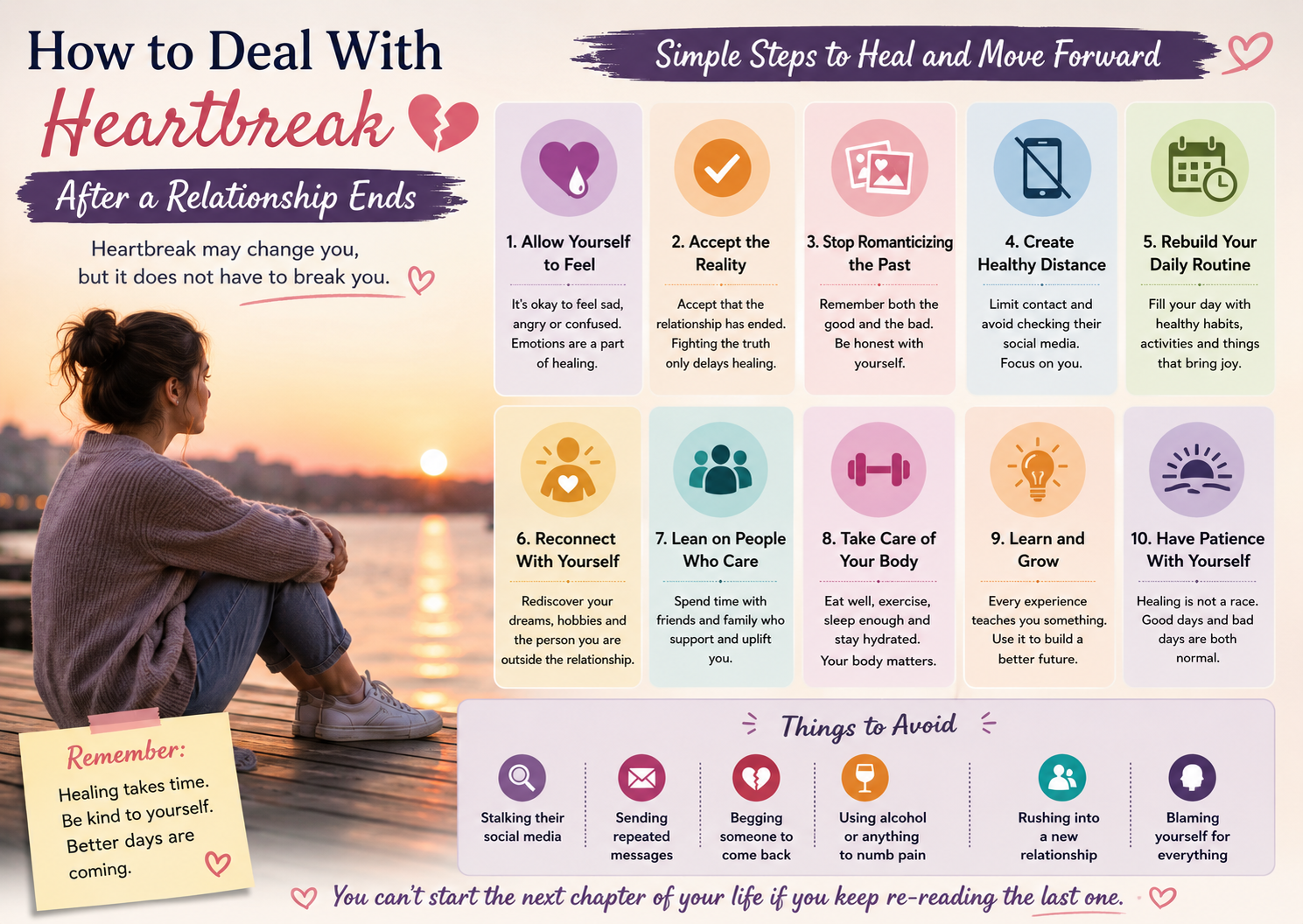









Romanticizing your past relationship can make moving on much harder than it needs to be. You may remember the late-night conversations, inside jokes, special dates, thoughtful messages, and the feeling of being loved while quietly forgetting the arguments, disappointment, loneliness, or problems that existed too.
After a breakup, your mind may naturally return to familiar memories. And when you are lonely, the happy moments can feel even more powerful.
You might start thinking:
“Maybe it wasn’t that bad.”
“Maybe I should have tried harder.”
“What if we had stayed together?”
“I’ll never find that connection again.”
But missing the good parts of a relationship does not necessarily mean the relationship was right for you.
Sometimes, healing begins when you stop remembering only the beautiful parts of the story.
What Does It Mean to Romanticize a Past Relationship?
Romanticizing a relationship means looking back through a softened version of the past.
Instead of remembering the relationship as a complete experience, you may focus heavily on:
- The happiest memories
- Their best qualities
- Special dates
- Physical affection
- Inside jokes
- Sweet messages
- Early relationship excitement
- The future you imagined together
At the same time, you may minimize:
- Repeated disagreements
- Unmet emotional needs
- Communication problems
- Differences in values
- Moments when you felt alone
- Broken trust
- Incompatibility
- The reasons you eventually separated
This does not mean your happy memories were fake.
They were real.
The important thing is remembering that the difficult parts were real too.
Why We Remember the Good Times So Strongly
After a breakup, memories can become selective.
When someone is no longer part of your everyday life, you lose many of the ordinary experiences that once gave you a realistic picture of the relationship.
You may no longer remember the boring Tuesday evenings, frustrating conversations, repeated disagreements, or moments when you wondered whether things were working.
Instead, your mind may replay the strongest emotional memories.
This can create a version of the relationship that feels almost perfect.
And when you compare that idealized version with your current life, being single can suddenly feel much worse.
Missing Someone Does Not Mean You Should Go Back
One of the hardest lessons after a breakup is understanding that missing someone and wanting a relationship with them are not always the same thing.
You can miss someone’s voice.
You can miss their hugs.
You can miss having someone to text at the end of the day.
You can miss your shared routines.
You can even miss the person while knowing that the relationship was not working for you.
Missing someone is an emotion.
It does not automatically have to become an action.
Look at the Whole Relationship
If you find yourself remembering only the best moments, deliberately look at the complete picture.
Ask yourself:
How did I usually feel in the relationship?
Could I communicate my needs?
Did I feel respected?
Were my important needs being met?
How did we handle disagreements?
Was I genuinely happy, or was I constantly hoping things would improve?
Why did the relationship eventually end?
The purpose isn’t to make your ex look bad.
It is to make your memory more balanced.
Make a Reality List
One practical exercise is to write down two lists.
What I Miss
Write honestly about the things you miss.
Maybe it was:
- Their sense of humor
- Weekend dates
- Morning messages
- Physical affection
- Shared hobbies
- Feeling understood
- Having someone to talk to
Do not judge yourself for missing these things.
What Wasn’t Working
Now write down what made the relationship difficult.
Include:
- Arguments
- Communication issues
- Emotional distance
- Broken promises
- Differences in goals
- Repeated misunderstandings
- Things you constantly asked for but didn’t receive
- How you felt during difficult periods
Read both lists when you catch yourself thinking that the relationship was perfect.
You don’t need to erase the good memories.
You simply need to stop allowing them to tell the whole story.
Stop Comparing Your Present to Your Past
One reason people romanticize old relationships is that they compare their real present with an edited version of the past.
Your current life may include loneliness, uncertainty, and ordinary days.
Your memories, meanwhile, may contain only birthdays, vacations, romantic dinners, and beautiful conversations.
That’s not a fair comparison.
Your present is happening in real time.
Your memories have already been edited by time and emotion.
Instead of asking:
“Was my past relationship better than my life now?”
Ask:
“What can I build for myself from this point forward?”
That question moves your attention from comparison to growth.
Be Careful With Social Media
Social media can make romanticizing an ex much easier.
You might see:
- Their new photos
- Old pictures
- Mutual friends’ posts
- Places you visited together
- Relationship-related updates
- Memories from years ago
A few seconds of scrolling can bring back emotions you were slowly processing.
If checking their profile repeatedly makes healing harder, consider muting, unfollowing, or taking a temporary break from their content.
You do not have to make a dramatic statement.
You are simply creating some emotional space.
Don’t Turn the Past Into a Fantasy
Sometimes we don’t miss the actual relationship.
We miss the relationship we wanted it to become.
Maybe you imagined getting married.
Maybe you planned to travel together.
Maybe you pictured growing old together.
Maybe you believed that eventually the communication problems would disappear.
Losing those imagined possibilities can hurt just as much as losing the person.
Ask yourself:
Am I missing what actually happened, or am I missing what I hoped would happen?
That distinction can be surprisingly powerful.
Remember Who You Were Before the Relationship
A breakup can make it feel as though you lost your entire identity.
Your routines may have revolved around another person.
Maybe your weekends were planned around them. Your conversations were about them. Your future plans included them.
Now there is suddenly empty space.
Use that space to reconnect with yourself.
Think about:
- Hobbies you stopped doing
- Friends you haven’t seen enough
- Places you want to visit
- Skills you want to learn
- Personal goals you postponed
- Activities that make you feel like yourself
Healing isn’t only about forgetting someone.
It is also about remembering yourself.
Create New Memories
You don’t need to immediately become a completely different person.
Start small.
Try a new café.
Take a weekend trip.
Join a class.
Spend an afternoon with a friend.
Start exercising.
Read something you’ve wanted to read.
Change your room.
Explore a new hobby.
The goal is to slowly create experiences that belong to your life now.
Eventually, your present can become more emotionally meaningful than the memories you keep replaying.
Don’t Use New People to Escape Old Feelings
After a breakup, it can be tempting to start dating immediately just to prove that you are desirable or to stop thinking about your ex.
There is nothing wrong with meeting new people when you genuinely feel ready.
But another person should not have to carry the responsibility of healing your previous relationship.
Give yourself enough space to understand what happened, what you learned, and what you want next.
When you enter a new relationship, you want to be able to see the new person for who they actually are rather than constantly comparing them with your ex.
Forgive Yourself for Staying
Sometimes romanticizing the past is connected to regret.
You may think:
“Why did I stay so long?”
“Why didn’t I leave earlier?”
“Why did I ignore those signs?”
“Why did I give so many chances?”
Try not to judge your past self using everything you know today.
You made decisions with the information, emotions, hopes, and circumstances you had at that time.
Instead of asking why you didn’t know better, ask:
What do I understand now that I can carry into my future?
That turns regret into a lesson.
Stop Looking for Closure in Every Memory
You may spend hours analyzing old conversations, wondering what a particular message meant or why someone behaved differently at a certain point.
Sometimes understanding can help.
But endlessly analyzing the past can also keep you emotionally attached to it.
You may never receive a perfect explanation for everything that happened.
Closure does not always arrive as one final conversation.
Sometimes closure is accepting that you know enough to move forward.
Let Yourself Miss Them Without Going Back
Healing does not require pretending you don’t care.
You can have a difficult day.
You can hear a song and remember them.
You can visit a familiar place and feel emotional.
You can miss what you had.
That doesn’t mean you’ve failed.
Instead of fighting every emotion, acknowledge it:
“I miss that part of my life today, and that’s okay.”
Then continue with your day.
Feelings can exist without controlling your decisions.
Focus on What You Want in Your Next Relationship
Instead of constantly asking what went wrong, think about what you want to do differently in the future.
Maybe you want:
- Better communication
- Emotional availability
- Mutual effort
- Shared values
- Respect for boundaries
- More honesty
- A healthier approach to conflict
- Space for individual interests
- A relationship where both people feel heard
Your past relationship can become information rather than a permanent emotional home.
Signs You Are Starting to Let Go
Healing doesn’t always feel dramatic.
Sometimes you notice small changes.
You may:
- Think about your ex less often
- Stop checking their social media
- Feel less emotional when their name comes up
- Enjoy your own company more
- Stop replaying old conversations
- Feel excited about future plans
- Remember the relationship more realistically
- Stop imagining what could have been
- Feel comfortable meeting new people
- Start caring more about your present than your past
You don’t need to reach a point where you never think about your ex again.
Moving forward can simply mean the memories no longer control your everyday life.
Final Thoughts
Learning how to stop romanticizing your past relationship isn’t about convincing yourself that everything was bad.
It is about remembering the relationship honestly.
Keep the beautiful memories. Learn from the difficult ones. Accept that something can have been meaningful and still not have been right for your future.
When you stop comparing your real present to an edited version of your past, you create space for something new.
And sometimes moving on doesn’t mean forgetting the person.
It means finally choosing to build a life that doesn’t depend on them being part of it.
FAQs
Why do I keep romanticizing my ex?
You may naturally focus on positive memories after a breakup, especially when you feel lonely or miss the familiarity of the relationship. Looking at the complete relationship rather than only its happiest moments can help create a more balanced perspective.
How do I stop thinking my ex was perfect?
Remind yourself that no relationship is made up entirely of its best moments. Write down both what you miss and what wasn’t working. This can help you remember the relationship more realistically.
Does missing my ex mean I should get back together?
Not necessarily. Missing someone is an emotional response. It does not automatically mean that returning to the relationship would be right for you.
How long does it take to stop romanticizing an ex?
There is no universal timeline for healing. The process can vary depending on the length and nature of the relationship, how the breakup happened, and your individual circumstances.
Why do I remember the good times more than the bad?
Emotional memories can become selective over time. When you are lonely, positive memories may feel especially powerful, while ordinary or difficult moments may receive less attention.
How can I move on without hating my ex?
You don’t have to hate someone to move on. You can appreciate the good memories, acknowledge what didn’t work, accept the ending, and choose to focus on your own future.