







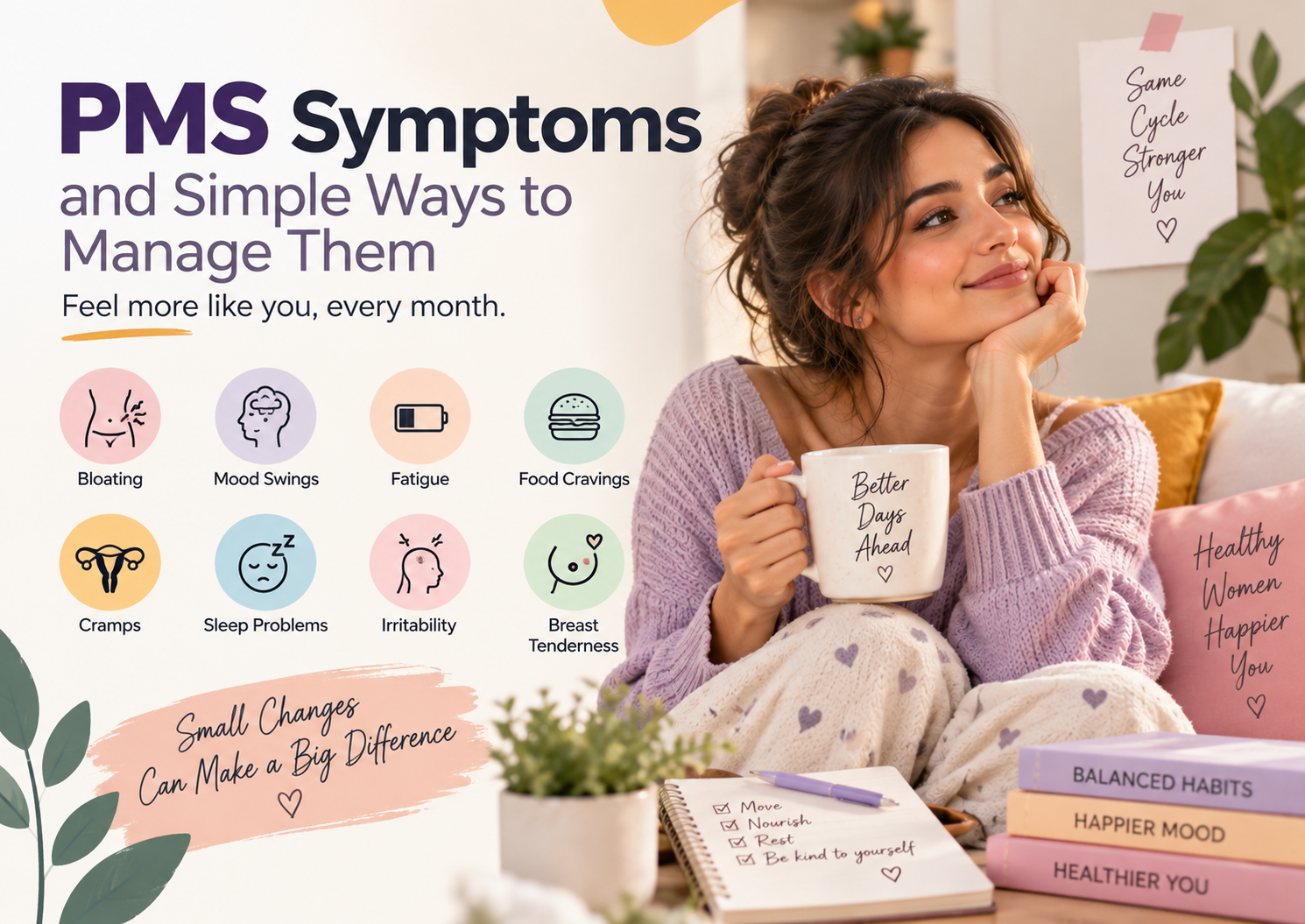
PMS symptoms can make the days before your period feel very different from the rest of the month. You may feel more tired than usual, notice bloating or breast tenderness, experience mood changes, or suddenly crave certain foods.
Premenstrual syndrome, commonly called PMS, refers to a combination of physical and emotional symptoms that occur after ovulation and before menstruation. Symptoms vary from woman to woman and can also change from month to month.
While mild PMS is common, symptoms that regularly interfere with work, relationships, school, or everyday activities deserve attention.
What Is PMS
PMS is a group of symptoms that can appear before your period. Researchers do not know exactly why some women experience PMS while others do not, but changes in hormone levels during the menstrual cycle may play a role.
Symptoms usually improve after the period begins. For some women, they are mild and manageable. For others, they can be uncomfortable enough to affect daily life.
Understanding your own pattern can make PMS easier to manage.
Common PMS Symptoms
PMS can affect your body, mood, appetite, sleep, and concentration.
Physical PMS Symptoms
Common physical symptoms include:
- Bloating or feeling gassy
- Abdominal cramps
- Breast tenderness
- Headaches
- Backaches
- Tiredness
- Constipation or diarrhea
- Acne or skin changes
- Changes in appetite
- Food cravings
- Increased sensitivity to noise or light
Not every woman experiences the same symptoms, and their intensity can vary.
Emotional PMS Symptoms
PMS can also affect how you feel emotionally. You may experience:
- Mood swings
- Irritability
- Anxiety
- Feeling emotional
- Sadness
- Difficulty concentrating
- Trouble sleeping
- Feeling more stressed
- Reduced interest in everyday activities
These changes are not simply about being “moody.” PMS can involve genuine physical and emotional symptoms connected with the menstrual cycle.
Why PMS Happens
The exact cause of PMS is not fully understood. However, hormonal changes during the menstrual cycle appear to be involved.
After ovulation, estrogen and progesterone levels change. Some women may be more sensitive to these natural hormonal fluctuations than others.
Stress and other health conditions can also affect how symptoms feel. Conditions such as depression, anxiety, migraines, and irritable bowel syndrome may overlap with or become worse around the time of PMS.
Simple Ways to Manage PMS Symptoms
You may not be able to prevent every PMS symptom, but certain everyday habits can make them easier to handle.
Stay Physically Active
Regular physical activity throughout the month may help with symptoms such as fatigue, low mood, and difficulty concentrating.
You do not need an intense workout. Walking, cycling, swimming, stretching, dancing, or other activities you enjoy can be useful ways to stay active.
The key is consistency rather than trying to exercise only when PMS starts.
Eat Balanced Meals
What you eat can influence how you feel during the days before your period.
Try to build meals around:
- Vegetables and fruits
- Whole grains
- Protein-rich foods
- Healthy fats
- Calcium-rich foods
Some women find that reducing very salty, sugary, or highly caffeinated foods before their period helps reduce certain PMS symptoms.
Instead of skipping meals and then dealing with intense cravings, aim for regular, balanced meals.
Get Enough Sleep
Poor sleep can make tiredness, irritability, and mood changes harder to manage.
Try to maintain a consistent sleep schedule and create a relaxing bedtime routine. Limiting screens before bed, keeping your bedroom comfortable, and avoiding excessive caffeine late in the day may also help.
The Office on Women’s Health recommends aiming for about eight hours of sleep each night.
Find Ways to Reduce Stress
Stress does not necessarily cause PMS, but managing stress may make the premenstrual period easier to handle.
You could try:
- Gentle yoga
- Meditation
- Deep breathing
- Journaling
- Walking outdoors
- Reading
- Spending time with supportive people
- Taking short breaks during a busy day
Finding something calming that you can realistically repeat every month is more useful than trying to completely eliminate stress.
Track Your Symptoms
One of the simplest ways to understand your PMS is to track it.
For at least two menstrual cycles, record:
- When your period begins
- When symptoms appear
- Which symptoms you experience
- How severe they are
- When symptoms disappear
- Changes in sleep, appetite, and mood
A calendar or period-tracking app can make this easier. A symptom diary can also give your healthcare provider useful information if you need professional advice.
Managing PMS Cramps and Headaches
Physical symptoms such as cramps and headaches can sometimes be relieved with over-the-counter pain medicines.
Medicines such as ibuprofen or naproxen may help with certain PMS-related pain, but they are not suitable for everyone. Follow the product instructions and ask a doctor or pharmacist if you are unsure whether a particular medicine is appropriate for you.
If your pain is severe, keeps returning, or interferes with normal activities, speak with a healthcare professional rather than relying on pain medicine alone.
What About Vitamins and Supplements
You may see supplements marketed specifically for PMS, including calcium, vitamin B6, magnesium, and other products.
Some research suggests that certain nutrients may help with particular PMS symptoms, but evidence is not equally strong for every supplement. Supplements can also interact with medicines or may not be appropriate for everyone.
It is better to talk to a doctor or pharmacist before taking supplements regularly, especially if you take medication or have an existing health condition.
When PMS May Need Medical Attention
PMS is common, but you do not have to simply tolerate symptoms that seriously interfere with your life.
Talk to a healthcare professional if:
- Your symptoms affect work, school, relationships, or daily activities
- Lifestyle changes do not provide enough relief
- Your symptoms become significantly worse
- You experience severe or unusual pain
- Your emotional symptoms feel difficult to manage
- You are unsure whether your symptoms are PMS
Keeping a symptom diary for several cycles can make the conversation with your healthcare provider more useful.
PMS vs PMDD
Some women experience a much more severe condition called premenstrual dysphoric disorder, or PMDD.
PMDD can cause intense emotional symptoms such as severe irritability, anxiety, depression, mood changes, or feelings of being overwhelmed, along with physical symptoms. These symptoms can significantly interfere with daily life.
If you experience severe emotional symptoms every month before your period, speak with a healthcare professional. PMDD can be treated, and you do not have to manage severe symptoms alone.
If you experience thoughts of suicide or feel that you may hurt yourself, seek urgent mental health help immediately.
Can PMS Be Completely Prevented
There is no single solution that prevents PMS for everyone.
Your symptoms depend on your individual body, menstrual cycle, lifestyle, and possibly other health conditions. What helps one woman may not work for another.
A combination of regular movement, balanced nutrition, adequate sleep, stress management, symptom tracking, and professional treatment when needed can provide a more practical approach.
A Simple PMS Self-Care Routine
When your period is approaching, you can prepare instead of waiting for symptoms to become uncomfortable.
Morning
Start with a balanced breakfast, drink enough water, and include some gentle movement.
During the day
Eat regular meals, take short breaks when possible, and avoid relying heavily on caffeine or sugary snacks.
Evening
Choose a relaxing activity such as stretching, reading, journaling, or meditation and aim for a consistent bedtime.
Throughout the cycle
Track your symptoms so you can identify patterns and prepare for the days when symptoms usually appear.
Small habits repeated consistently can be easier to maintain than making major changes only when PMS begins.
Final Thoughts
PMS symptoms can affect your body, emotions, appetite, sleep, and energy in different ways. Although PMS is common, that does not mean you have to ignore symptoms that make everyday life difficult.
Start by paying attention to your cycle and identifying your personal symptoms. Regular exercise, balanced meals, adequate sleep, stress management, and symptom tracking can all be useful parts of a PMS management routine.
If symptoms are severe or continue to interfere with your daily life, talk to a healthcare professional. Getting the right support can help you understand whether you are dealing with typical PMS or something that needs further evaluation.
FAQs
What are the most common PMS symptoms?
Common PMS symptoms include bloating, cramps, breast tenderness, headaches, fatigue, mood swings, irritability, appetite changes, food cravings, and sleep problems.
How many days before a period does PMS start?
PMS symptoms can occur during the days or weeks before your period. The timing and severity vary between women.
Does exercise help PMS?
Regular aerobic physical activity may help with symptoms such as fatigue, low mood, and difficulty concentrating.
What foods can help with PMS?
A balanced diet containing vegetables, fruits, whole grains, protein, and calcium-rich foods can support overall health. Some women may also benefit from reducing excessive salt, sugar, and caffeine before their period.
When should I see a doctor about PMS?
You should consider speaking with a healthcare professional when PMS symptoms interfere with your daily activities, relationships, work, or school, or when lifestyle changes are not enough to manage them.
Is severe PMS the same as PMDD?
No. PMDD is a more severe condition involving significant emotional and physical symptoms that can substantially affect daily life. A healthcare professional can help determine whether your symptoms may be PMDD.