







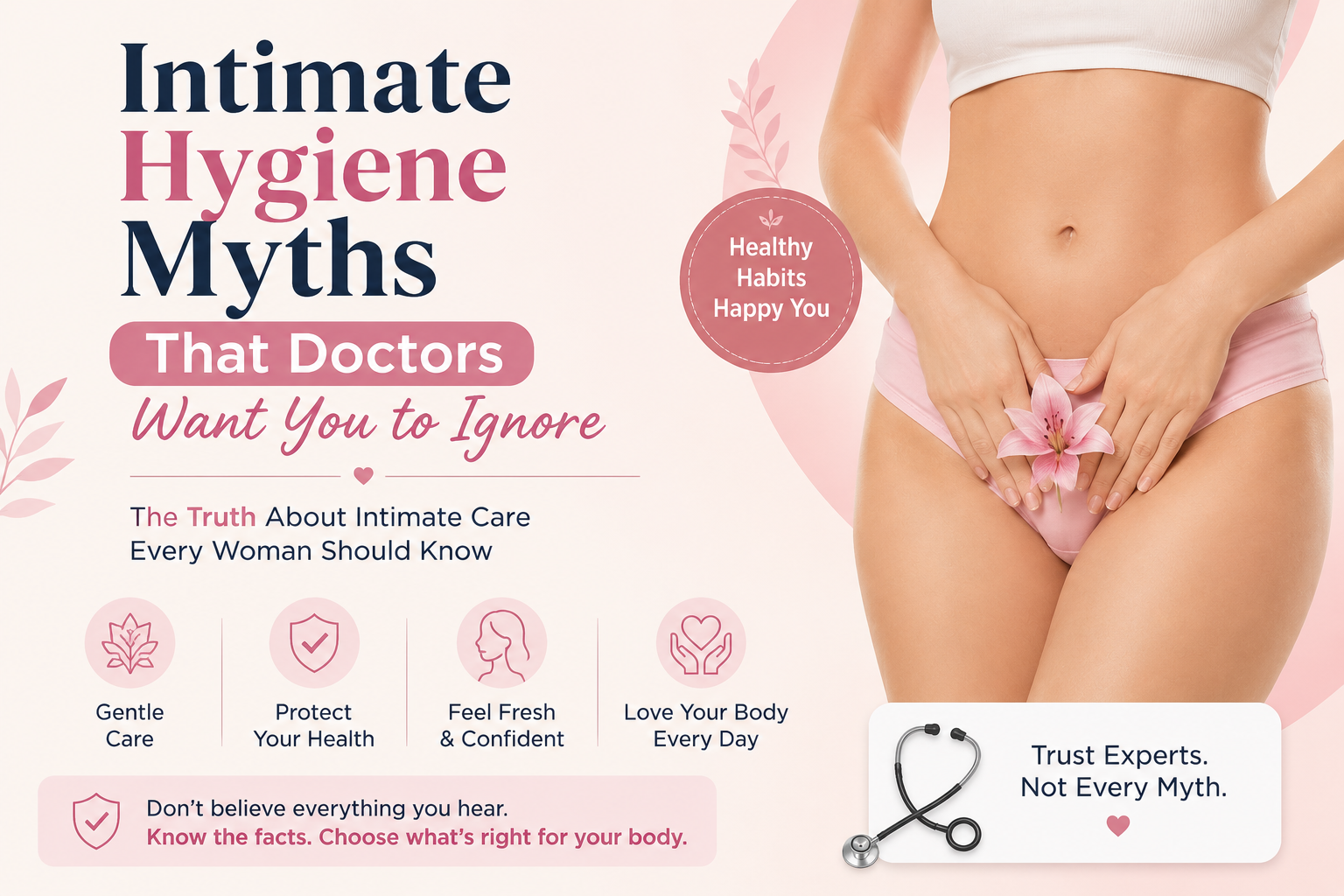
Intimate Hygiene Myths are everywhere. From social media advice to old family beliefs, it’s easy to become confused about what’s actually good for your intimate health. Unfortunately, following the wrong advice can sometimes lead to irritation, discomfort, or even infections.
The truth is that intimate hygiene is much simpler than many people think. Understanding the facts can help you care for your body safely and confidently.
Let’s separate myths from facts.
Myth 1 You Need Scented Products to Stay Fresh
Many people believe scented washes, sprays, powders, or perfumes are necessary for intimate hygiene.
Fact
The intimate area has its own natural balance. Strong fragrances and scented products may irritate sensitive skin and, in some cases, disrupt that balance.
Warm water and a gentle, fragrance-free cleanser for the external area (if needed) are usually enough.
Myth 2 Douching Keeps You Cleaner
Some believe douching is an important part of intimate hygiene.
Fact
Medical experts generally do not recommend routine douching. It can disturb the natural balance of bacteria and increase the risk of irritation or certain infections.
Your body naturally maintains a healthy balance without needing internal cleansing.
Myth 3 A Healthy Intimate Area Should Have No Natural Odor
Many women worry that any natural odor means something is wrong.
Fact
A mild natural scent is completely normal and can vary during different stages of the menstrual cycle.
A strong, unusual odor accompanied by itching, burning, pain, or unusual discharge should be evaluated by a healthcare professional.
Myth 4 Tight Clothing Has No Effect
Many people assume clothing doesn’t affect intimate health.
Fact
Wearing very tight clothing for long periods may trap heat and moisture, creating an environment that can increase discomfort.
Breathable fabrics like cotton underwear can improve comfort.
Myth 5 More Washing Means Better Hygiene
Some people wash the intimate area multiple times a day.
Fact
Overwashing can dry or irritate sensitive skin.
Once daily cleaning of the external area is usually sufficient unless you need additional cleaning after exercise or sweating.
Myth 6 Every Itch Means an Infection
An itch doesn’t always mean something serious.
Fact
Itching can have many causes, including:
- Dry skin
- Irritation
- Allergies
- New personal care products
- Sweat
- Tight clothing
If itching continues or is accompanied by pain, unusual discharge, sores, or a strong odor, consult a healthcare professional.
Myth 7 You Should Use Antibacterial Soap
Some people think stronger soaps provide better protection.
Fact
Harsh antibacterial soaps may irritate sensitive skin and aren’t necessary for routine intimate hygiene.
Choose mild, fragrance-free products designed for sensitive skin if you use a cleanser.
Myth 8 Hair Removal Is Necessary for Good Hygiene
This is one of the most common myths.
Fact
Removing pubic hair is a personal choice, not a hygiene requirement.
Whether you shave, trim, wax, or leave it natural, maintaining good hygiene is what matters most.
Myth 9 Panty Liners Should Be Worn Every Day
Some women wear panty liners continuously.
Fact
Daily use may not be necessary for everyone. If used regularly, changing them frequently helps keep the area clean and dry.
Choose breathable options when possible.
Myth 10 Intimate Hygiene Is Only Important During Your Period
Good hygiene matters every day.
Fact
Daily healthy habits support comfort throughout the month, not just during menstruation.
Healthy Intimate Hygiene Habits
Simple habits that support intimate health include:
- Wash the external intimate area gently once a day.
- Wear clean, breathable cotton underwear.
- Change out of wet swimsuits or sweaty workout clothes promptly.
- Change sanitary products regularly during your period.
- Wipe from front to back after using the toilet.
- Stay hydrated.
- Eat a balanced diet.
- Practice safer sex and use protection when appropriate.
- Avoid unnecessary scented products in the intimate area.
You can also read: How to maintain intimate hygiene
When Should You See a Doctor?
Seek medical advice if you experience:
- Persistent itching
- Burning during urination
- Unusual discharge
- A strong or unpleasant odor
- Pelvic pain
- Sores, blisters, or rashes
- Symptoms that don’t improve after a few days
Early evaluation can help identify and treat problems before they worsen.
Frequently Asked Questions
Is it normal to have a natural intimate odor?
Yes. A mild natural odor is normal and may vary throughout your menstrual cycle.
Is douching recommended?
No. Routine douching is generally not recommended because it can disrupt the natural balance of the vaginal environment.
How often should I wash my intimate area?
Cleaning the external area once a day with warm water is usually enough. Avoid excessive washing.
Are scented intimate products safe?
Many people with sensitive skin may experience irritation from scented products. Fragrance-free options are generally a better choice.
Does wearing cotton underwear help?
Yes. Cotton is breathable and can help reduce moisture buildup, improving everyday comfort.
Final Thoughts
Many intimate hygiene myths have been passed down for years, but good intimate care doesn’t require complicated routines or harsh products. Gentle daily hygiene, breathable clothing, proper menstrual care, and paying attention to changes in your body are often all that’s needed. If you notice persistent symptoms like unusual discharge, pain, itching, or a strong odor, don’t rely on myths-consult a qualified healthcare professional for personalized advice.