






Having a baby can completely change your daily routine, including the way you move and exercise. After pregnancy and childbirth, it is natural to want to feel stronger and more energetic again, but getting back into fitness shouldn’t mean immediately returning to intense workouts.
A postpartum workout routine for new moms should focus on recovery first, followed by gradual improvements in strength, mobility, endurance, and confidence.
There isn’t one universal timeline for returning to exercise after childbirth. Recovery can depend on the type of delivery, complications, surgery, pelvic-floor symptoms, fitness level, and overall health. That’s why it’s important to follow your healthcare professional’s advice before increasing exercise intensity.
For generally healthy postpartum women, the CDC says moderate-intensity physical activity can be safe during the first year after delivery and recommends working toward 150 minutes of moderate aerobic activity per week, while emphasizing that some activity is better than none.
The key is to start where your body is now-not where it was before pregnancy.
When Can You Start Exercising After Having a Baby?
There isn’t a single date when every new mother should start exercising.
Your return to exercise may depend on:
- Vaginal or cesarean delivery
- Recovery from any complications
- Bleeding and healing
- Pelvic-floor symptoms
- Abdominal discomfort
- Previous fitness level
- Overall health
- Your healthcare professional’s advice
Some gentle movement may be appropriate relatively early for some women, while others may need more time.
Before starting a structured postpartum exercise program, especially after a cesarean birth or complicated pregnancy or delivery, discuss your individual situation with your healthcare professional.
Start With Gentle Movement
Your first goal doesn’t need to be “getting your body back.”
It can simply be moving comfortably again.
Gentle walking can be a practical starting point for many new moms once they are medically ready.
Start with a short, easy walk and gradually increase the duration as your body feels comfortable.
You might begin with:
5–10 minutes → rest → repeat on another day.
Over time, you can gradually build toward longer walks.
The CDC specifically lists brisk walking among examples of moderate-intensity activity that can be appropriate during the postpartum period for healthy women.
Postpartum Workout Routine: Beginner Level
Once you’re cleared for exercise and comfortable with basic movement, you can begin building a simple routine.
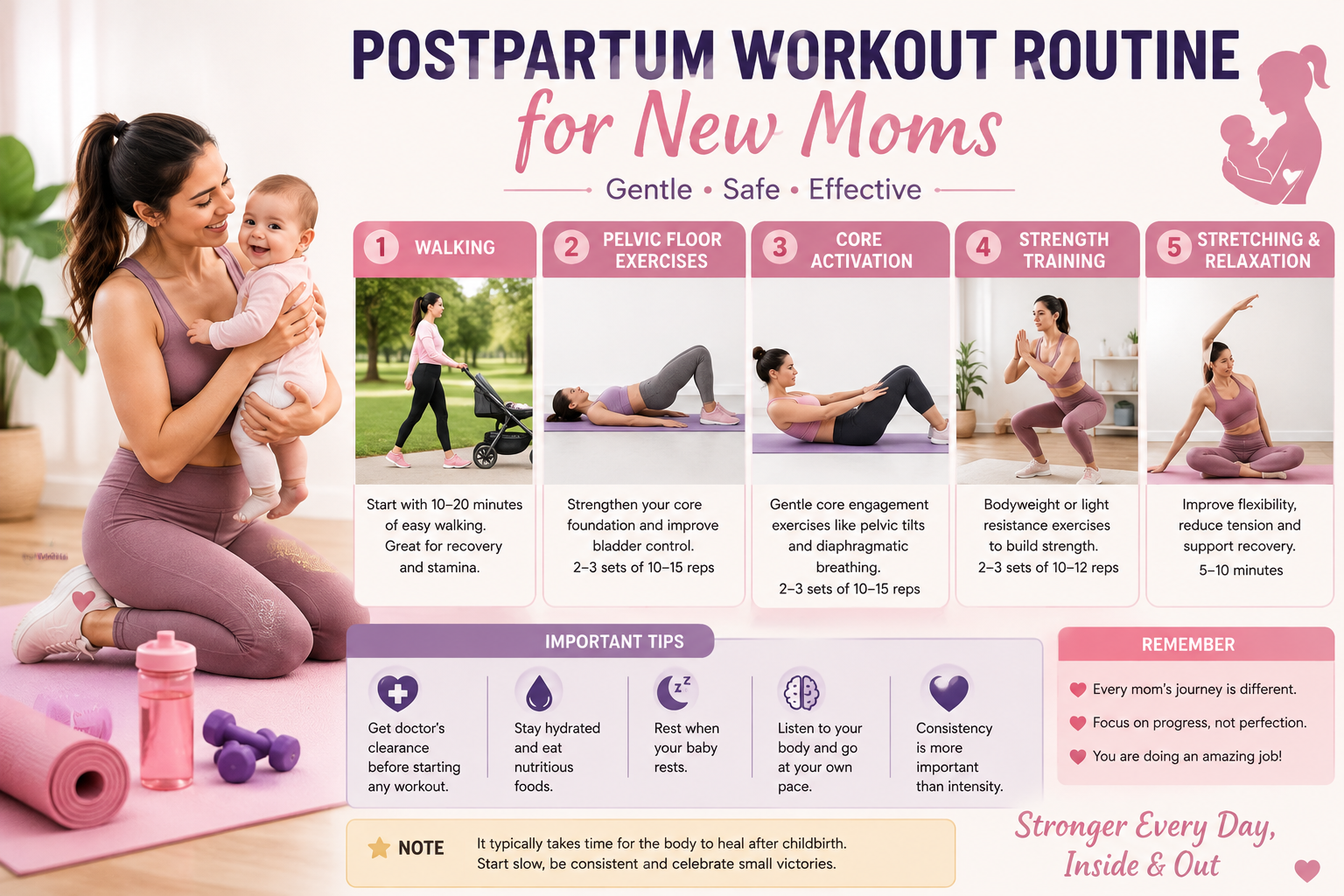
1. Gentle Walking
Time: 10–20 minutes
Walking can help you gradually rebuild endurance without requiring complicated equipment.
Start at a comfortable pace.
As your strength improves, you can increase your walking time or gradually make the pace more challenging.
2. Gentle Mobility Exercises
Spend a few minutes moving your body through comfortable ranges of motion.
Try:
- Shoulder rolls
- Gentle neck movements
- Ankle circles
- Hip movements
- Gentle upper-back stretches
These can be particularly useful if you’re spending a lot of time feeding, holding, or carrying your baby.
3. Pelvic-Floor Exercises
Pregnancy and childbirth can affect the pelvic floor.
Pelvic-floor exercises may help strengthen these muscles, but they aren’t simply about doing as many contractions as possible.
Technique matters.
If you’re experiencing pelvic pressure, urinary leakage, pain, or other pelvic-floor symptoms, consider speaking with a healthcare professional or pelvic-floor physical therapist rather than pushing through the symptoms.
4. Gentle Core Activation
Your abdominal muscles and core can feel different after pregnancy.
Instead of immediately doing hundreds of crunches, begin with gentle exercises that help you reconnect with your core.
Depending on your recovery and professional guidance, this might include controlled breathing and gentle core activation.
Focus on control rather than intensity.
Don’t Rush Into Intense Ab Workouts
New moms often feel pressure to flatten their stomach as quickly as possible.
But postpartum recovery isn’t a race.
Avoid jumping straight into intense abdominal workouts simply because you want faster results.
If you notice abdominal pain, unusual pressure, bulging, or discomfort during an exercise, stop and seek appropriate guidance.
Your core needs to regain function gradually.
Add Light Strength Training Gradually
Once basic movement feels comfortable and you’ve been cleared for more activity, strength training can become an important part of your routine.
You don’t necessarily need a gym.
You can start with bodyweight movements or light resistance.
Examples may include:
- Chair squats
- Wall push-ups
- Glute bridges
- Supported lunges
- Light resistance-band exercises
- Light rows
Start with a small number of repetitions and focus on good technique.
The goal isn’t to exhaust yourself.
It’s to gradually rebuild strength.
A Simple Beginner Postpartum Workout
Once you’re ready for a structured routine, you could build a gentle session around:
5 minutes: Easy walking or gentle warm-up
5 minutes: Mobility exercises
8–10 minutes: Beginner strength exercises
5 minutes: Easy walking or relaxation
That’s enough to start.
You don’t need a 60-minute workout to make progress.
As your recovery continues, you can gradually increase the duration and intensity.
Example Weekly Routine for New Moms
Here’s an example of how you could structure movement once your healthcare professional has cleared you for exercise:
| Day | Activity |
|---|---|
| Monday | 15–20 minute walk |
| Tuesday | Gentle mobility + pelvic-floor work |
| Wednesday | Rest or easy walk |
| Thursday | Beginner strength routine |
| Friday | 15–25 minute walk |
| Saturday | Gentle stretching or yoga |
| Sunday | Rest |
This is only an example.
Your actual routine should depend on your recovery, energy, symptoms, and healthcare guidance.
Don’t Try to Exercise Every Day
Rest is part of postpartum fitness.
Your body has gone through pregnancy and childbirth, and you’re also adjusting to caring for a newborn.
Some days you may have enough energy for a workout.
Other days, walking around the house may be all you can manage.
That’s okay.
Fitness isn’t destroyed by taking a rest day.
What About Breastfeeding and Exercise?
If you’re breastfeeding, exercise can still be part of your routine.
Staying hydrated and eating enough to support your nutritional needs is important.
You may also find that exercising after feeding or pumping feels more comfortable because your breasts may feel less full.
A supportive, comfortable sports bra can also make movement easier.
If you have concerns about milk supply, nutrition, hydration, or exercise intensity while breastfeeding, discuss them with your healthcare professional.
Listen to Your Body During Exercise
Postpartum exercise should not be about ignoring discomfort.
Pay attention to how your body responds.
Stop or reduce the intensity if you experience concerning symptoms such as:
- Significant pain
- Heavy or increasing bleeding
- Dizziness
- Chest pain
- Difficulty breathing
- Severe headache
- New or worsening pelvic pressure
- Urinary or bowel-control problems
- A feeling that something is not right
If you experience concerning symptoms, seek appropriate medical advice.
Don’t Compare Your Postpartum Body to Social Media
One of the biggest challenges for new moms isn’t physical.
It’s comparison.
Social media can make it look as though everyone else returned to their pre-pregnancy body within a few weeks.
That’s not reality.
Bodies recover differently.
Some women experience changes in their abdomen, hips, breasts, weight, skin, or muscle strength after pregnancy.
Your goal should not be to recreate your old body as quickly as possible.
A better goal is to become stronger, healthier, and more comfortable in your body.
Nutrition Matters Too
Exercise is only one part of postpartum recovery.
Your body also needs adequate nutrition.
Instead of following a restrictive diet, focus on balanced meals containing:
- Protein
- Vegetables
- Fruits
- Whole grains
- Beans and lentils
- Healthy fats
- Adequate fluids
If you’re breastfeeding, your nutritional and energy needs may be different.
Extreme dieting immediately after childbirth isn’t a good foundation for recovery.
If you want personalized nutrition guidance, especially while breastfeeding, speak with a qualified healthcare professional or registered dietitian.
For broader women’s wellness habits, you can also read [Women’s Health Habits Every Woman Should Start Paying Attention To].
Sleep and Recovery Are Part of Fitness
Newborns aren’t exactly famous for respecting sleep schedules.
You may have nights when uninterrupted sleep feels impossible.
Instead of expecting yourself to perform like you did before pregnancy, adjust your expectations.
When possible:
- Rest when you can.
- Ask for help.
- Don’t feel guilty about taking breaks.
- Avoid unnecessary pressure to complete a perfect workout.
- Prioritize recovery when your body needs it.
A 10-minute walk on a difficult day can be more appropriate than forcing yourself through an exhausting workout.
How to Progress Your Workout
Once your body is responding well, progress gradually.
You can increase:
Duration — walk or exercise for a little longer.
Frequency — add another active day.
Intensity — move slightly faster.
Resistance — gradually use more challenging weights or bands.
Don’t increase everything at once.
Give your body time to adapt.
The CDC recommends gradually working toward the 150-minute weekly moderate-intensity aerobic target rather than treating it as an immediate requirement. It also emphasizes that any amount of activity is better than none.
What Exercises Should New Moms Avoid?
There isn’t one universal list of exercises that every postpartum woman must avoid.
The right exercises depend on your recovery.
However, jumping immediately into high-impact or very intense training may not be appropriate for everyone.
If an exercise causes pain, pelvic pressure, leakage, abdominal discomfort, or other unusual symptoms, don’t simply push through it.
Get individual guidance before progressing.
When Should You See a Pelvic-Floor Specialist?
If you experience ongoing:
- Urinary leakage
- Pelvic heaviness or pressure
- Pain during movement
- Pain during sex
- Difficulty controlling your bladder or bowel
- Abdominal separation concerns
- Persistent pelvic discomfort
consider talking to a healthcare professional.
A pelvic-floor physical therapist can assess your specific symptoms and create an individualized rehabilitation plan.
You don’t have to accept uncomfortable postpartum symptoms as something you simply have to live with.
How Long Does It Take to Get Fit Again?
There is no universal postpartum fitness timeline.
Some women gradually return to exercise relatively quickly.
Others need considerably more time.
Your recovery can depend on pregnancy, delivery, sleep, nutrition, complications, previous fitness level, and many other factors.
Instead of asking:
“How quickly can I get my old body back?”
try asking:
“What can my body comfortably do today?”
That mindset can make postpartum fitness much healthier and more sustainable.
A Realistic Fitness Goal for New Moms
Your first goal might simply be:
Move consistently.
Then:
Build strength.
Then:
Improve endurance.
Eventually:
Return to the activities you enjoy.
You don’t need to rush through these stages.
Progress can be slow and still be progress.
Frequently Asked Questions
When can I start a postpartum workout routine?
There isn’t one timeline for everyone. Your return to exercise depends on your delivery, recovery, symptoms, and individual health. Ask your healthcare professional when it’s appropriate for you to progress from gentle movement to structured exercise.
What is the best exercise after having a baby?
Walking is a simple starting point for many healthy postpartum women. As recovery progresses, gentle strength training, mobility exercises, and other activities can be added gradually. The CDC lists brisk walking, some forms of yoga, water aerobics, and cycling among examples of postpartum physical activity.
Can I exercise while breastfeeding?
In general, healthy breastfeeding mothers can exercise, but nutrition, hydration, comfort, and individual recovery should be considered. If you have concerns, discuss your exercise routine with your healthcare professional.
How much exercise should new moms get?
The CDC recommends working toward at least 150 minutes of moderate-intensity aerobic activity per week during the postpartum period for healthy women, but some activity is better than none and the amount should be built up according to individual circumstances.
Can exercise help with postpartum mood?
Physical activity can have mental-health benefits, and CDC guidance notes that postpartum physical activity can decrease symptoms of postpartum depression. However, exercise should not replace professional treatment for postpartum depression or other mental-health conditions.
How can I lose postpartum weight safely?
Focus on gradual lifestyle changes rather than crash diets or extreme workouts. Regular movement, balanced nutrition, adequate recovery, and professional guidance when needed are more sustainable approaches.
Final Thoughts
A postpartum workout routine for new moms shouldn’t be about rushing back to your pre-pregnancy body.
It should be about rebuilding your relationship with movement.
Start gently. Walk when you can. Work on mobility and strength gradually. Give your pelvic floor and core the attention they deserve. Rest when you need to. And don’t compare your recovery to someone else’s.
Most importantly, listen to your body and follow individualized medical guidance, especially after a cesarean birth, complicated pregnancy, or delivery.
You don’t need to do everything at once.
Even a short walk today can be the beginning of a stronger, healthier routine tomorrow.
This article is for general educational purposes and is not a substitute for personalized medical advice. Postpartum recovery varies, so consult your healthcare professional before beginning or progressing an exercise program.