







When should you worry about breast lumps?
It’s a question many women ask after noticing a change in their breasts. Finding a lump can feel frightening, but it’s important to remember that most breast lumps are not cancerous. Many are caused by harmless conditions such as hormonal changes, cysts, or benign (non-cancerous) growths.
Even so, every new breast lump deserves attention. Paying attention to changes in your body and knowing when to seek medical advice can lead to early diagnosis if treatment is needed. Early detection is one of the most effective ways to improve outcomes for breast cancer and many other breast conditions.
In this guide, we’ll explain what breast lumps are, common causes, warning signs you shouldn’t ignore, and when it’s time to consult a healthcare professional.
What Is a Breast Lump?
A breast lump is an area of tissue that feels different from the surrounding breast tissue. It may feel:
- Soft or firm
- Round or irregular
- Movable or fixed
- Painful or painless
Some lumps appear suddenly, while others develop gradually over time.
Not every lump feels the same, which is why self-awareness is important.
Common Causes of Breast Lumps
Most breast lumps are caused by non-cancerous conditions.
Common causes include:
Breast Cysts
Fluid-filled sacs that often occur due to hormonal changes.
Fibroadenomas
Smooth, movable, non-cancerous lumps that are common in younger women.
Hormonal Changes
Breasts may feel lumpy before or during menstruation.
Breast Infections
Sometimes infections can cause swelling, tenderness, and lumps.
Fat Necrosis
Injury to breast tissue can occasionally create firm lumps.
Although many causes are harmless, only a healthcare professional can determine the exact reason.
Warning Signs You Should Never Ignore
While many breast lumps are benign, certain symptoms should prompt medical evaluation.
Seek medical advice if you notice:
- A new lump that doesn’t go away after your menstrual cycle.
- A hard lump with irregular edges.
- A lump that doesn’t move easily.
- Changes in breast size or shape.
- Skin dimpling or puckering.
- Redness or swelling that doesn’t improve.
- Nipple discharge, especially if bloody.
- A nipple turning inward suddenly.
- Persistent breast pain in one specific area.
- Swollen lymph nodes under the arm.
These symptoms don’t automatically mean cancer, but they should always be checked.
When Should You See a Doctor?
Schedule an appointment if:
- A lump lasts longer than a few weeks.
- The lump continues growing.
- You notice skin changes.
- There is unusual nipple discharge.
- One breast suddenly looks different from the other.
- You have a family history of breast cancer.
- You’re unsure about any breast change.
It’s always better to seek reassurance than ignore something unusual.
How Doctors Evaluate Breast Lumps
Your healthcare provider may recommend:
- Physical breast examination.
- Breast ultrasound.
- Mammogram.
- MRI (when appropriate).
- Needle biopsy if further evaluation is needed.
These tests help determine whether a lump is harmless or requires treatment.
Can Breast Lumps Be Prevented?
Not all breast lumps can be prevented, but healthy habits may support overall breast health.
Consider:
- Maintaining a healthy weight.
- Staying physically active.
- Eating a balanced diet.
- Limiting alcohol.
- Avoiding smoking.
- Attending recommended breast screenings.
Regular health check-ups play an important role in early detection.
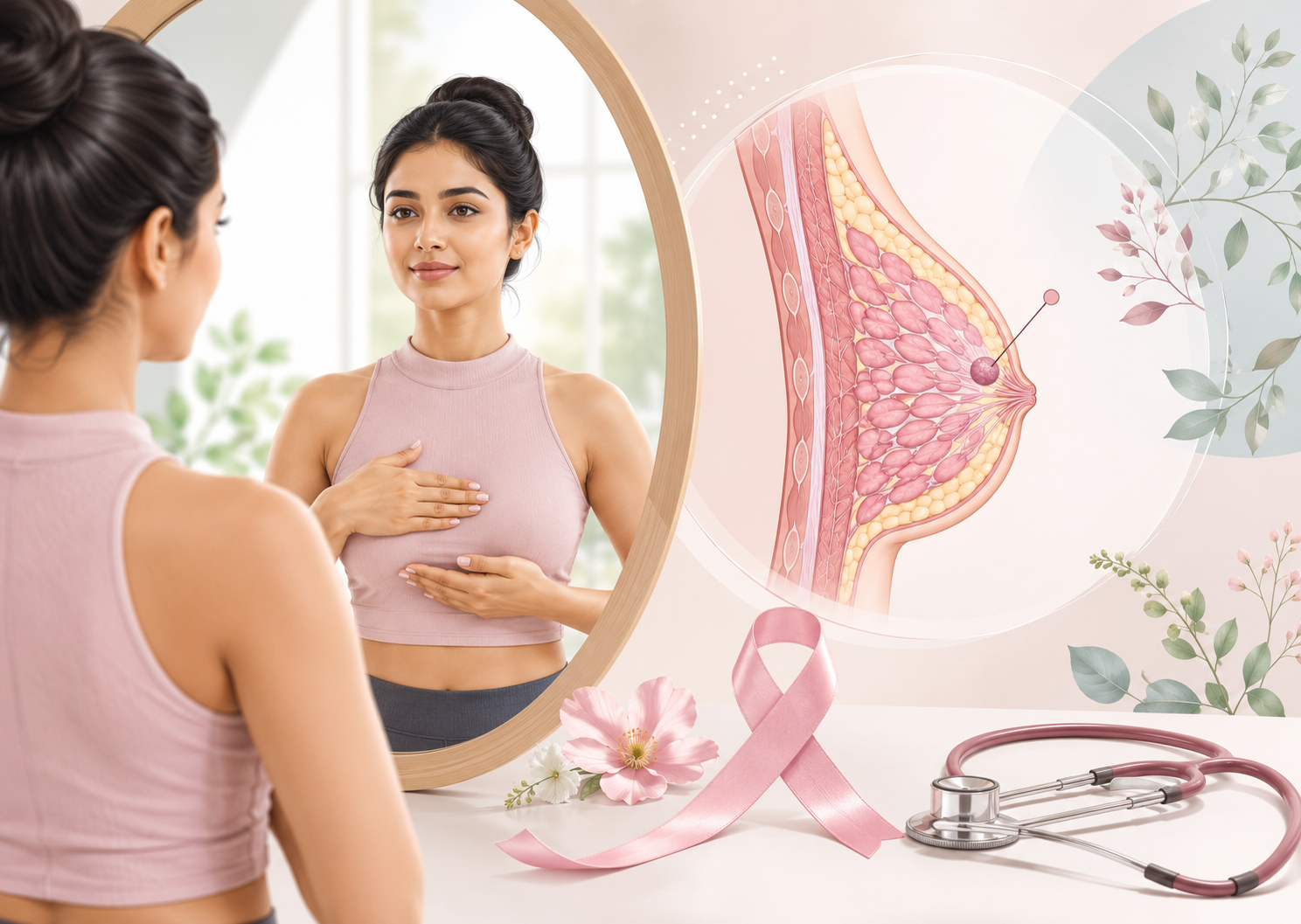
How to Check Your Breasts at Home
Breast self-awareness is more valuable than following a rigid monthly routine.
Become familiar with how your breasts normally look and feel.
Look for:
- New lumps.
- Changes in skin texture.
- Nipple changes.
- Swelling.
- Differences between breasts.
If something feels different, don’t panic—but don’t ignore it either.
You can also read: How to Maintain the Breast Round Shape
Myths About Breast Lumps
Myth: Every breast lump is cancer.
Fact: Most breast lumps are benign.
Myth: Painful lumps are always harmless.
Fact: Both painful and painless lumps should be evaluated if they persist.
Myth: Young women don’t get breast problems.
Fact: Breast conditions can occur at any age.
Myth: If there’s no family history, you’re safe.
Fact: Many people diagnosed with breast cancer have no family history.
Conclusion
Finding a breast lump can be worrying, but it doesn’t always indicate a serious condition. The most important step is to stay aware of your body and seek medical advice whenever you notice a new or persistent change. Early evaluation helps identify harmless conditions while also improving the chances of successful treatment if something more serious is found.
Remember, caring for your breast health isn’t about living in fear, it’s about staying informed, paying attention to changes, and making your well-being a priority.
You can also read: Common Intimate Hygiene Mistakes Women Make
Frequently Asked Questions
Are most breast lumps cancerous?
No. Most breast lumps are caused by benign conditions such as cysts or fibroadenomas.
Should I worry about a painful breast lump?
Pain alone doesn’t determine whether a lump is serious. Any persistent lump should be assessed by a healthcare professional.
Can hormones cause breast lumps?
Yes. Hormonal changes during the menstrual cycle can temporarily make breasts feel lumpier.
How soon should I see a doctor?
If a new lump lasts beyond one menstrual cycle, grows, or is accompanied by other changes, schedule a medical evaluation.
How often should I check my breasts?
Become familiar with how your breasts normally look and feel so you can notice new changes early.